Tarot Card Combinations
Three of Swords and Two of Cups
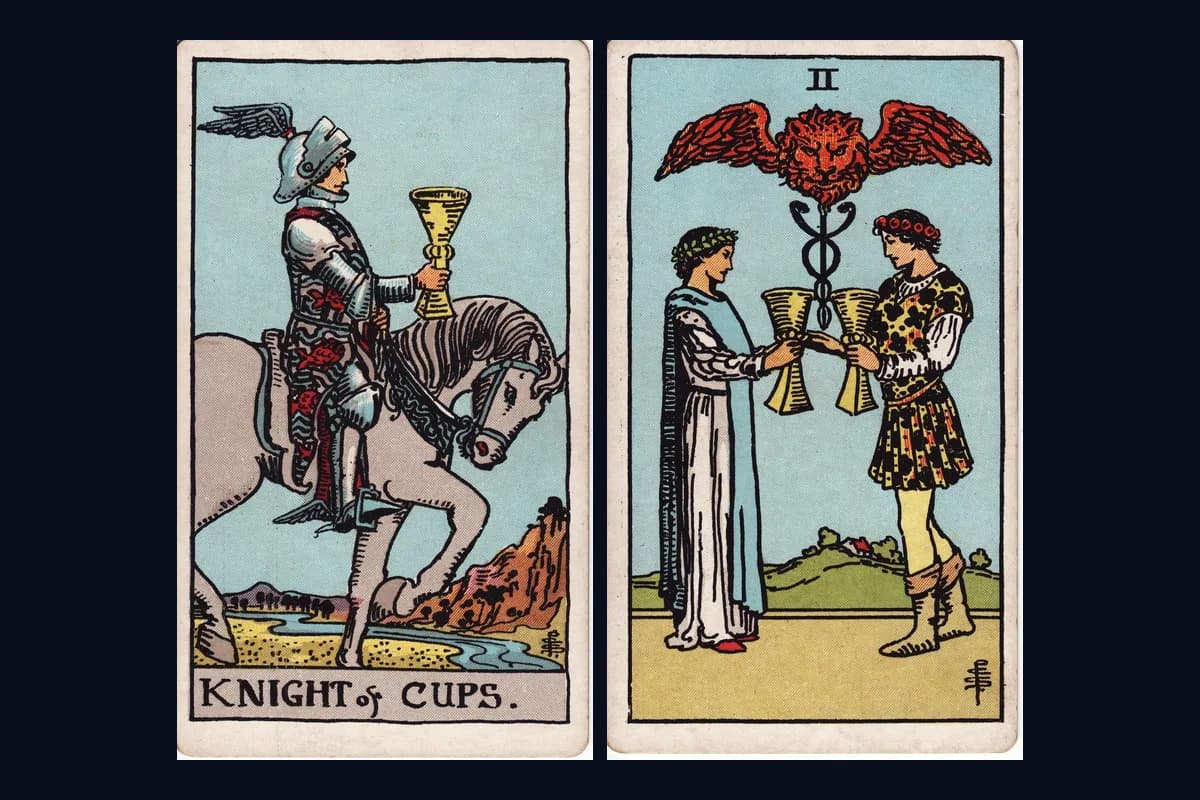
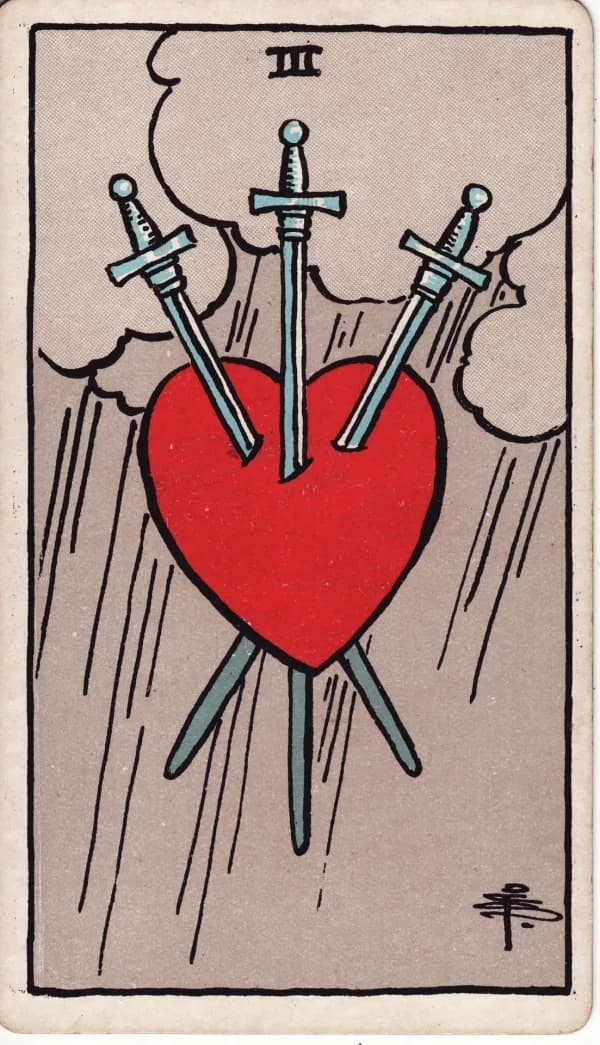
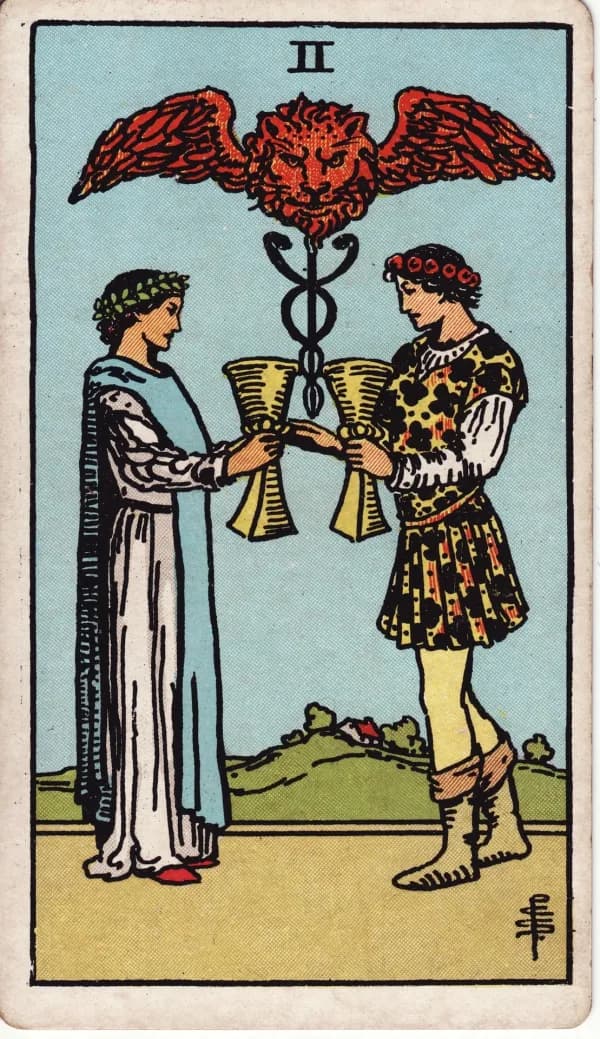
The Three of Swords and Two of Cups tarot combination says the love is real, and so is the hurt. Rain falls behind a red heart pierced by three swords. On the other card, red wings and a red lion's head rise over two people pledging their cups. Red for love, red for the wound. Worried there's someone else? These cards can't say. They can tell you someone's hurting.

Climate scientist, ashtanga practitioner, and advocate for human rights and LGBTQIA+ equality.
What each card brings on its own
Look at the Rider-Waite-Smith Three of Swords. No people, no ground. Just weather and one red heart. Three swords drive in from above, and the outer two cross inside the heart, so their points come out on opposite sides. Gray clouds crowd the edges, and rain slants across everything.
A.E. Waite, who planned the deck (Pamela Colman Smith painted it), said what the design means is "too simple and obvious to call for specific enumeration." But further on, in a list of extra meanings, he added a love line: "For a woman, the flight of her lover." A departure. Waite names no rival. The Golden Dawn, the magical order whose system shaped this deck, titled the card the Lord of Sorrow and gave it Saturn in Libra. Through its suit, Swords, it takes the Hebrew letter Vav, meaning nail.
The order's manual, Book T, lists "faithfulness in promises" among the card's meanings, and a few words later "deceitful in words." Then it adds: "The whole according to dignity." The cards around the Three decide. That's a rule for reading the card, not a test of anyone's faithfulness.
Now look at the Two of Cups.
Two young people face each other, each holding out a gold cup. She wears a laurel wreath, and he wears red flowers in his hair. Between their cups rises the snake-wound staff of Hermes, topped by the red lion. Notice where the red goes. Here it's scattered: his flowers, the lion, a red roof behind them. On the Three of Swords it's all in one heart, and that's exactly where the swords go.
Waite named the lion and then declined to explain it: "Some curious emblematical meanings are attached to it, but they do not concern us in this place." So he left both reds for you to read. To the Golden Dawn the Two is the Lord of Love, Venus in Cancer, and its suit letter is Heh, meaning window.
Older Italian and French decks have no couple at all, usually just two cups and an ornament between them. Tarot historian Robert M. Place thinks Smith's lion was her version of the Marseille card's flames. The French cartomancer Etteilla had already turned that ornament into a vessel of red elixir, flames and all. On this card, red began as fire. On the other, it's the wound.
Under that red lion, two people stand close enough to talk. If you were one of them, what would you ask the other?
What the Three of Swords and Two of Cups mean together
On tarot forums, people who draw these two say they can't square them. One card is a pledge, the other a wound. But they share something most pairs don't. Venus. The Golden Dawn put the Two of Cups under Venus in Cancer. The Three of Swords is Saturn in Libra, and Libra is one of the two signs Venus rules. So the heartbreak card sits in love's own house. Read that way, the hurt lives inside the bond.
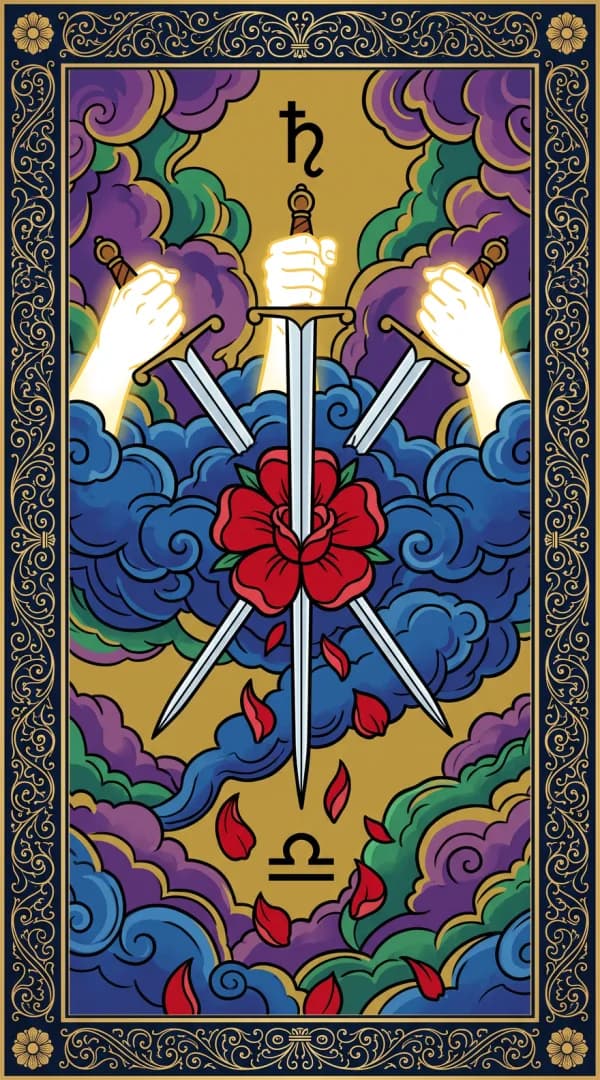
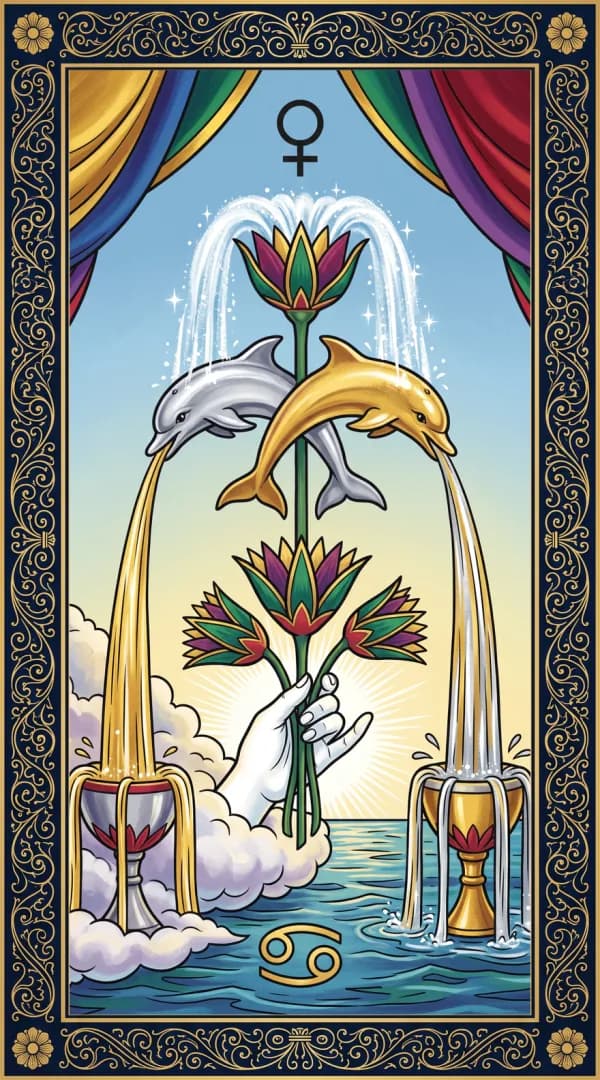
The Golden Dawn pair below prints those planets and signs right on the cards. There the heart is a red rose, cut by the middle blade.
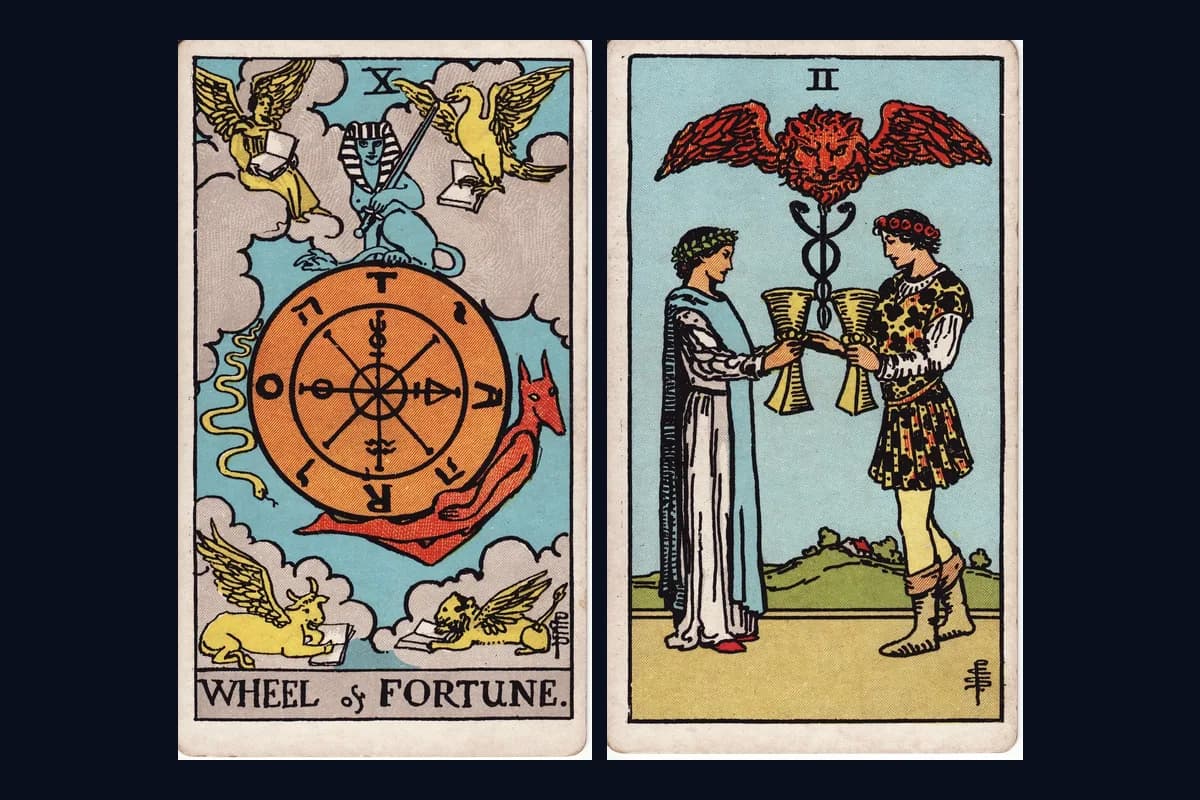
There's no Major Arcana card here and no court card, so two numbered cards keep this at ground level: particular words between particular people. Unlike the Wheel of Fortune and Two of Cups combination, where timing does the turning, this one turns on what gets said.
Cups are feeling. Swords are thought, and the words that come out of it. Aeclectic Tarot ties the Three of Swords to love triangles, then adds the catch: it's an Air card, so "what wounds the querent is not an action, but something said to them, or read by them." The love is real, someone is hurting, and the next move is a conversation, not a conclusion.
Count the figures. The Two of Cups holds two people. The Three of Swords holds none, only a heart, three blades and rain. Nowhere in this pair is there a third person. And nothing here comes labeled: nobody's name is on the cups, and the heart could be anyone's.
So what is the third sword? Tarot author T. Susan Chang reads the three swords as two parties plus the agreement between them: "The promise itself, in other words, is the third thing." A third person is one possibility, not the default, and no card can say either way.
Which have you said out loud, the love or the hurt? And which have you kept to yourself?
What it means when you're asking about someone else
Do they love me, but someone else too? The pair can't name names. The Two of Cups shows a real feeling, and the Three of Swords a hurt. Who else is involved, if anyone, isn't on either card. Theresa Reed of The Tarot Lady counts the Three of Swords among her love-triangle cards in a post on cheating, and adds: "Always remember: innocent until proven guilty." Three swords can also be harsh words, a broken promise, time apart or an old heartbreak one of you brought in.
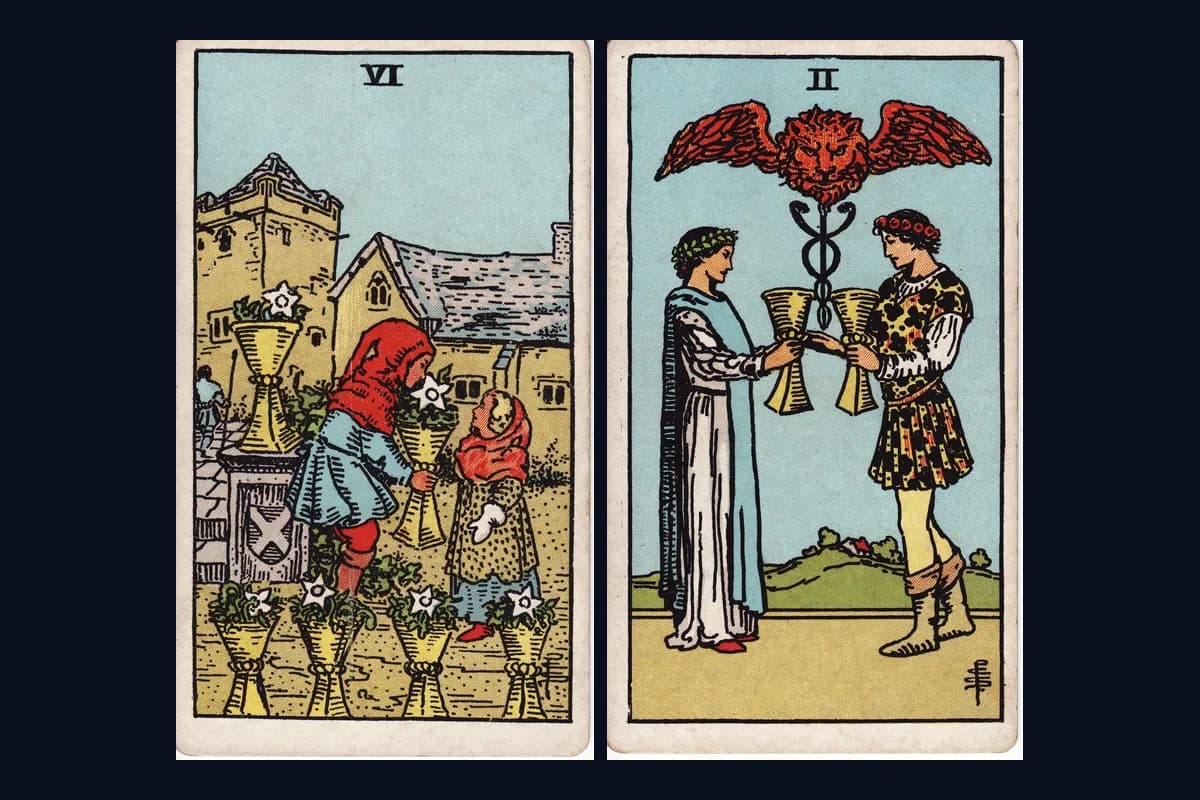
Before you suspect anyone, draw one more card and ask it a different question: what needs to be said? Going through their phone won't tell you that. And if the "someone else" is an ex they still mention, the Six of Cups and Two of Cups combination reads the pull of the past.
If raising your worry doesn't feel safe, that matters more than any card. Talk first with someone you trust, or a domestic violence helpline where you live.
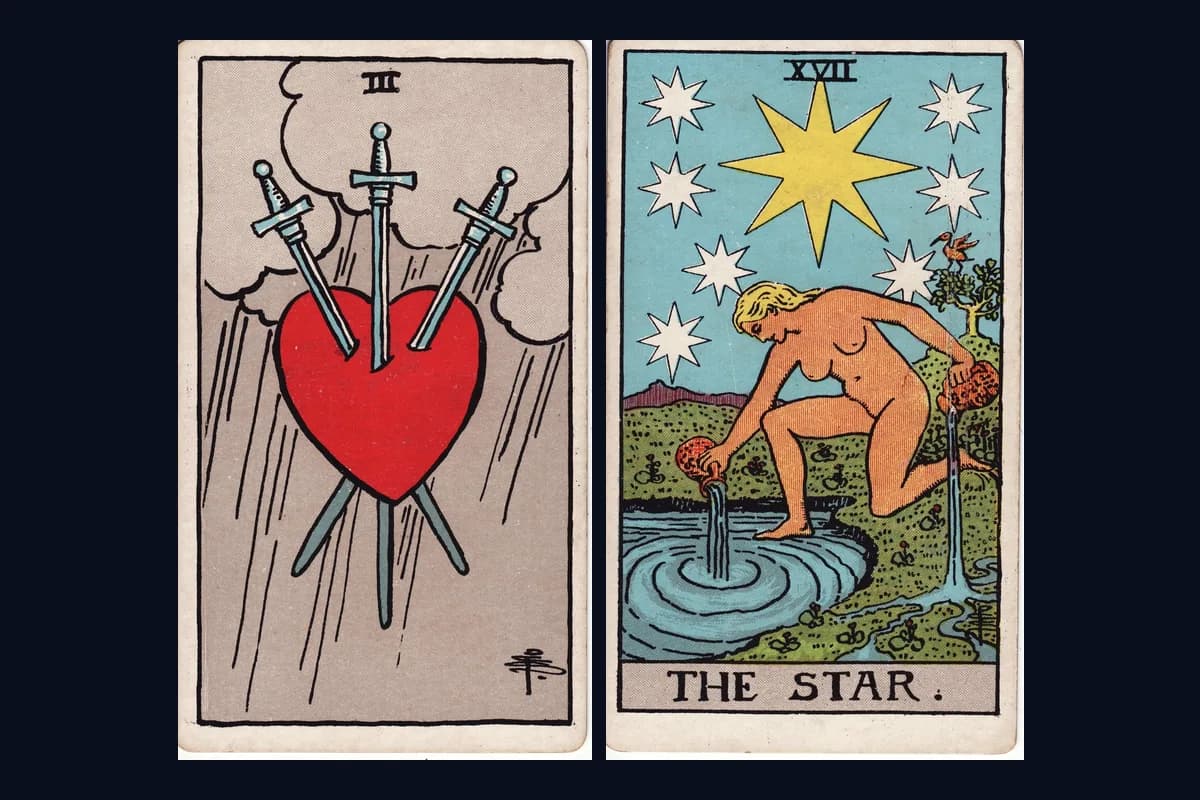
Sometimes "someone else" is a person they lost. A new love can sit right beside grief for an old one, and this pair can mean that too. The Three of Swords and Star combination stays with that grief.
If you're the one outside a couple, the Two of Cups isn't a promise they'll leave, or that they'll stay. The Three may be your own hurt: the waiting, the half answers. That wait has its own pair, the Knight of Cups and Two of Cups combination.
And if you have feelings for two people, the blades may be yours. Joan Bunning of Learning the Tarot allows for that: "It is also possible that you are contemplating hurting someone else."
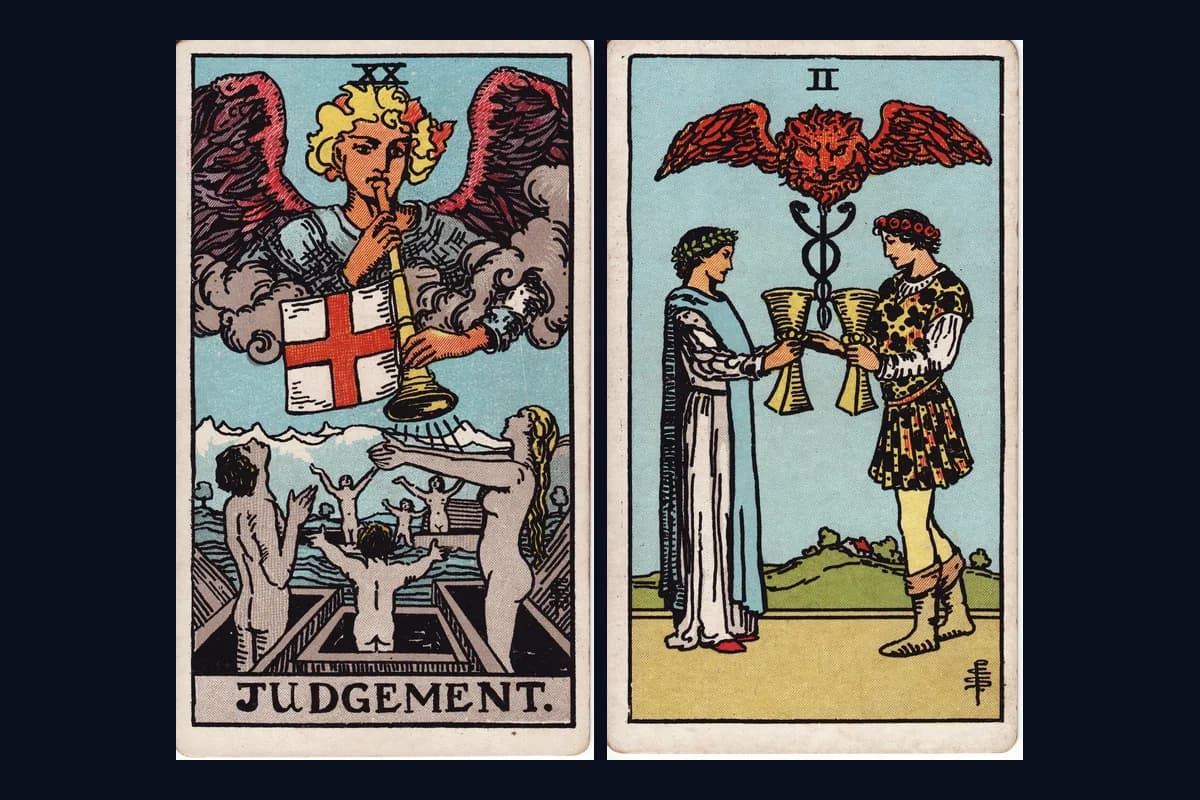
If it's already over, the pair holds the love and the break at once. Wondering whether they'll come back? The Judgement and Two of Cups combination weighs what a return would take.
In a business partnership, the Two of Cups is the deal. Waite called the card "Favourable in things of pleasure and business, as well as love." The Three of Swords is the cut across the table: a late payment, a decision one of you made alone. Put the terms in writing, then talk about who owes what.
In a Celtic Cross, Rachel Pollack's Seventy-Eight Degrees of Wisdom uses both cards in one example, a love reading with the Two of Cups as the Possible Outcome. The relationship still goes badly. If the Three of Swords sat in Hopes and Fears, card 9, she writes, it would show a fear of heartbreak that "has prevented the necessary emotional commitment."
Yes or no? Split the question. Is the feeling real? With the Two upright, yes. Is there someone else? This pair can't answer that in either order. Can the two of you get through it? With the Three of Swords first, it leans yes, if the hard thing gets said. With the Two first, not yet. A reversed Two makes it no for now, whichever comes first. None of it promises what anyone else will do.
Who in this reading hasn't said the hard thing yet? It might be you. What would your Three of Swords look like if its swords were the words still waiting to be said? That image belongs in your deck.
The wound first, or the pledge first
Three of Swords first, then Two of Cups: the hopeful order. Something hard gets said or found out, and what follows is love rebuilt on what's true, with them or with someone new. The second card shows a direction. It doesn't guarantee one. Moving in together once you've rebuilt? The Four of Wands and Two of Cups combination covers that step.
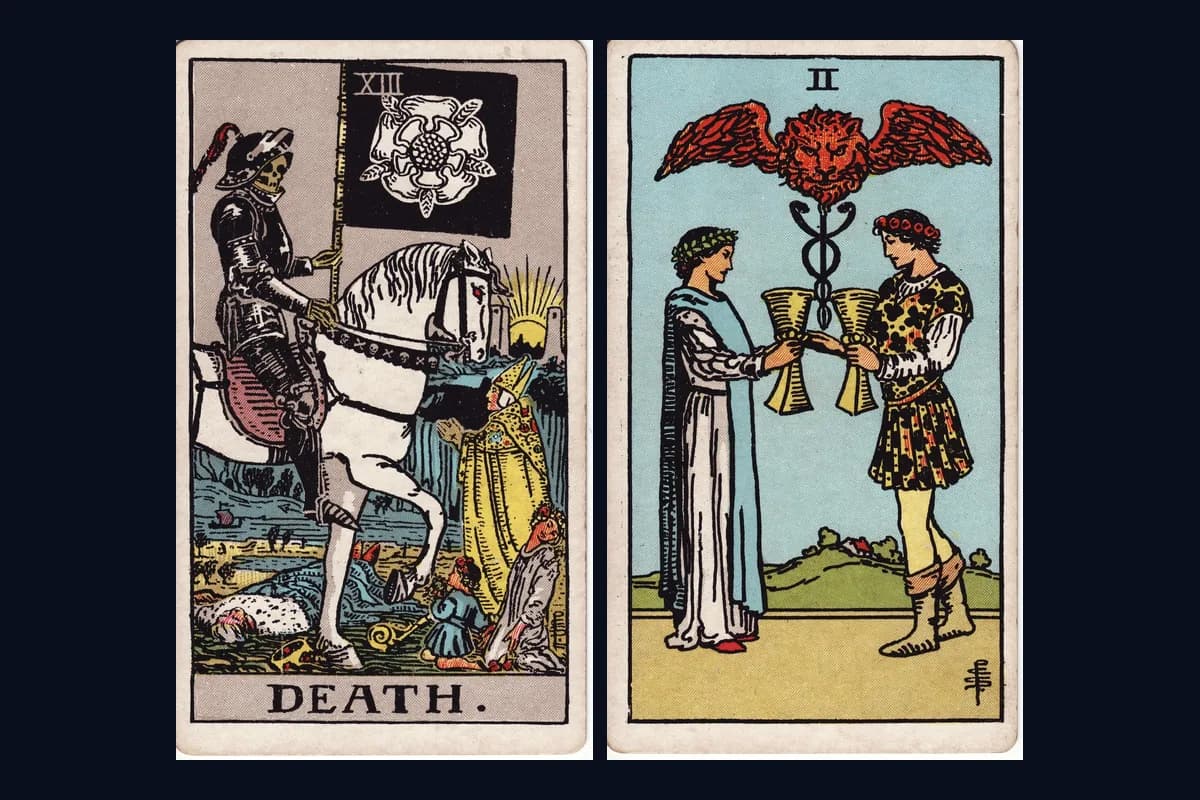
Two of Cups first, then Three of Swords: the cautionary order. A happy start, then a cut. This order doesn't predict a betrayal, but whatever's still unspoken is getting heavier. If an ending follows the Two instead, turn to the Death and Two of Cups combination.
In a three-card spread of past, present and future, the Three behind you with the Two now means you got through a hurt and you're rebuilding. The Two behind you with the Three now means the easy stretch is over. And if the Three lands in the future, treat it as a warning you can act on: speak up now, while the hurt is small.
Orientation matters too, if you read reversals. Waite's main Two of Cups entry has no reversed meaning; his list of extra meanings gives one word, "Passion." The usual modern reading is a bond out of balance. But the reversed Three splits readers. Theresa Reed sees healing: "The storm is parting and the silver lining arrives." Rachel Pollack sees the pain pushed away: "The healing process becomes blocked when we fight acceptance."
| Orientation | Reading |
|---|---|
| Both upright | Love and hurt both out in the open; the hard talk comes next |
| Both reversed | Hurt kept quiet in a relationship going through the motions; nobody's shouting, and that silence is the problem |
| Three upright, Two reversed | The hardest row: the wound is open, and the balance between you is off; one of you may be giving far more, and that's the first thing to say |
| Three reversed, Two upright | The most hopeful row: the sharpest pain is easing, unless it's being pushed away; the bond is still there to build on |
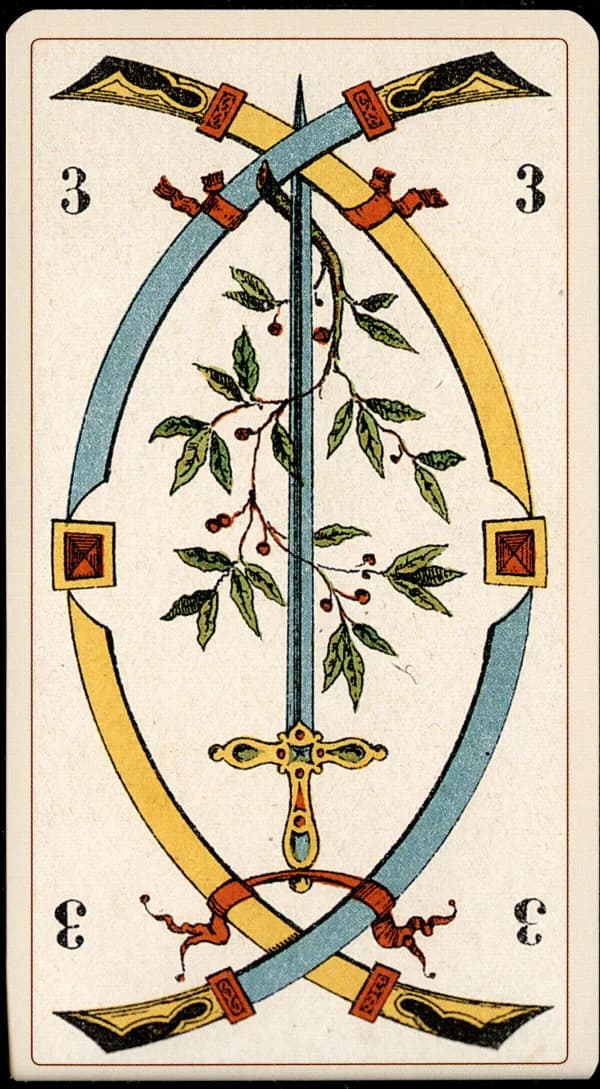
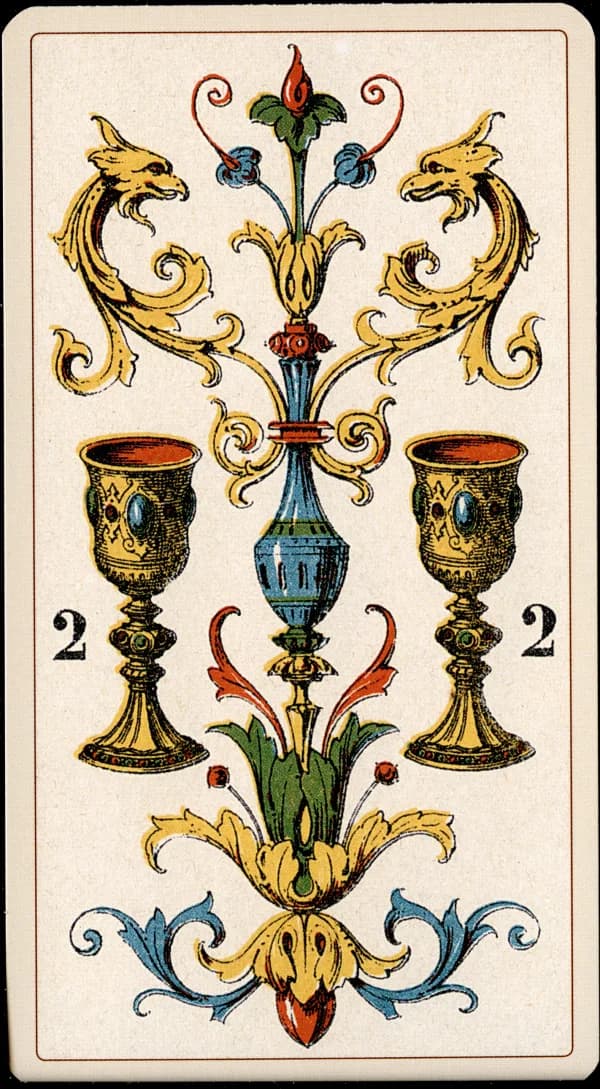
The Milanese pair below has no heart, no couple and no lion. Its red is trim: bands where the curved blades cross, berries on a branch, a flame-shaped bud over the cups.
Which card landed first, the heart or the cups? Does that order match the story you've been telling yourself?
What the sky adds to this reading
Book T, the Golden Dawn's tarot manual, gives each card from Two to Ten a planet and ten degrees of one sign, a slice called a decan. The Two of Cups holds the first ten degrees of Cancer, the Three of Swords the middle ten of Libra. And Saturn's strong there: astrologers call Libra its exaltation. So sorrow has the high ground in love's house. Robert Wang, author of The Qabalistic Tarot, reads Saturn without panic: "Its presence usually means pain and hardship but this should not be taken as evil."
The elements stay out of the fight. Book T calls Air, the Swords element, friendly with Water, the Cups element, so the two don't weaken each other.
On the Tree of Life, the Qabalah's map of ten spheres, every Two sits in Chokmah (Wisdom) and every Three in Binah (Understanding). Aleister Crowley names the path between them, Daleth, the Hebrew letter meaning door: "Daleth is the path leading from Chokmah to Binah." Daleth is also the Empress's letter, and the Empress is Venus's card. So the door between the Twos and the Threes belongs to the planet of love.
Cancer and Libra lie a square apart, 90 degrees, the angle astrologers link to tension. In 2027, Venus meets Saturn at hard angles from both cards' signs (dates in Universal Time). On July 25, 2027, Venus in Cancer squares Saturn in Aries. On October 4, 2027, Venus in Libra stands opposite Saturn. That October sky flips the cards' balance: Venus is at home in Libra, and Saturn is weak in Aries, its fall.
Astrologers read a Venus and Saturn opposition as a time when commitments and limits loom larger, in love and in money. An echo of your cards, not a verdict. No planet can tell you whether there's someone else in the picture. Start with a conversation.
In your relationship or your business partnership right now, who's setting the terms?
The five hiding in this pair
Add the Three of Swords to the Two of Cups and you get 5, already a single digit. That's the Hierophant. Adding card numbers is a reader's habit. Not a Golden Dawn rule.
Rachel Pollack sets the Fool apart and sorts the rest of the Major Arcana into three rows of seven, with the Hierophant in the first, the row about love, authority and learning. On the Rider-Waite-Smith card, he sits in a red robe above two kneeling figures. So the third figure this pair adds is a witness, the one who hears what two people promise each other out loud. The Hierophant and Two of Cups combination reads that promise up close.
The better five comes from the Two's own suit. On the Five of Cups, a cloaked figure looks at three spilled cups while two more stand behind him. Pollack has seen it linked to a Three, of Cups or of Swords. She writes that "the two cups standing have often referred to the Two of Cups, that is, support from a lover or friend." And Waite counts the cups: "It is a card of loss, but something remains over; three have been taken, but two are left." The hurt isn't all there is.
The figure in the Five of Cups hasn't turned around yet. If you turned around right now, what would you find still standing?
Questions readers ask about this combination
Does the Three of Swords and Two of Cups mean a love triangle?
No card can show a love triangle. The Two of Cups holds two people, and the Three of Swords a pierced heart, but neither card names a third person. You're looking at real love and real hurt. Some readers count the Three of Swords among love-triangle cards, yet the hurt can also be words, distance or an old wound. If you're worried, ask plainly. If asking feels unsafe, talk to someone you trust or a helpline first.
What does the Three of Swords and Two of Cups say about their feelings?
Read the Two of Cups as a real feeling and the Three of Swords as something about it that hurts. Whether that feeling is exclusive, or who else anyone cares for, isn't on either card. With the Three first, the feeling follows the hurt, which reads as repair, if the hard thing gets said. With the Two first, the hurt arrives inside the feeling. Only the other person can answer for themselves, so ask, and watch what they do.
What does it mean when the Three of Swords and Two of Cups are both reversed?
Both reversed, the Three of Swords and Two of Cups read as hurt kept quiet inside a relationship going through the motions. Nobody is shouting, and that silence is the problem. It isn't evidence of anyone else. Not every reader uses reversals, and Waite's main entry for the Two of Cups gives no reversed meaning, so hold this reading loosely. The useful step is the same as with both upright: say the hard thing out loud.
What planet connects the Three of Swords and the Two of Cups?
Venus. The Golden Dawn put the Two of Cups under Venus in Cancer and the Three of Swords under Saturn in Libra. Venus rules Libra, so the heartbreak card sits in love's own house. The elements get along too: the Golden Dawn's manual, Book T, calls Air, the Swords element, friendly with Water, the Cups element. The strain comes from Saturn.
Is the Three of Swords and Two of Cups a yes or no combination?
It depends on the question. Is the feeling real? Yes, with the Two of Cups upright. Is there someone else? The pair can't answer that in either order. Can the two of you get through it? With the Three of Swords first, it leans yes, if the hard thing gets said; with the Two first, not yet. A reversed Two makes it no for now, whichever comes first. None of it promises what anyone else will do.