Tarot Card Combinations
The Tower and The Star
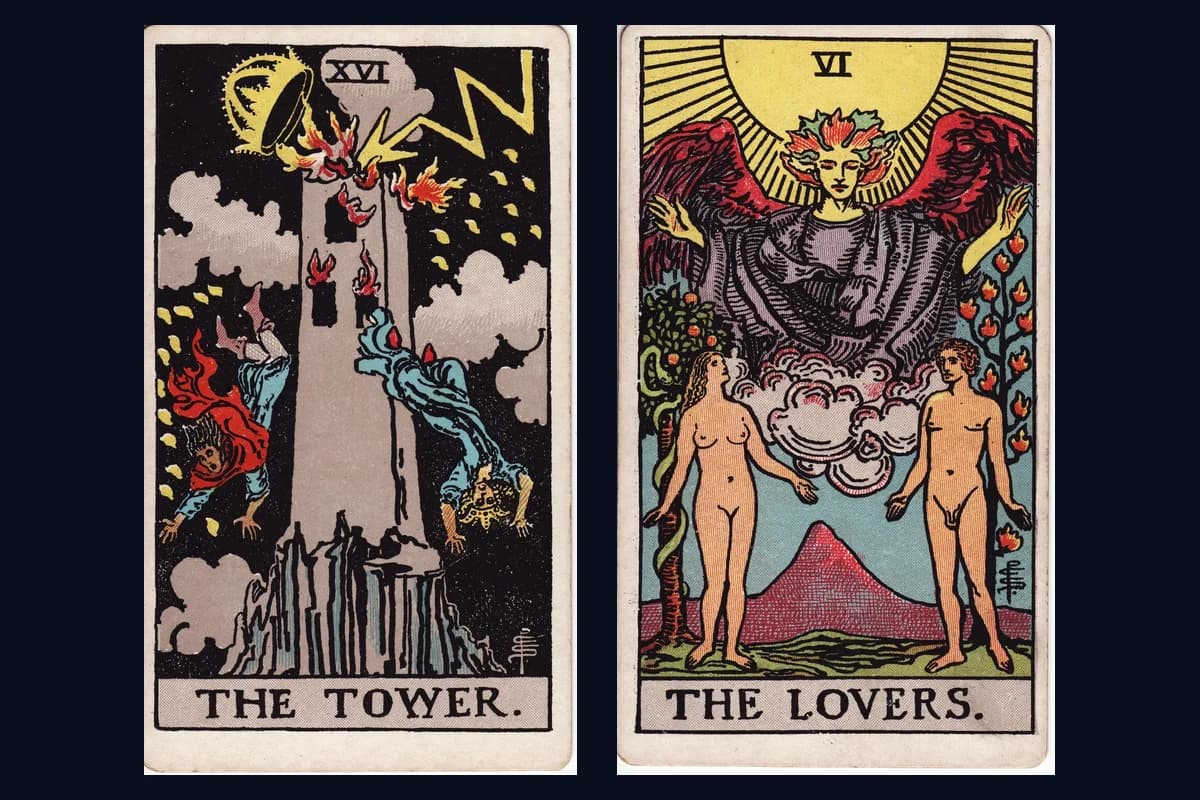
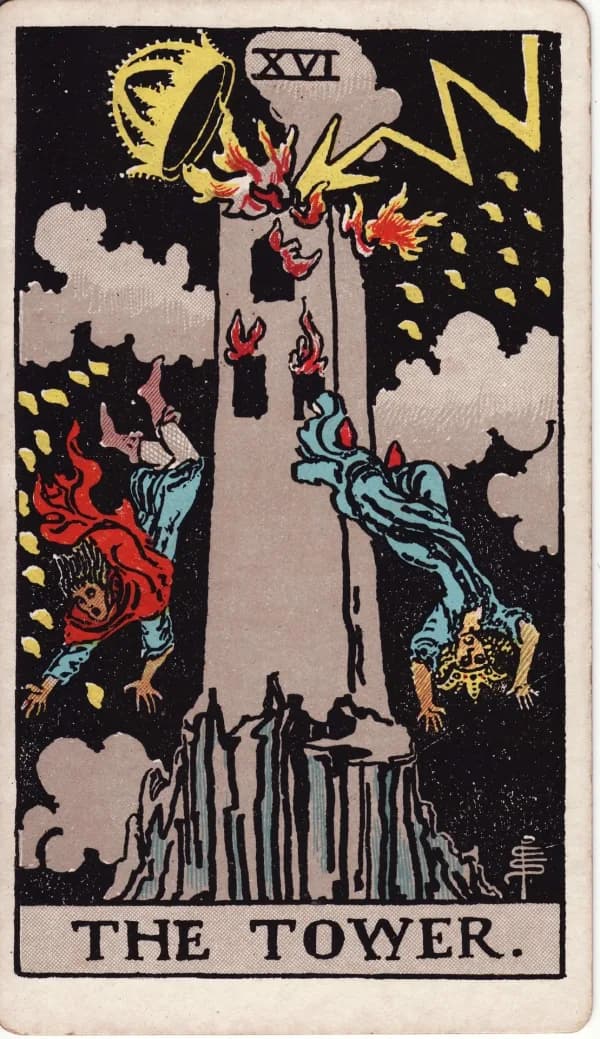
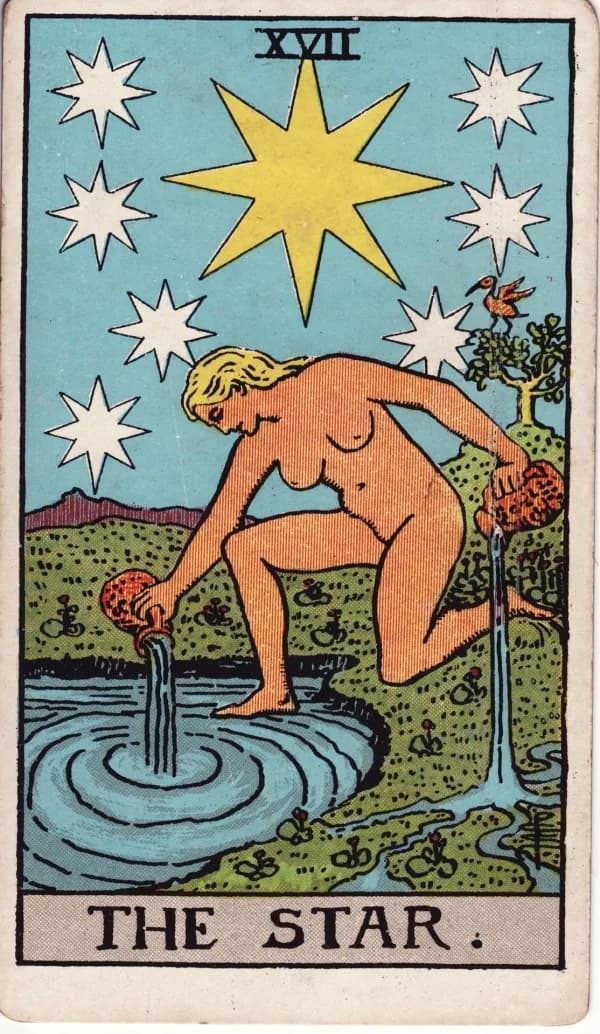
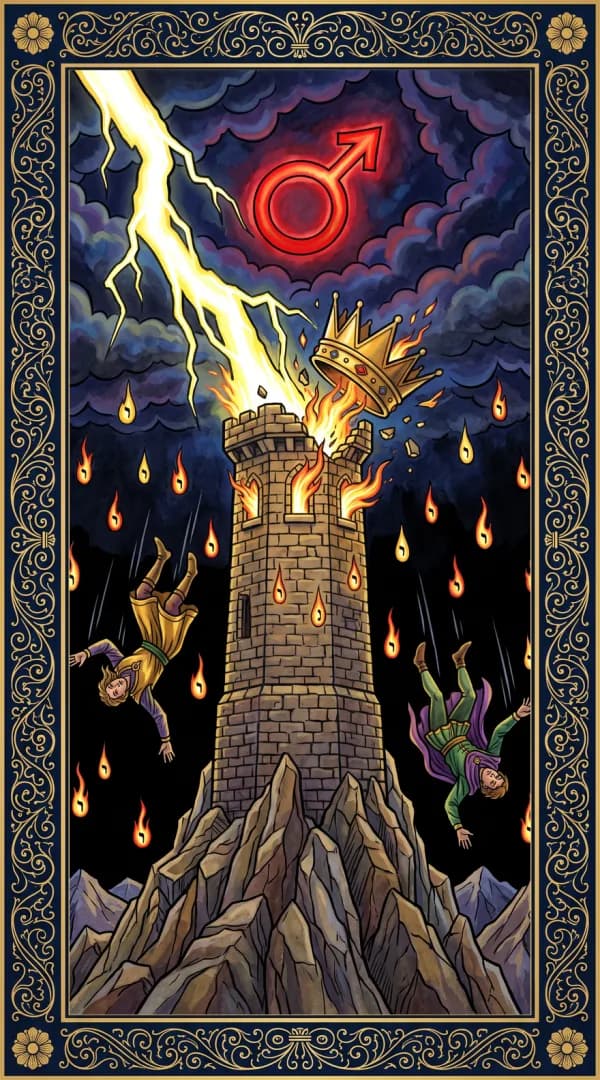
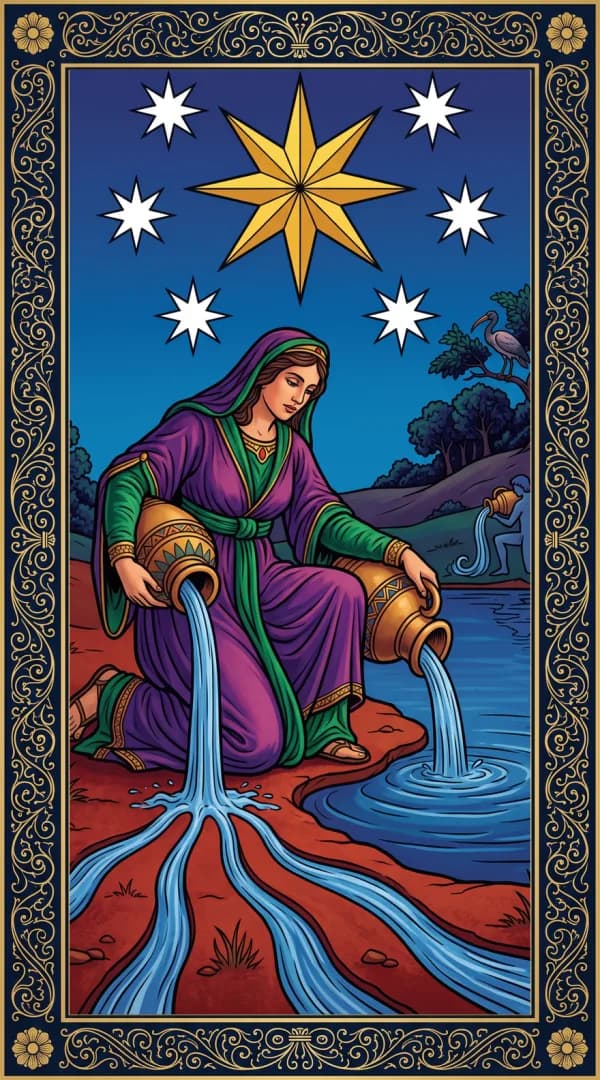
The Tower and Star tarot combination signals hope on the far side of a collapse. Against a black sky, lightning knocks the crown off a tower. Two people fall headfirst. The next card's sky is pale blue, and under its one great star a naked woman kneels at a pool, pouring water. If you're asking whether the worst is over, notice what she isn't doing: rebuilding the tower.

Climate scientist, ashtanga practitioner, and advocate for human rights and LGBTQIA+ equality.
What each card means on its own
Put the two Rider-Waite-Smith cards side by side and look at the skies first. The Tower's is black. The Star's is pale blue. It's the same yellow in both: the bolt that breaks the tower, and the great star over the kneeling woman.
The Tower (XVI) stands on a jagged gray peak. The bolt comes in from the right and knocks a gold crown off the top. Fire bursts from the windows, and two people fall headfirst, one in a red cloak, one still wearing a crown. The Golden Dawn gave the card to Mars and to Peh, the Hebrew letter for mouth.
A.E. Waite, whose deck Pamela Colman Smith illustrated, called it "a card in particular of unforeseen catastrophe." He also wrote that the card's reference is "to a House of Falsehood." Plenty of readers stop there: the tower was false, so it had to go. Sometimes that fits. But look at the word he put before catastrophe. Unforeseen. Nobody saw it coming, and nobody on this card chose the lightning.
Aleister Crowley's Thoth deck reads the fall almost as a rescue. In The Book of Thoth he says the destruction of the tower's garrison, the people falling from it, may mean "their emancipation from the prison of organized life, which was confining them." They're being let out.
Now here's the Star (XVII).
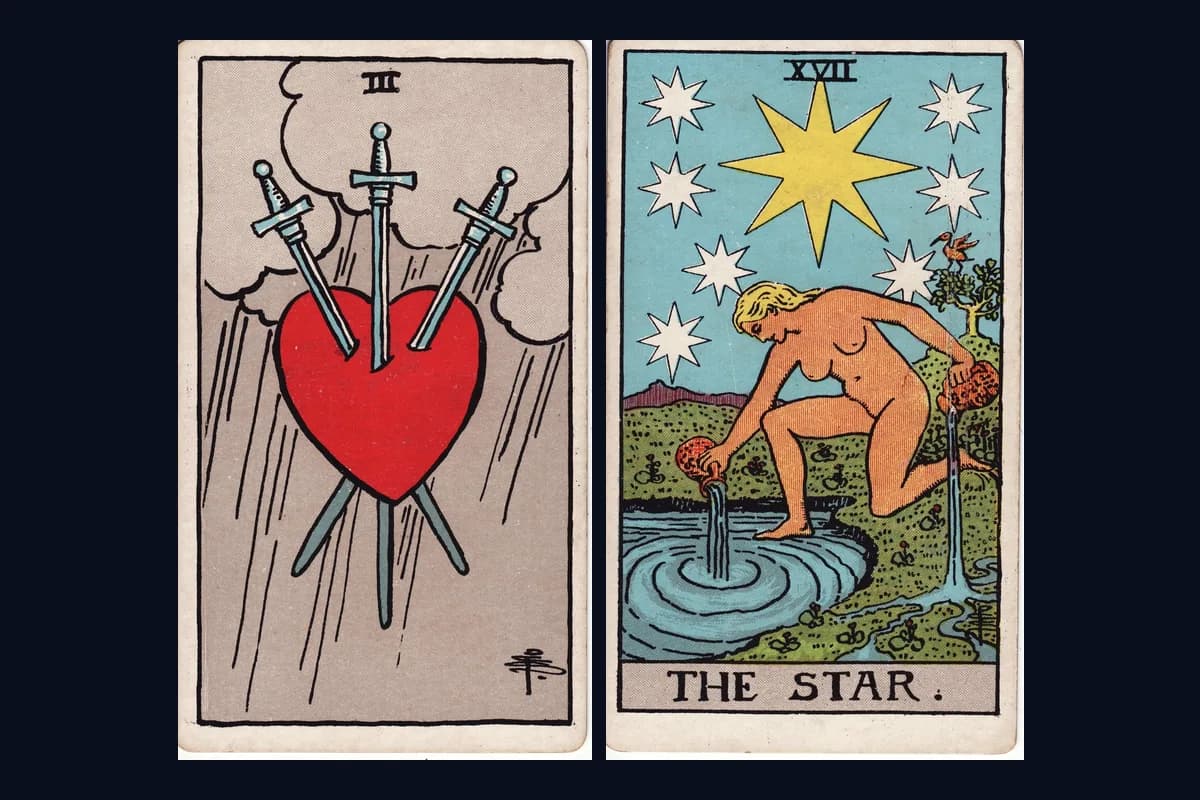
One great yellow star shines among seven small white ones, every one of them eight-pointed. A naked woman kneels between a pool and the grass. Waite placed her exactly: "Her left knee is on the land and her right foot upon the water." She's pouring from two red jugs, one into the pool and one onto the land. The Golden Dawn gave the card to Aquarius and to Tzaddi, a letter Robert Wang, author of The Qabalistic Tarot, glosses as a fish hook.
Rachel Pollack opens her pages on the Star in Seventy-Eight Degrees of Wisdom with four words: "After the storm, peace." The Golden Dawn's own manual, Book T, is more careful. It lists the Star as "Hope, faith, unexpected help." And it adds dreaminess and "deceived hope" as the other side of the same card.
Somewhere between these two cards, the falling stops and the kneeling starts. Which side of that moment are you on today?
What the Tower and the Star mean together
Both cards open on hardship in the divinatory meanings Waite collected. The Tower's list is what you'd expect: "Misery, distress, indigence, adversity, calamity, disgrace, deception, ruin." The Star's is the surprise. It opens with "Loss, theft, privation, abandonment" and gives hope only as another reading. He was setting two older traditions side by side. Still, in his list, the card of hope starts in loss.
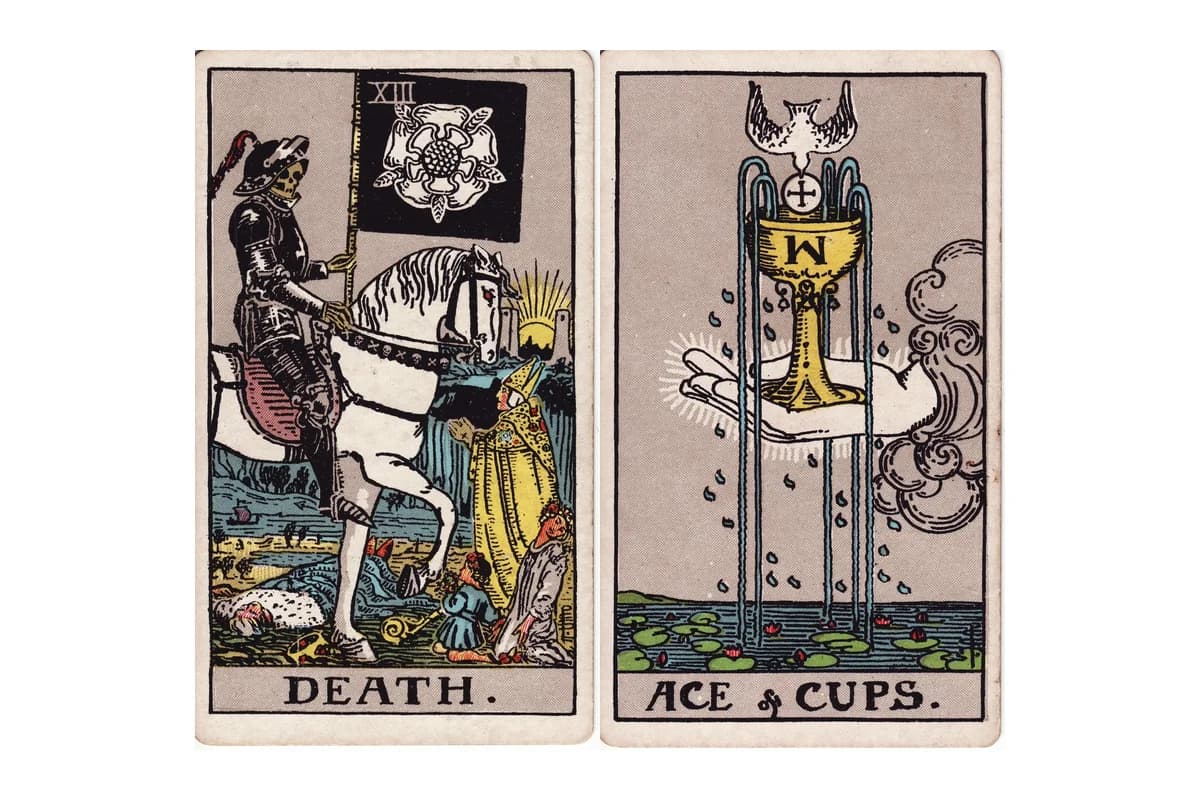
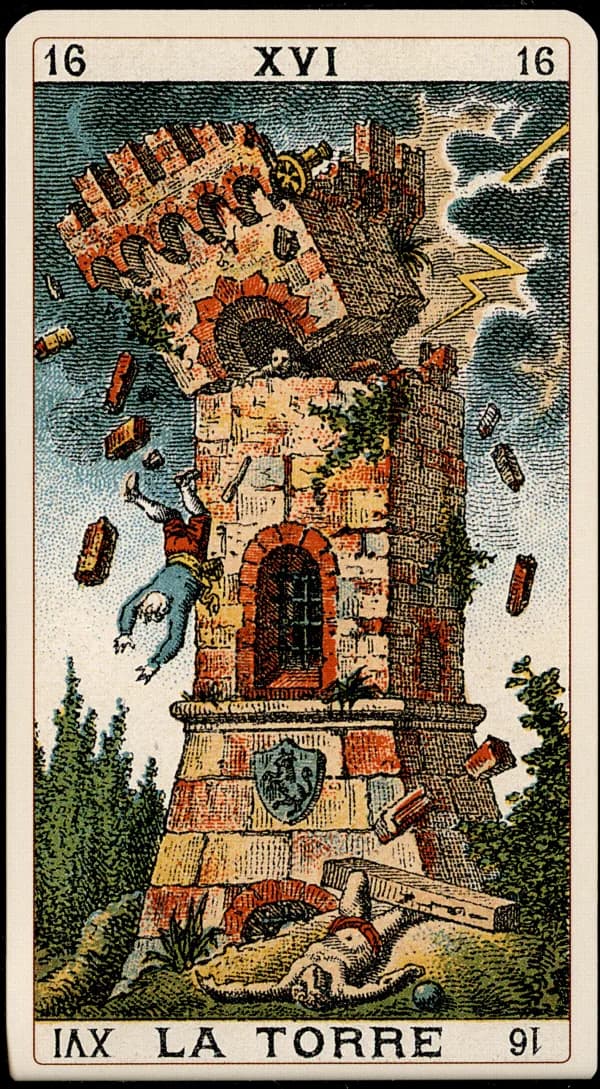
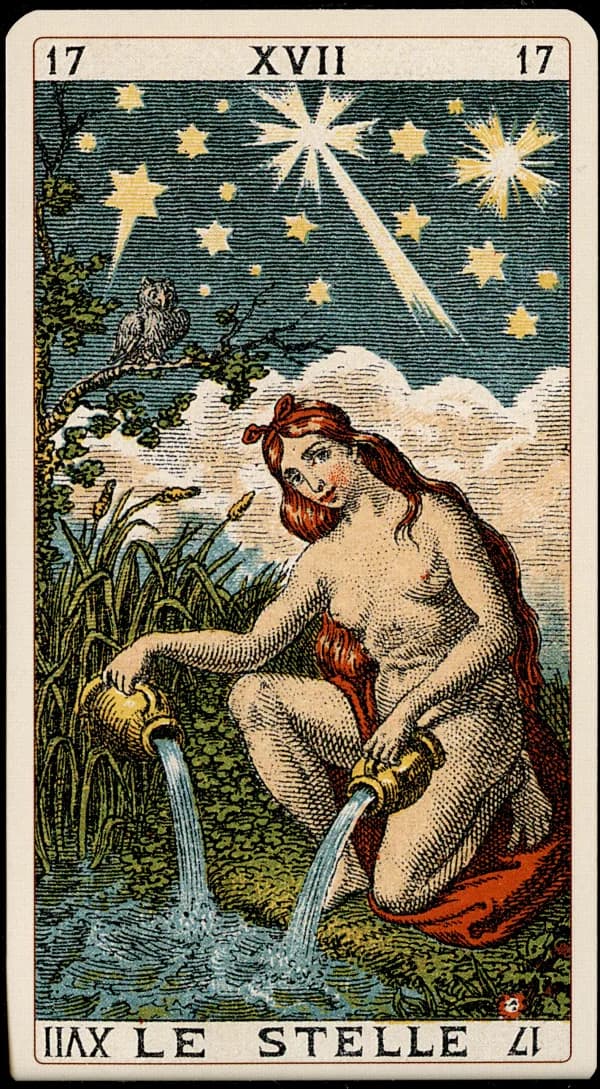
Two Major Arcana cards in one reading point to a big theme, not a passing mood, though only you can say how big. And these two are neighbors, XVI and XVII in all three decks here, so no card stands between the fall and the first light. If your own ending came slowly rather than all at once, the Death and Ace of Cups combination tells that version of the story.
Meg Jones Wall, writing in The Rebis, puts what the Star brings into one word.
A balm soothes a wound. It doesn't close it. So does the Star after the Tower mean the worst is over? Usually yes, if the Tower sits in your past: the Star is what comes after the fall. If it sits in your present, you're still falling, and the Star points past it. In a future position, the Star follows a Tower that hasn't hit yet.
But there's a limit: with the Tower behind you, the Star after it means the fall is over, not the work. Look at what the woman is doing. Pouring water onto the land. Joan Bunning, author of Learning the Tarot, says the Star "is not a card of practical solutions or final answers."
In his entry on the World card, Waite said Truth belongs "more properly" to the seventeenth card. On the Star itself, he wrote that for "the majority of prepared minds," the kneeling woman appears as "the type of Truth unveiled," pouring out what she has. One card knocks down what stood. The next kneels in the open with nothing hidden. What you get after the Tower is a clearer look at what's left.
What came down in your life, and what can you see now that you couldn't while it was still standing?
Where the Tower sits tells you whether it's over
In a Celtic Cross, find the Tower first. Waite's instructions call the card behind you "the influence that is just passed, or is now passing away." The card before you shows the influence "that is coming into action and will operate in the near future." So the Tower behind you with the Star before you is as close as this pair gets to a plain all clear. But read Waite's wording closely. Passed, or passing. The tail end of a Tower can still be with you.
In a three-card spread, the past, present and future positions carry the answer. The Tower in the past and the Star in the present: the drop is behind you, and you're already in the recovery, even if it doesn't feel like much yet. The Tower in the present and the Star in the future: you're in the middle of it, and the reading points past it. Either way, the spread puts things in order and says nothing about when.
In love readings, the Tower can be a breakup, a crisis or a discovery you can't unsee. The Star is you, starting to feel like yourself again. Labyrinthos reads the upright Star after a breakup as a sign that "you are slowly rebuilding your confidence so that you can move on." For a couple still together, the same page sees a possible time of healing. The Rider-Waite-Smith Star shows one figure, so the pair points to your own recovery first, whatever happens to the relationship. If what broke was your heart, not your whole life, the Three of Swords and Star combination is closer to your story.
For career questions, the Tower can be a layoff or a restructuring nobody saw coming. The Star gives you back your nerve. As Pollack puts it, "the Star is not really a card of action, but of inner calm." It gets you ready to apply again. It doesn't send the applications.
For health questions, read the pair as the emotional arc around a scare, not a forecast. The cards are not a medical opinion, and if your question is about your body, talk to someone who went to school for it.
If you're asking yes or no, order decides. Tower first, then Star: yes to building something new, though the pair doesn't promise the old version comes back. Star first, then Tower: no, not as things stand. You can keep the hope, but what it rests on will be tested.
Think of the ground where your own tower stood, in love or at work or somewhere harder to name. If your Star knelt there, what would she pour onto it? That image belongs in your deck.
The Star after the Tower, or before it
Order matters a great deal with this pair. Waite wrote that card meanings are "reduced, accentuated or subject to modification and sometimes almost reversal by their place in a sequence." Almost reversal. That's close to what happens here.
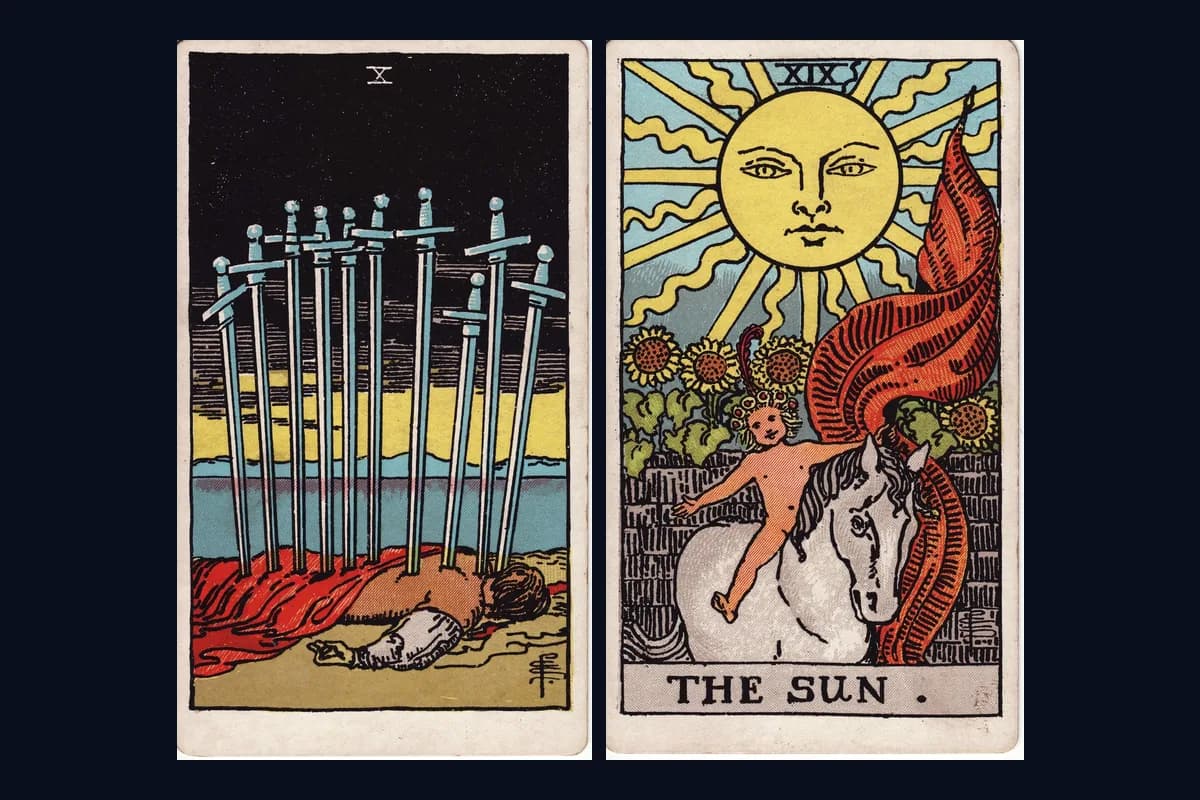
Tower first, then Star is the order the deck itself runs in, XVI to XVII: the fall, then hope. This is the hopeful reading. But after the Star comes the Moon, with its dim path between two towers, and only then the Sun. If fear comes back after that first hope, you're not back at the Tower. When the Sun does arrive, the Ten of Swords and Sun combination reads it beside a bottom already reached.
Star first, then Tower runs the sequence backward, and that's the cautionary reading. Calm first, then the crack. Sometimes the lightning is heading for a part of your life that feels settled. Or your hope rests on something untested. The calm still counts, and the hope may have to outlast the thing you pinned it on. An early warning leaves you time to soften the landing.
Orientation matters too. The Tower's orientation tells you whether the upheaval is happening to you or starting with you, and the Star's, whether hope is within reach now or still on its way. Not every reader uses reversals, and the reversed rows follow modern meanings:
| Orientation | Reading |
|---|---|
| Both upright | A sudden fall and the first calm; the Tower's position shows whether the fall is behind you, under way or still ahead |
| Both reversed | A smaller shake-up you may be holding off, and hope that feels far away; it's quieter, not hopeless, and that held-off change is the place to start |
| Tower upright, Star reversed | The blow is real and hope hasn't caught up yet; lean on the people around you, and don't read the delay as a verdict |
| Tower reversed, Star upright | A shake-up you start yourself, or a milder one; hope is already within reach, so the change can happen on your terms |
If hope has felt far away for weeks rather than days, tell someone who knows you.
In your spread, did the lightning come first, or the star? If it was the star, what could you get ready now, while things are still calm?
What the sky adds to this pair
The Golden Dawn gave the Tower to Mars and the Star to Aquarius, the fixed Air sign. One card is a planet, which moves. The other is a sign, a stretch of sky the Sun comes back to every year. The Tower is an event. The Star is a season.
In elemental dignities, the Golden Dawn's rules for how neighboring cards affect each other, the Tower's Mars counts as Fire and the Star's Aquarius as Air. Book T states the rule: "Air is friendly with Water and Fire, and Fire with Air and Earth." That rule covers the suits, and readers extend it to the Majors by planet and sign.
But friendly doesn't mean gentle. Mary K. Greer explains on her tarot blog that with friendly elements, each card will "increase the power and strength of the other, but whether this is good or bad depends on the specific cards." So the shock lands in full. The hope, too.
The Star's sign also holds a small version of this pair's story. Ancient astrologers split each sign into three decans (ten-degree slices), and the Golden Dawn gave all three of Aquarius's to the Swords. In order, they're the Five (the Lord of Defeat), the Six (the Lord of Earned Success) and the Seven (the Lord of Unstable Effort).
Book T's reading of the Six opens with "Success after anxiety and trouble." In the Rider-Waite-Smith deck, that's the ferryman poling his passengers to the far shore. Then the Seven, the last decan, describes "yielding when victory is within grasp," just short of the shore. If the Six is where you are, the defeat is behind you and the crossing is under way. The risk after that is running out of strength.
Mars, the Tower's planet, turns retrograde on January 10, 2027, and turns direct on April 1, 2027; in between, it appears from Earth to drift backward against the stars. Astrologers read a Mars retrograde as Mars's force turned inward, a time for going back over plans. All of Aquarius season fits inside that retrograde: the Sun enters Aquarius on January 20, 2027 (Universal Time), and stays until February 18, 2027.
On February 6, 2027, an annular solar eclipse falls at the New Moon in Aquarius. Along a narrow track, it leaves a ring of light around a dark disk. If you pull this pair during that Aquarius season, the sky is echoing your cards. It isn't answering for you.
If the Star's three Swords were a map of the months since your Tower, which one would you be standing on: the defeat, the crossing or the last stretch?
What sixteen and seventeen add up to
Add the Tower's 16 to the Star's 17 and you get 33. No Major Arcana card carries that number.
Numerologists call 33 a master number, one of three (with 11 and 22) that they leave whole instead of adding their digits. But to get a card, tarot readers break that rule and keep adding. 3 + 3 = 6. The Lovers. The Tower and Lovers combination adds up to 22, the master number just below this one. If sums like this aren't part of how you read, set them aside. Nothing else hangs on them.
Read the Lovers here as a choice. The older Marseille card shows a young man standing between two women, and readers have long seen him choosing. After the fall and the first hope, the card hidden in their sum is a decision about what you'll build. Pollack, writing about the Tower, pairs it with the Lovers: "We must learn to use all experience, the Tower as well as the Lovers."
And the Hebrew letters carry the story onto the Tree of Life, a Kabbalistic map of ten spheres joined by twenty-two paths. The Golden Dawn put one Major Arcana card on each path. The Tower's path, Peh, runs sideways from Netzach, the sphere called Victory, to Hod, the sphere of reason. The Star's path, Tzaddi, runs down from that same sphere, Victory, to Yesod, which Wang translates as the Foundation. Read down the Golden Dawn's Tree, and the Star is the road that ends at a foundation.
The Tower made the first choice for you. What's the next one you get to make yourself?
Questions readers ask about this combination
Does the Star after the Tower mean the worst is over?
Usually, yes: the Star after the Tower means the fall has happened, if the Tower sits in your past. If it sits in your present, you're still falling, and the Star points past it. In a future position, the Tower hasn't hit yet. The pair doesn't say how long recovery takes, or promise that what fell comes back. With the Star first, it's a calm that will be tested, which isn't the same as losing it.
What does the Tower and the Star mean in a love reading?
In a love reading, the Tower and the Star describe a sudden break, a crisis or a hard discovery, then the first stretch where you feel like yourself again. For a couple still together, the Star can mean a time of healing after a rough patch. The Rider-Waite-Smith Star shows one figure, so the pair points to your own recovery first. It doesn't forecast a reunion, and it doesn't rule one out.
What does it mean when the Tower and the Star are both reversed?
With the Tower and the Star both reversed, the shake-up is smaller, maybe one you're holding off, and hope feels far away for now. It's a quieter version of the pair, not a hopeless one, and that held-off change is the place to start. If hope has felt far away for weeks rather than days, tell someone who knows you. Not every reader uses reversals.
What element connects the Tower and the Star?
Fire and Air connect the Tower and the Star. The Golden Dawn gave the Tower to Mars, a fiery planet, and the Star to Aquarius, the fixed Air sign. In elemental dignities, the Golden Dawn's rules for how neighboring cards affect each other, Fire and Air are friendly, which means each makes the other stronger. So neither card softens the other: the shock lands in full, and so does the hope.
Is the Tower and the Star a yes or no combination?
The Tower and the Star give an answer that depends on which card comes first. With the Tower first, it's a yes to building something new, though the pair doesn't promise the old version comes back. With the Star first, it's no, not as things stand: you can keep the hope, but what it rests on will be tested. Neither order puts a date on it.