Tarot Card Combinations
Death and the Ace of Cups
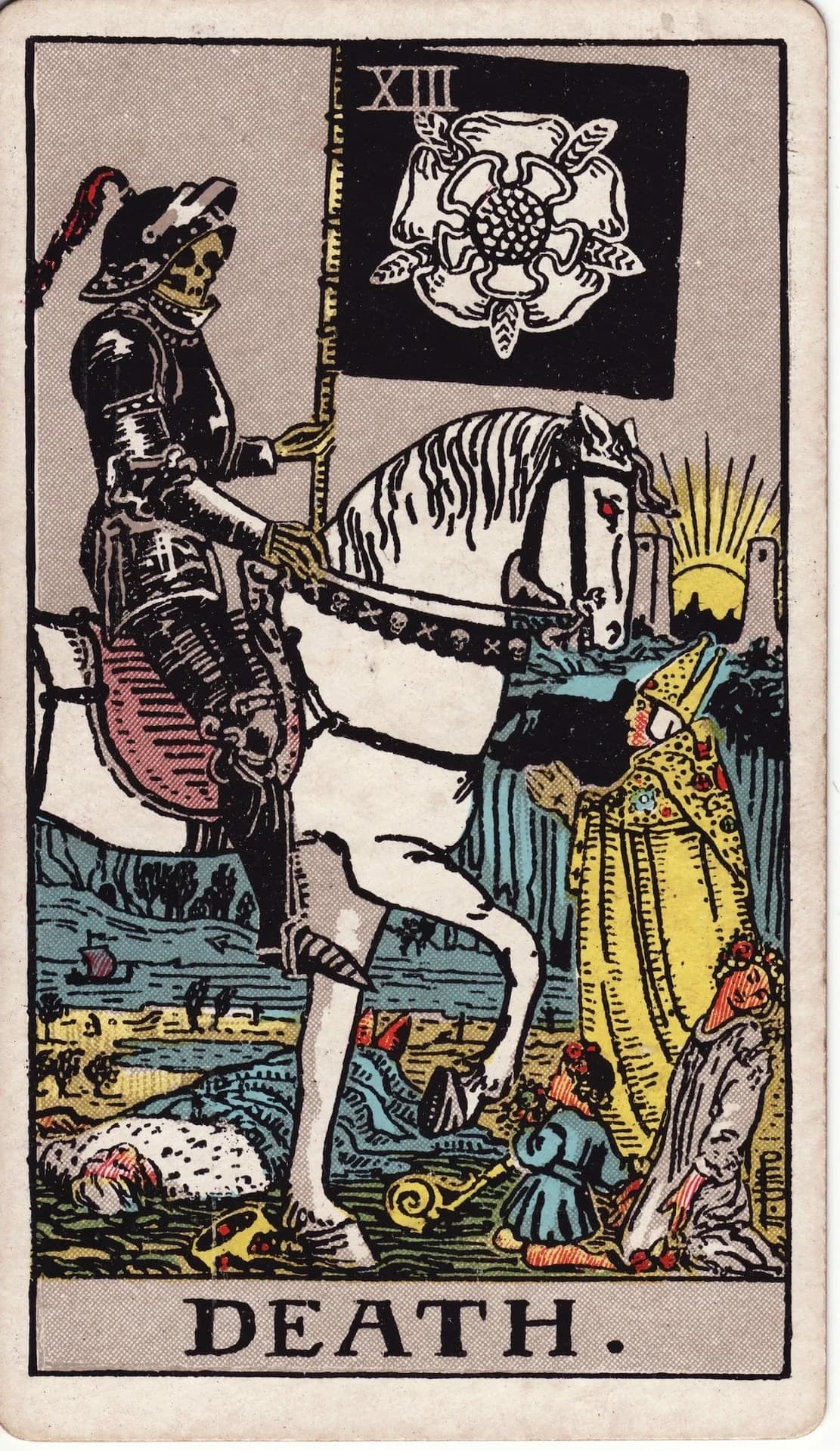
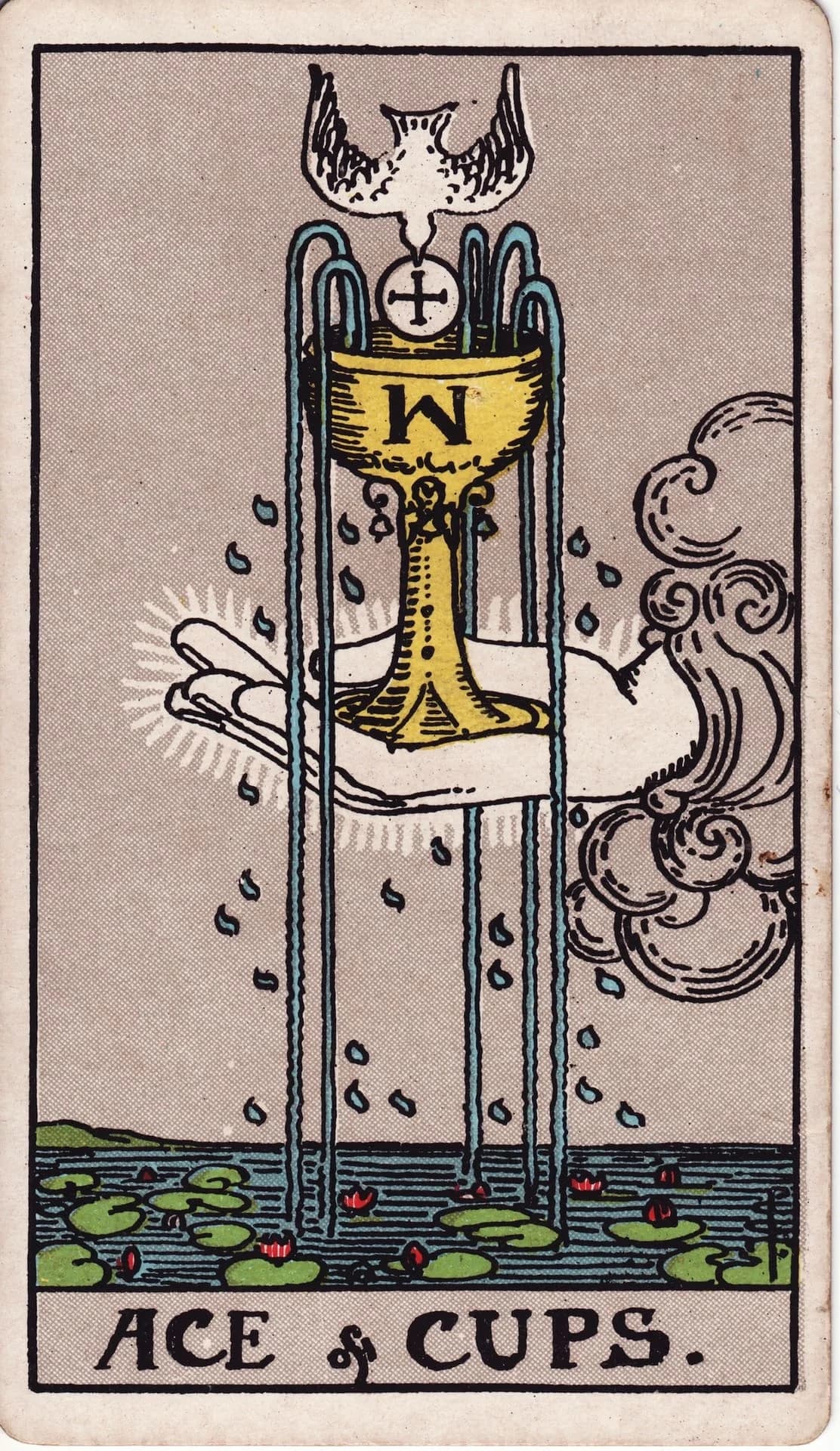
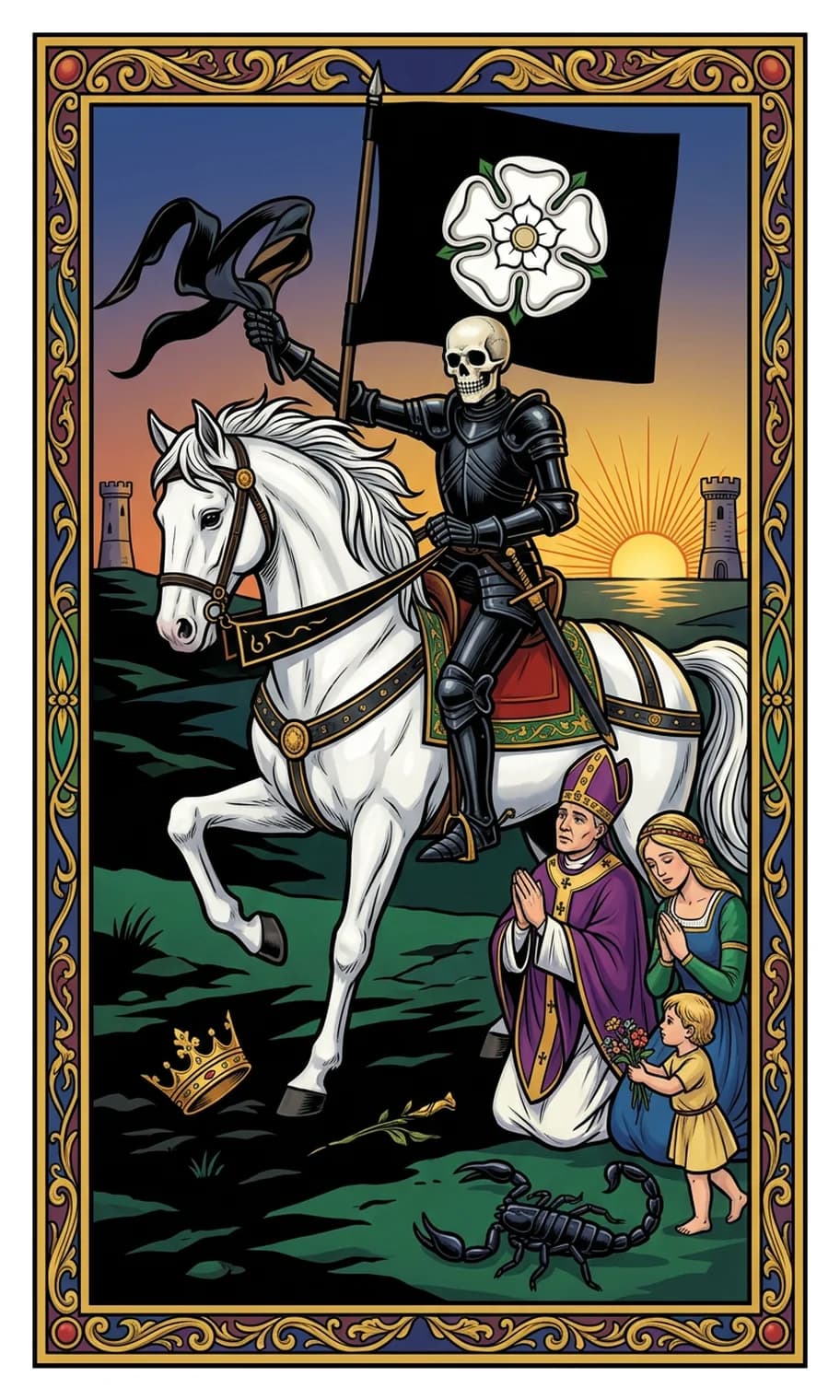
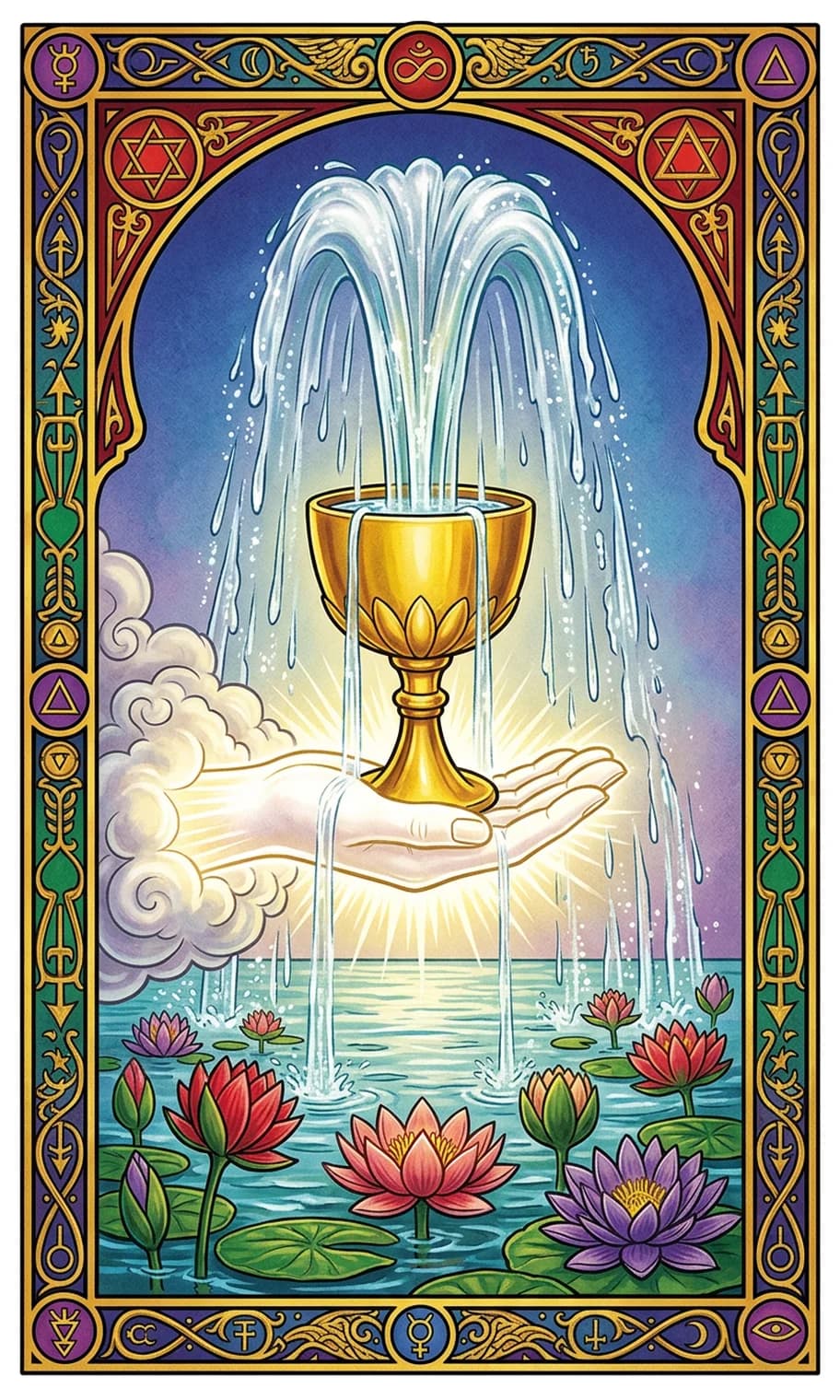
A skeleton rides across a still field. A king has fallen. A child holds out flowers. And from a cloud, a hand extends a golden cup already overflowing, water pouring earthward toward a sea of lotus blossoms. When these two cards land side by side in your reading, they tell one story: something had to end so something real could begin.

Climate scientist, ashtanga practitioner, and advocate for human rights and LGBTQIA+ equality.
What each card actually means
Look at the Rider-Waite-Smith Death card for a moment. Really look. A skeleton in black armor rides a white horse through a field where a king already lies fallen. A bishop in ceremonial robes stands facing the rider directly. A maiden turns her head away. And a small child holds out a bouquet of flowers with no fear at all. Behind them, a river winds toward the horizon, where the sun is rising between two towers.
A.E. Waite described what he built into this image: "The veil or mask of life is perpetuated in change, transformation and passage from lower to higher." The white horse represents purity. The black flag bears a five-petaled white rose, what Waite called "the Mystic Rose, which signifies life." And that sunrise between the pillars? He named it "the sun of immortality." Every detail in this card points forward, not backward.
But Rachel Pollack, whose Seventy-Eight Degrees of Wisdom remains one of the most respected tarot texts ever published, pushed the reading further. She argued that Death "does not actually refer to transformation. Rather, it shows us the precise moment at which we give up the old masks and allow the transformation to take place." That distinction changes everything. Death isn't the change itself. It's the breath before it. The moment you stop holding on.
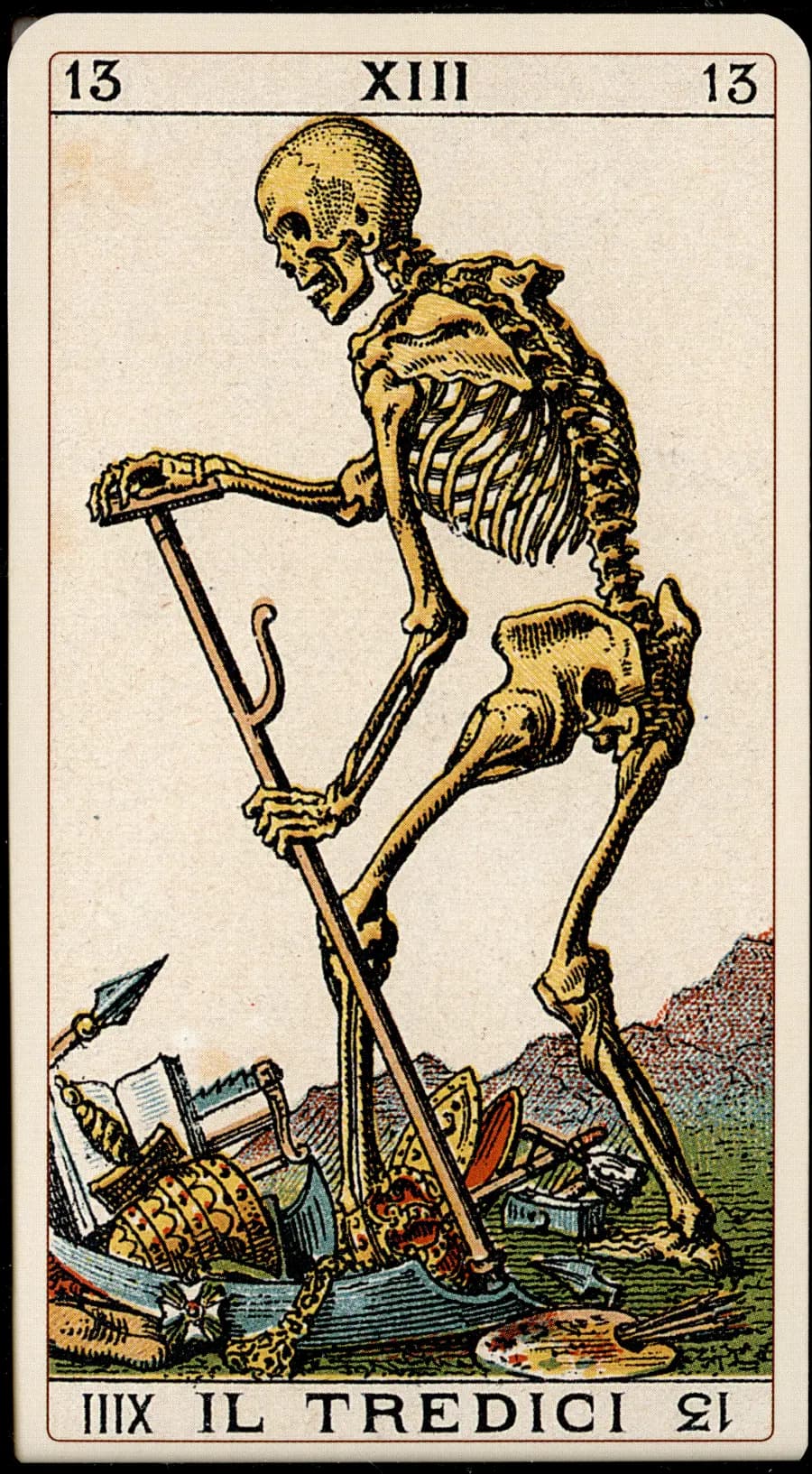
Death is card XIII, linked to Scorpio, the fixed Water sign. Its energy runs deep, below what you can see, in the places where you feel things before you can name them.
Now look at the Ace of Cups.
A hand reaches out from a cloud, holding a golden chalice that overflows with five streams of water, often read by modern interpreters as the five senses. A white dove descends, carrying a communion wafer marked with a cross, a symbol Waite intended as direct spiritual communion. Below, lotus blossoms float on a still sea.
Waite designed this card as the Holy Grail. The same year he created this deck, he published a 700-page study of Grail mythology. He wasn't being subtle. Mary K. Greer called it "the root of empathy." In the Golden Dawn tradition, its formal title is "Root of the Powers of Water," placing it outside the decan system entirely. It doesn't belong to a specific slice of the zodiac. It holds the whole element. All of Water, in seed form.
As an Ace, it carries the number one: pure potential, waiting for you to do something with it. Not the love affair. Not the creative breakthrough. Just the first stirring of possibility before it takes any particular shape.
Which of the four figures facing Death do you recognize in yourself right now? The one who has already fallen, the one standing rigid in his robes, the one turning partly away, or the one holding out flowers?
Why Death and the Ace of Cups amplify each other
These two cards share something most pairings don't. They're both Water. Death reaches the element through Scorpio. The Ace of Cups is Water in its most concentrated form. In the Golden Dawn's elemental dignity system, when two cards of the same element appear side by side, the system calls them "greatly strengthened." Barbara Moore of Llewellyn explains: "Cards of the same element strengthen each other greatly. It means that the experience is stronger or intensified."
Not every reader works with elemental dignities. Many approach the cards through imagery and intuition without this framework. But for those who do, the doubled Water here means the release Death signals and the opening the Ace offers aren't separate events. They're one experience, felt in the body and the gut, not reasoned through in the head.
Double Water carries what elemental theory calls passive polarity. That doesn't mean weak. It means receptive. Shaped by what flows through you rather than what you push against. You won't muscle your way through this one.
There's another layer to this pairing: it places a Major Arcana card beside a Minor. Death establishes the cosmic theme, a letting-go larger than your daily life, the kind that splits your timeline into "before" and "after." The Ace of Cups channels that current into a specific domain: your emotions, your love life, your intuition, your capacity to feel. Brigit Esselmont of Biddy Tarot calls this the "helicopter view" method. The Major card is the aerial picture. The Minor is the ground-level detail. Death says: something must be released, whether you cooperate or not. The Ace of Cups says: and here is where you'll feel it first.
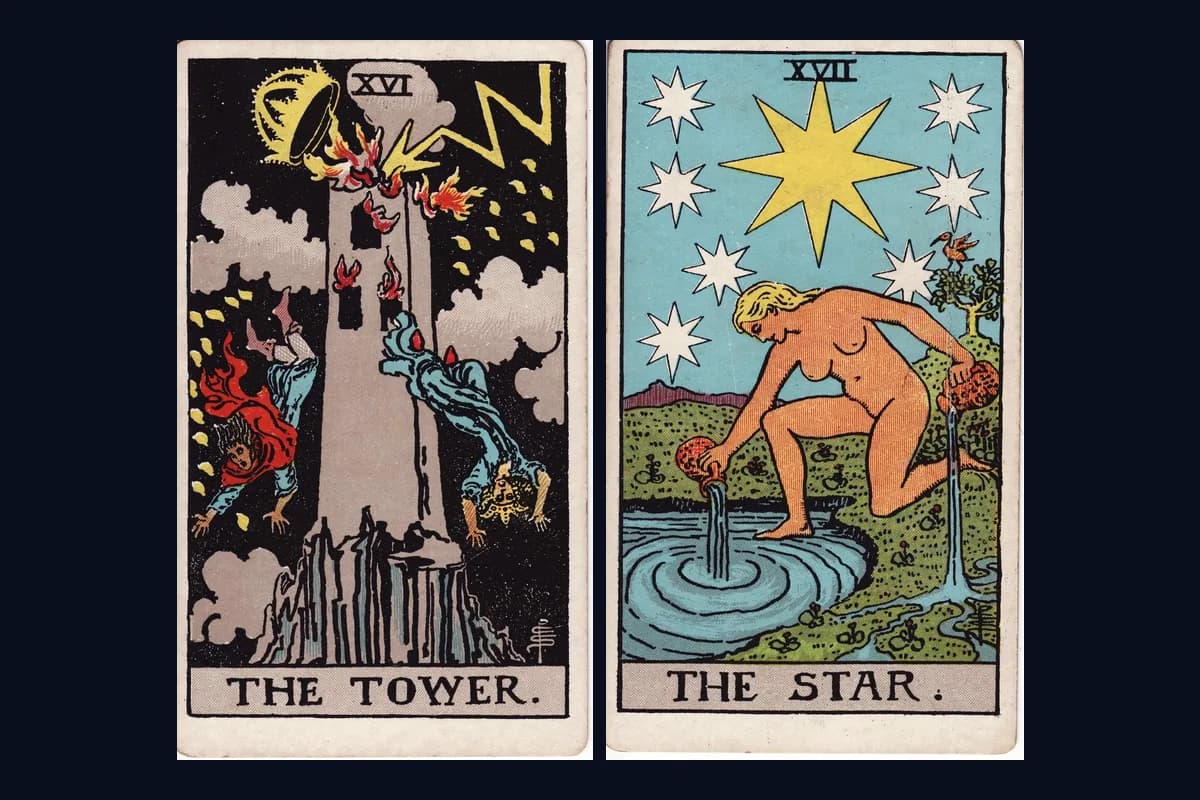
Readers who've seen this combination tend to frame it as a positive sign. The word "happy" doesn't quite fit. Hopeful is closer. The ending clears something stagnant, and what follows is alive in a way it wasn't before. Something in you that had gone still begins to move again. The Tower and Star combination tells the same story at a harder pace: the ending comes all at once, and the Star is the first hope after it.
Where these cards land changes everything
In a Celtic Cross, Death as the crossing card with the Ace of Cups in the outcome position sends a direct message: the thing blocking you is your resistance to letting go. Once you stop fighting the ending, emotional renewal is already waiting. This arrangement doesn't minimize what was lost, but it does point toward a path through it.
Death in the recent past with the Ace of Cups in the present often brings relief. The hard part has already happened. You're standing in the first light of something new, even if it doesn't feel fully formed yet.
In a three-card spread, Death in the past flowing into the Ace of Cups in the present or future is a sequence that honors the weight of what happened while leaving room for what follows. A significant ending has already cleared the ground.
When those positions reverse, the reading gets harder. Ace of Cups in the past, Death in the present: a period of feeling, of connection, of something that mattered is undergoing necessary change. That can genuinely hurt. The cards aren't promising it will hurt less because something better is coming. They're saying the loss is real, and the space it creates is real too. Sometimes the gap between Death and the Ace lasts months or years. The cards don't come with a timeline.
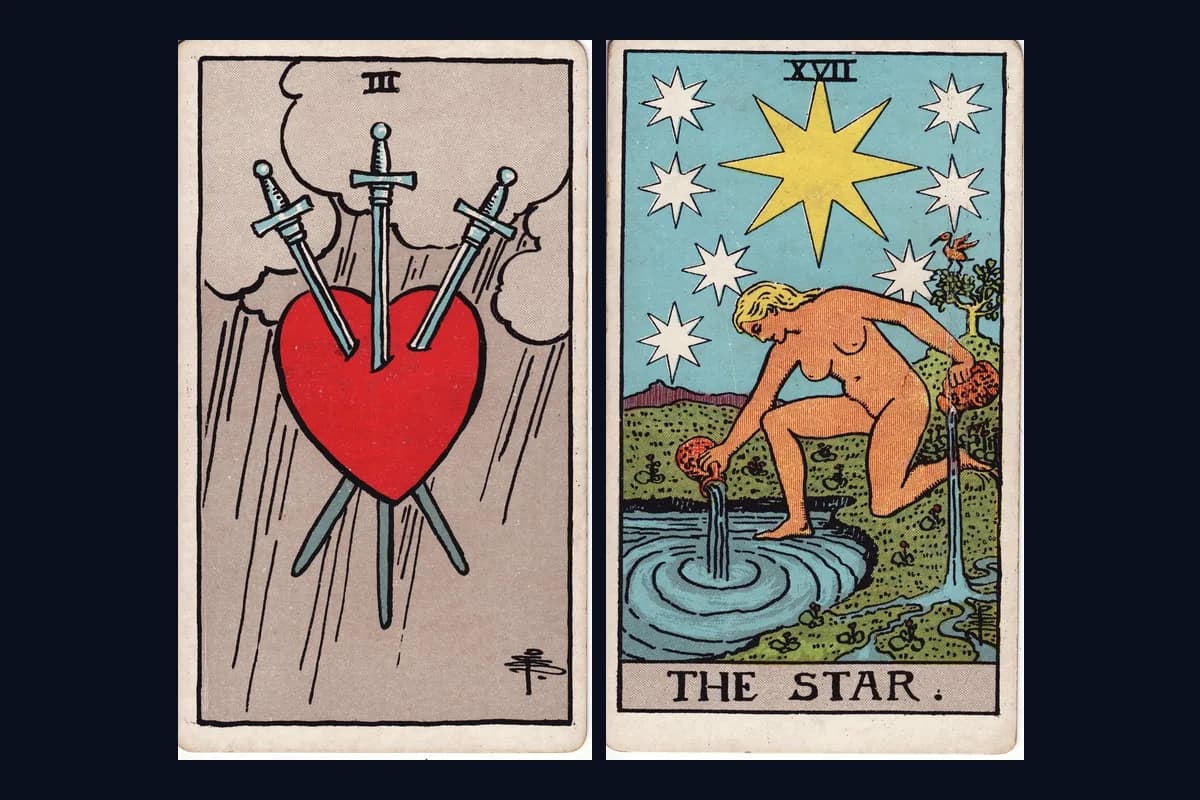
In love readings, this pairing points to the end of old relationship patterns and the arrival of something more honest. That doesn't always mean a new person. Sometimes it's the death of an old dynamic within a bond that already exists, clearing room for deeper connection with someone you've known for years. And sometimes it means your loneliness is coming to an end. When the ending is a heartbreak you're still feeling, the Three of Swords and Star combination stays with the hurt and finds hope already beside it.
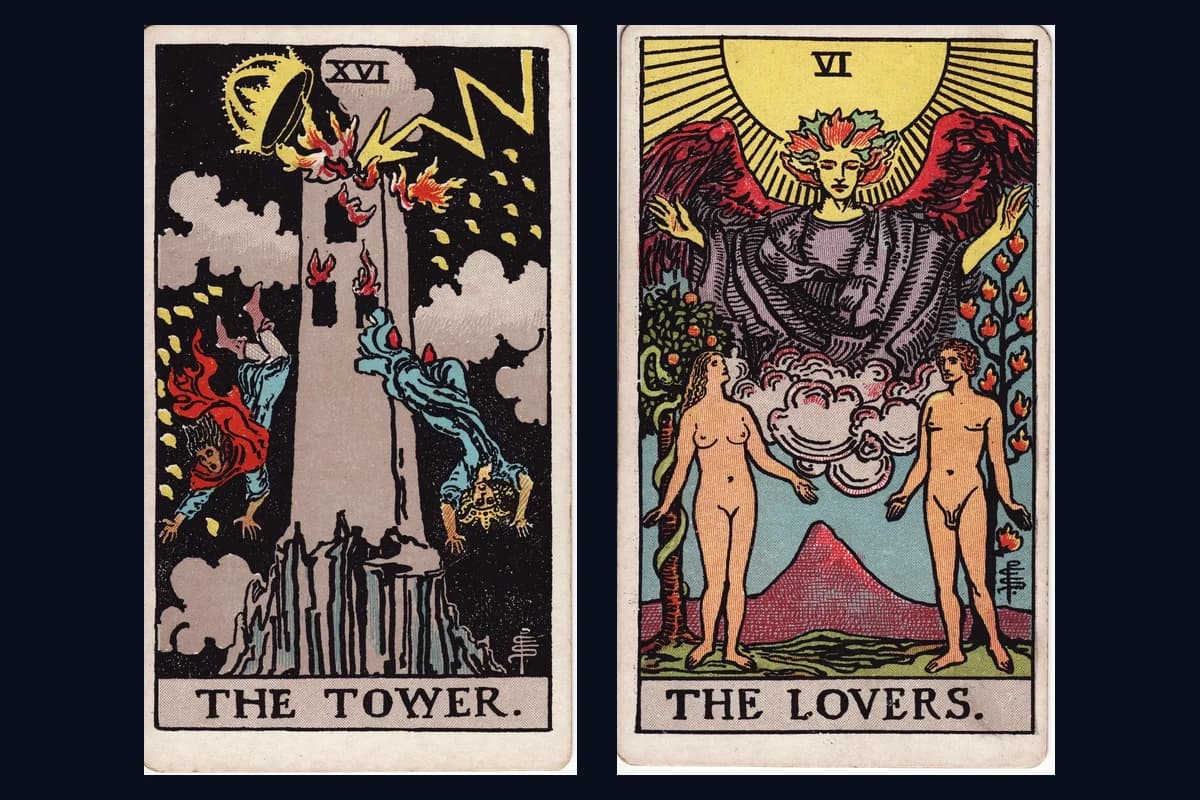
For career questions, the role draining you has run its course, and something more aligned is opening up. The Ace of Cups is not a card of financial strategy. It's a card of fulfillment. What follows Death here has to feed you, not just pay you. Like the Tower and Lovers combination, this pairing points to honest reckoning followed by something real.
For health questions, this pairing speaks to the emotional weight around a health experience, not to outcomes. The ending Death signals may be a chapter of fear or hypervigilance running its course, with the Ace offering permission to breathe again. But the cards are not a medical opinion, and if your question is about your body, talk to someone who went to school for it.
If you're asking yes or no: closer to yes than no, though it comes with the kind of honesty that stings before it helps. Something has to end first.
You already know which part of your life this reading is about. You knew before you started reading this section. What would your version of these two cards look like, shaped by your experience? That image belongs in your deck.
First card, second card: two different readings
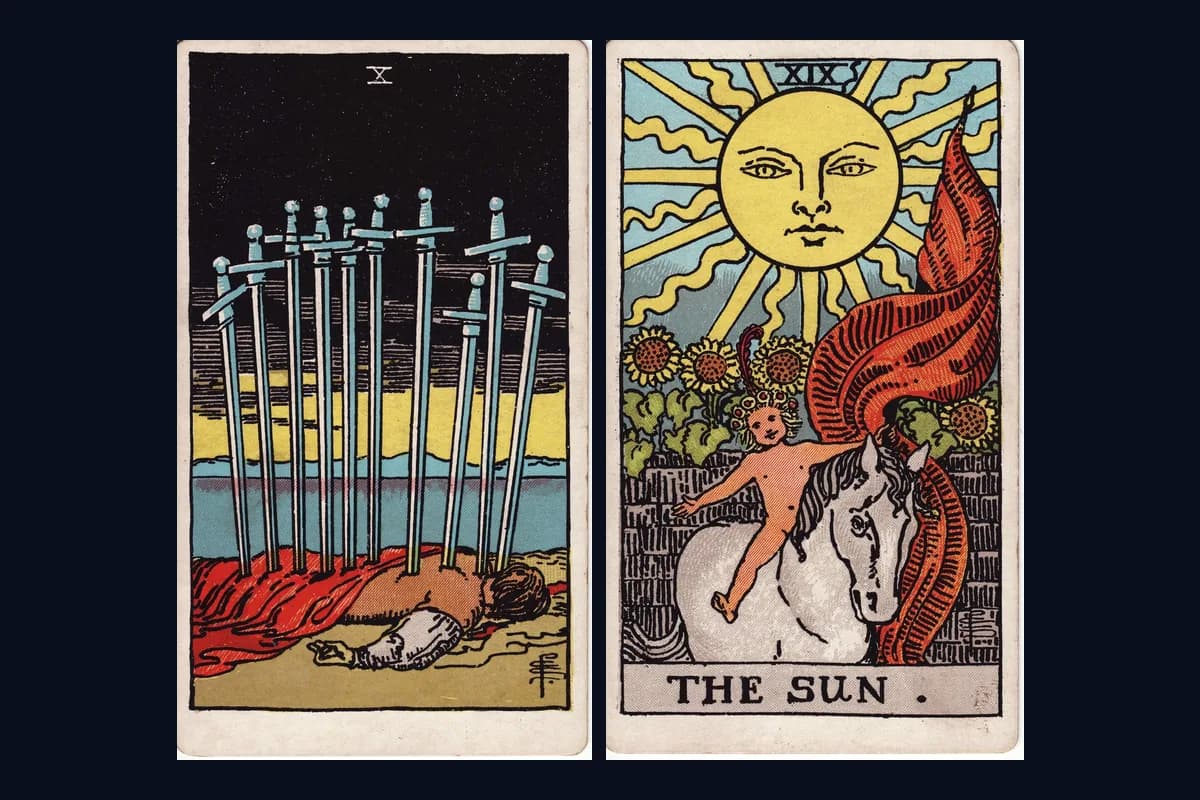
Death followed by the Ace of Cups reads as cause and effect: the ending comes first, and renewal follows naturally. You let go, and your hands are free to receive. If the ending knocked you flat instead of letting you go, the Ten of Swords and Sun combination reads it from the ground up.
The Ace of Cups followed by Death is more complex. A new emotional opportunity will require sacrifice. Maybe a new love asks you to release an identity you've built around being alone. Maybe a creative awakening means walking away from something stable. The opening comes first, but it demands something from you.
Orientation matters too. Here's how the four combinations read:
| Orientation | Reading |
|---|---|
| Both upright | Emotional rebirth after a necessary ending; the cycle is working as it should |
| Both reversed | Resisting emotional change you know is needed; something should have ended by now, and something new can't reach you until it does |
| Death upright, Ace reversed | The ending is real, but grief or exhaustion blocks what follows; the renewal is there, you're just not ready to receive it yet |
| Death reversed, Ace upright | An emotional opening is right there, but fear of letting go keeps you at the threshold; you can sense the new feeling, but the old thing hasn't been released |
Which of these four orientations sits closest to where you are right now? Sometimes the cards you're drawn to before a reading starts are already telling you something.
What the sky adds to this reading
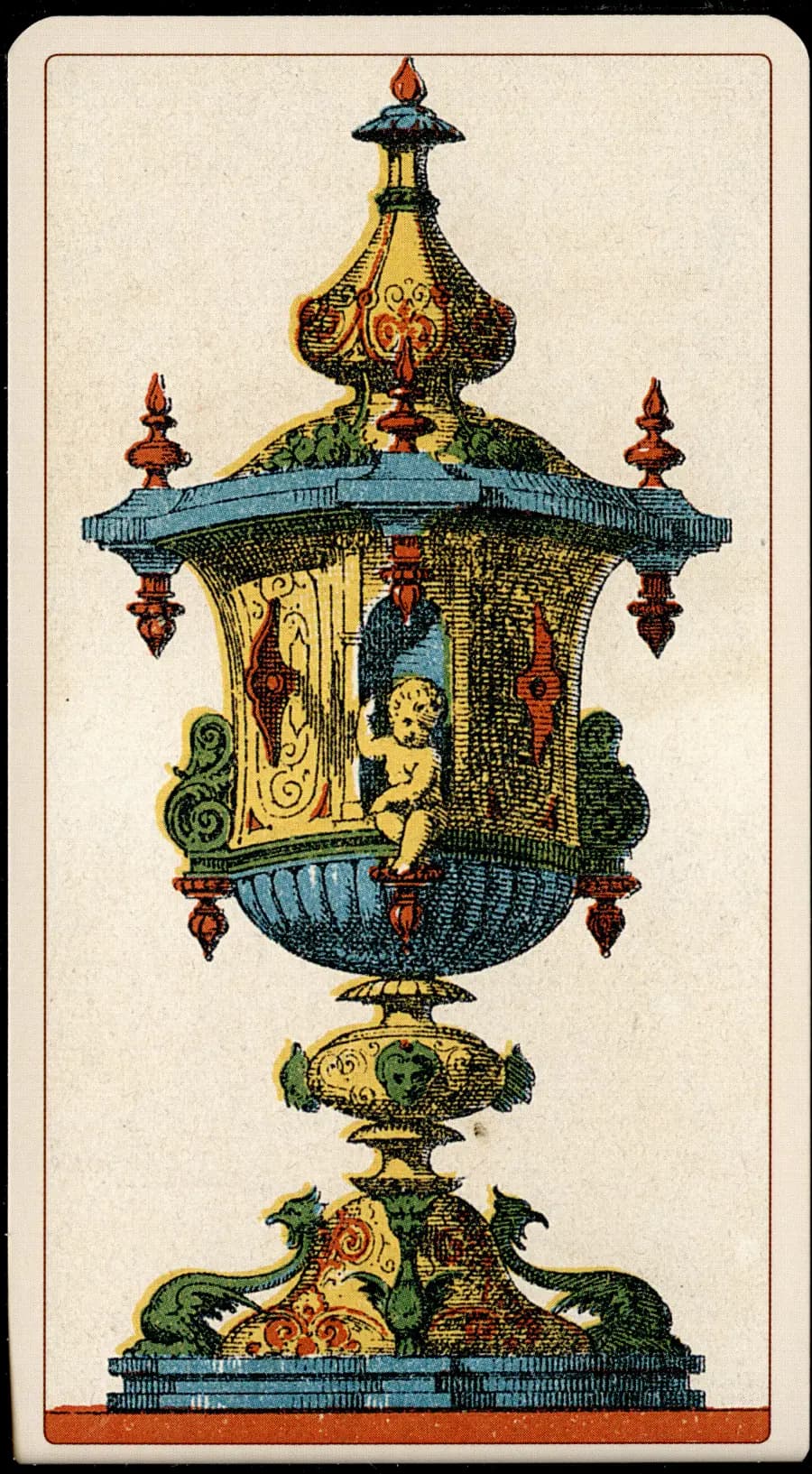
Both cards pull toward the same element, and that matters. Death belongs to Scorpio: fixed Water, governed by Pluto in modern astrology (Mars held the role before Pluto's discovery in 1930). The Ace of Cups doesn't just associate with Water. It is Water in its purest form. When these two land together, the current doubles. Not diluted. Amplified.
Scorpio season, late October through November, makes this combination hit hardest. Benebell Wen describes this period as the Death card's home stretch: "the season of Scorpio is when those of the underworld and otherworld can peek through the veil." She concludes that Scorpio season is "an optimal time for tarot divination."
The lunar phase matters too. The waning-to-new moon transition mirrors the Death-to-Ace arc almost exactly: the waning moon carries Death's release energy, and the new moon activates the Ace's potential for emotional beginning. If you pull this combination under a waning crescent or a dark moon, the timing is speaking with the cards.
Your birth chart shapes how this lands. Water signs (Cancer, Scorpio, Pisces) feel this as familiar ground, but fluency cuts both ways; the intensity can pull you under. Fire signs will feel useful discomfort, because the reading pushes toward vulnerability, the exact muscle that needs developing. Earth signs often see this show up as a material change (a move, a career shift) that cracks open something underneath. And Air signs? They'll think their way through it before they let themselves feel it.
Since Pluto entered Aquarius in late 2024, where it stays until 2043, every Death card reading carries a collective undertow. Individual endings ripple outward now. The renewal the Ace promises ripples outward too. You might notice your own shifts echoing in the people around you.
If you know your birth chart, notice where Scorpio lands. The house it occupies is where this combination plays out most personally for you. And if that picture were a tarot card, what would it look like?
The numbers beneath the cards
Add Death to the Ace of Cups and you get 14. That's Temperance.
Sit with that for a moment. In the Major Arcana, Temperance is the card that directly follows Death. It depicts an angel pouring water between two cups in an endless, balanced flow. And here you are, holding a combination that literally adds up to that image. The Ace provides the vessel. Death provides the dissolution. Temperance is what emerges when they merge, the angel who knows exactly how much to pour and when to stop. Some readers treat this kind of numerical sum as meaningful; others don't. But in the Golden Dawn's carefully constructed system, where every number was placed with intention, it's hard to call it coincidence.
Death's number, 13, carries its own weight. Twelve or sometimes 13 new moons fall in a calendar year, tying the card to the moon's rhythm of constant disappearance and return. The Hebrew letter assigned to it, Nun, means "fish," the creature that lives and breathes beneath the water's surface, invisible to those standing on the shore.
Reduce 13 and you arrive at 4 (1+3), which belongs to the Emperor. Mary K. Greer's constellation system groups these cards together: the Emperor (4), Death (13), and the Fool (numbered 0 in modern decks, 22 in esoteric tradition, which also reduces to 4). The Emperor builds structures meant to last. Death tests whether those structures are honest. And the Fool, wild and unburdened, shows what freedom looks like once you've survived that test.
The Ace, meanwhile, is pure 1. In Kabbalistic tradition, this is Kether, the Crown, the source from which everything else descends. It's a seed that hasn't yet decided what kind of flower to become. All potential, no fixed form.
So when 13 meets 1, you're not going in circles. You're spiraling. You return to a beginning, yes, but you carry everything you released to get there. The wisdom of what you let go lives in the new seed. And the spiral lands on 14. On balance. On flow between vessels.
When you sit with the number 14, what would balanced flow look like in your life right now? Where have you been gripping one cup too tightly, afraid to pour?
Questions readers ask about this combination
Is the Death and Ace of Cups a good combination?
It depends on what you mean by good. This pairing signals that something real is ending and something new is beginning to stir emotionally. That process can feel like relief or like grief, sometimes both at once. The combination favors forward movement, but it does not bypass the weight of what was lost.
What does Death and the Ace of Cups mean in a love reading?
In love readings, this combination points to the end of old relationship patterns and the arrival of something more honest. That might mean a new person, or it might mean letting go of a worn-out dynamic within an existing bond. The Ace of Cups here asks for emotional openness, which requires releasing whatever you have been gripping.
What does this combination mean when both cards are reversed?
Both reversed suggests you are resisting an emotional change you already know is needed. Something should have ended by now, and something new cannot reach you until it does. The reversal does not cancel the message. It adds friction to it.
What element connects Death and the Ace of Cups?
Water. Death is linked to Scorpio, the fixed Water sign, and the Ace of Cups represents the pure essence of Water itself. When two cards of the same element appear together, elemental dignity theory says they are greatly strengthened. The doubled Water here means you will feel this combination in your body before you reason through it in your head.
Is this a yes or no combination?
Closer to yes than no, though it comes with a condition: something has to end first. If you are asking whether a new emotional beginning is possible, the answer is yes. If you are asking whether you can have it without letting go of what came before, the answer is no.