Tarot Reading
Page, Knight, Queen, King
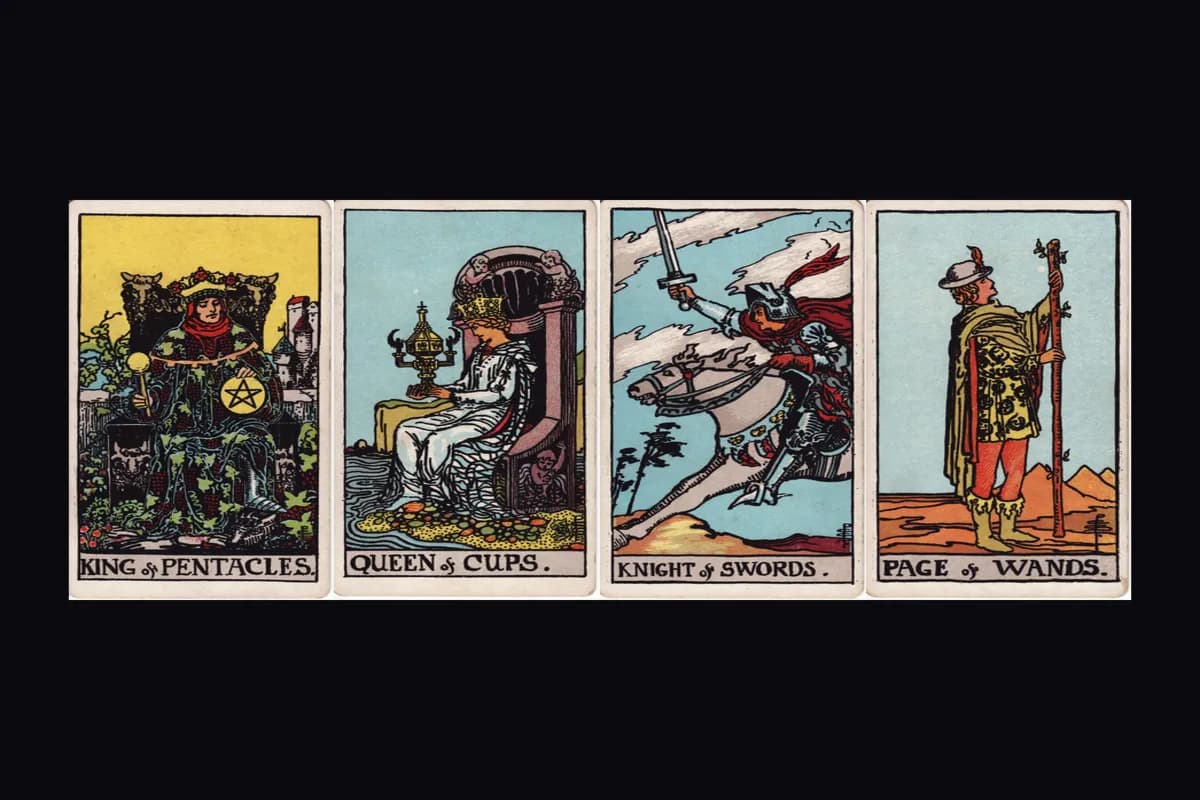
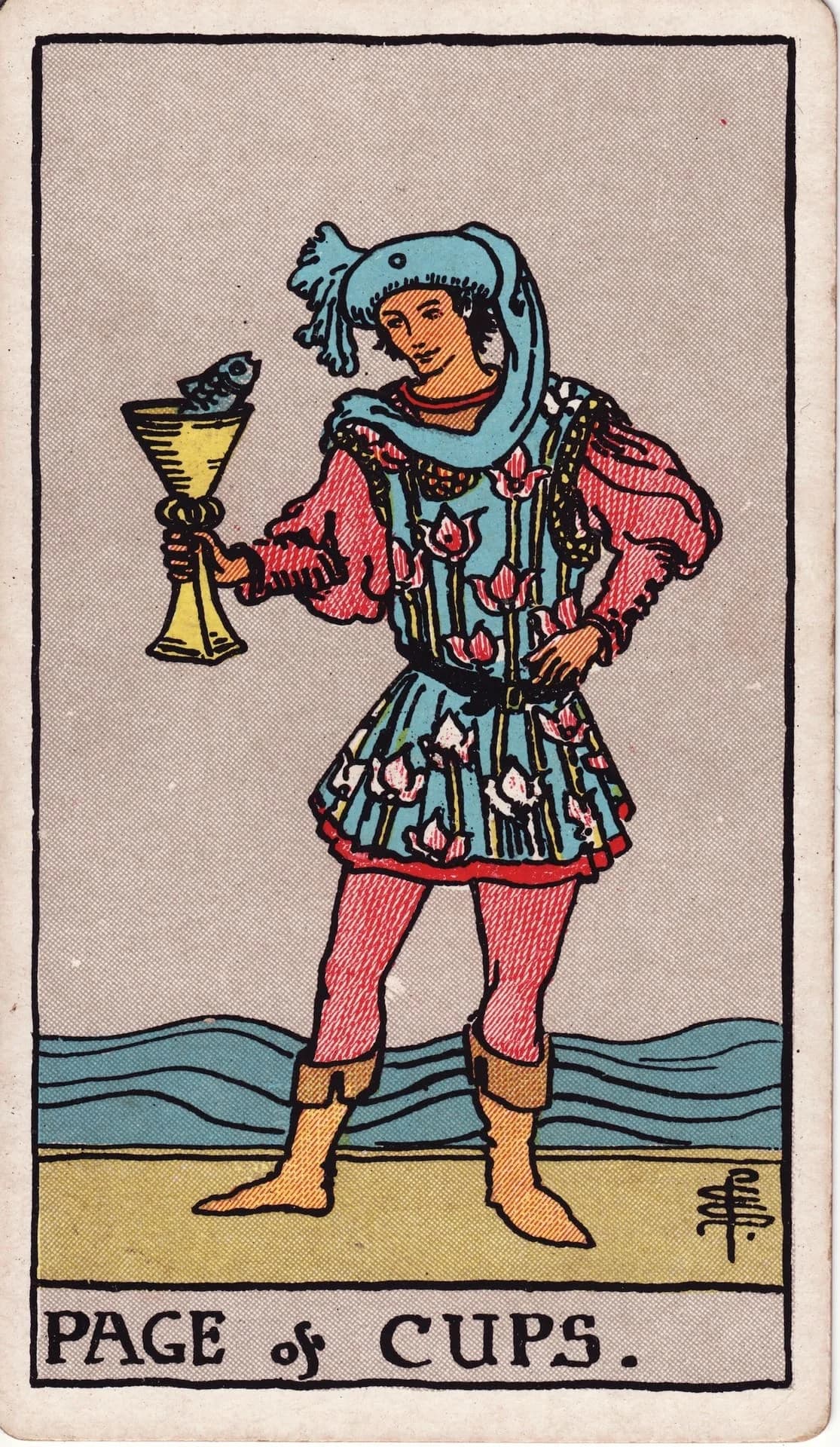
You know what a Page does in a reading. Curiosity, beginnings, messages. But who IS the Page? Not what the card means. Who the person on the card is. What they want, what scares them, why they haven't started moving yet. The Page of Cups isn't "emotional new beginnings." She's a kid staring into a cup with a fish in it, completely unsurprised. That tells you something about her that no keyword ever will.

Climate scientist, ashtanga practitioner, and advocate for human rights and LGBTQIA+ equality.
From curious beginner to quiet authority
Think of something you've learned to do well. Cooking, maybe. Or managing money. Or sitting with someone who's hurting. Or building something from nothing.
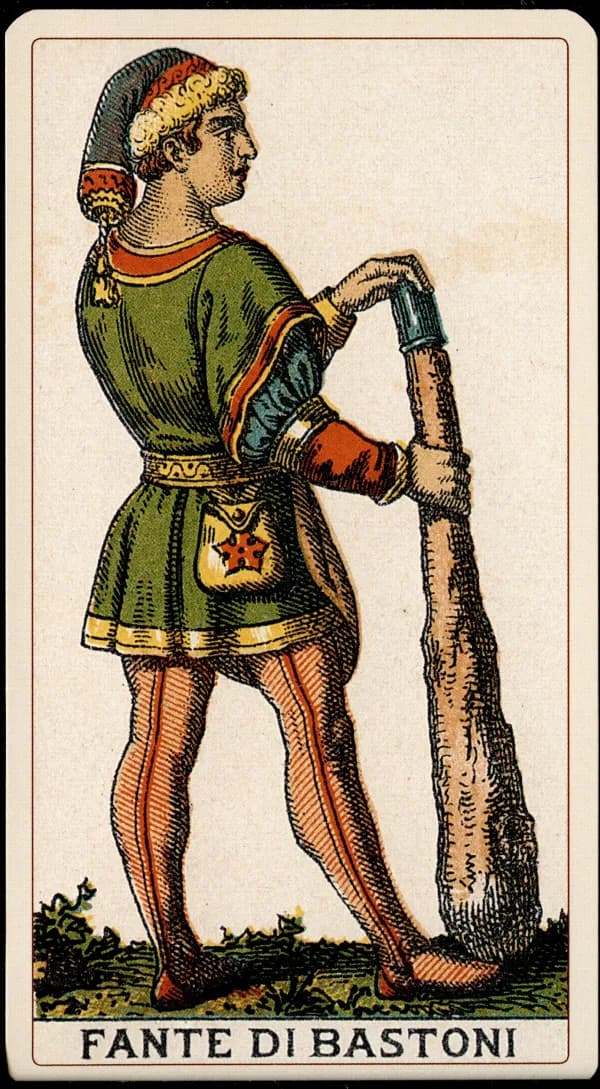
You didn't wake up an expert. You started curious, fumbling, fascinated by the sheer newness of it. That's Page energy. Joan Bunning describes it simply: each Page "shows a happy child holding the token of his suit. He is fascinated by his plaything." No pretense at the Page stage. Just wonder. If you want a practical guide on how to read court cards in any spread, start there. This post is about who they are.
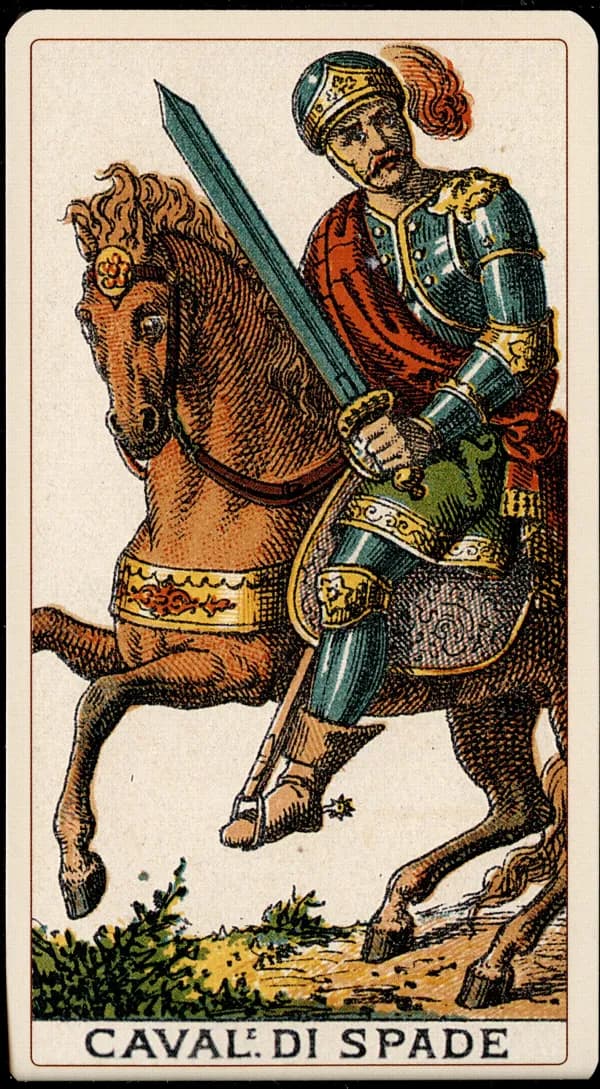
Then something shifted. You stopped reading about it and started doing it, with more intensity than the moment called for. Enter the Knight. Bunning calls them extremists: "they express their suit qualities to the maximum." Knights charge forward. They overcorrect. They learn by burning bright and occasionally burning out.
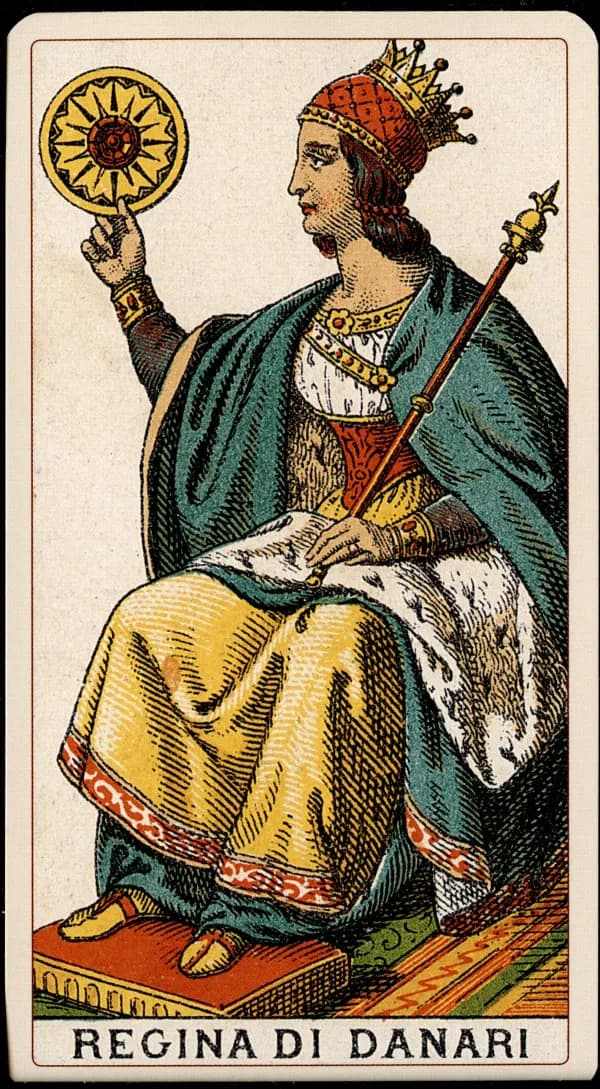
Somewhere along the way, the fire became a hearth. You internalized what you'd learned so deeply that it stopped being something you did and became something you were. The Queen. The Queen doesn't perform her knowledge. She lives it. Mary K. Greer calls this stage "intra- and interpersonal mastery," a kind of fluency that doesn't need to announce itself.
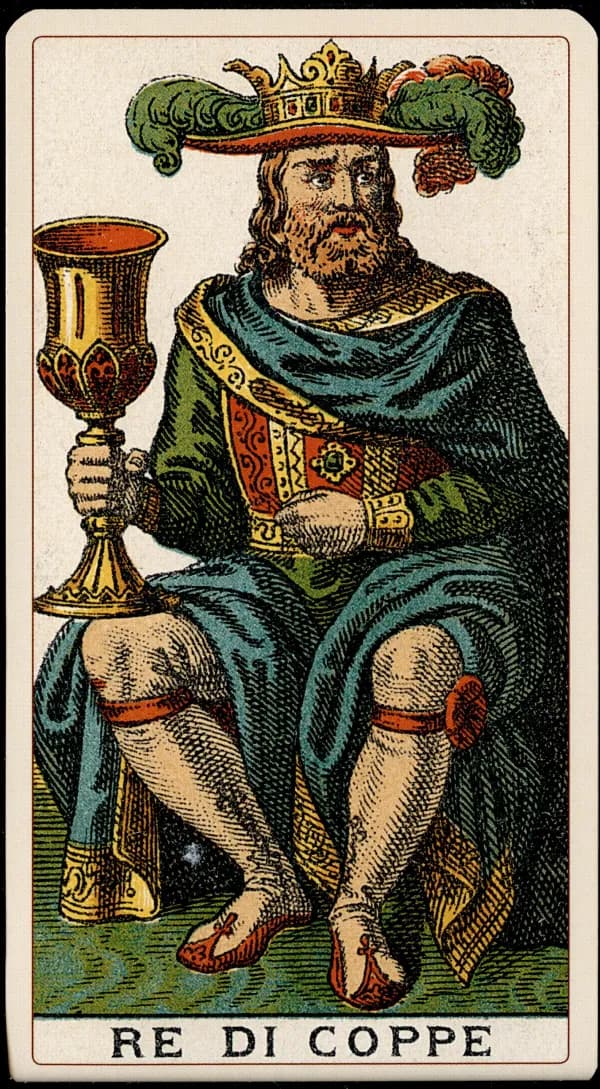
And the King? The King takes that inner knowing and builds something with it in the outer world. Bunning calls the King "a doer whose focus is outward on the events of life." Structure. Responsibility.
Here's where readers trip up. Queen and King aren't a hierarchy. They're parallel expressions. The Queen masters the inner dimension of a suit's force. The King masters the outer. Neither is higher. Neither is better.
This progression looks clean on paper. It isn't, in practice. You can be a King at work and a Page in your relationships. You can slide backward. You probably already have.
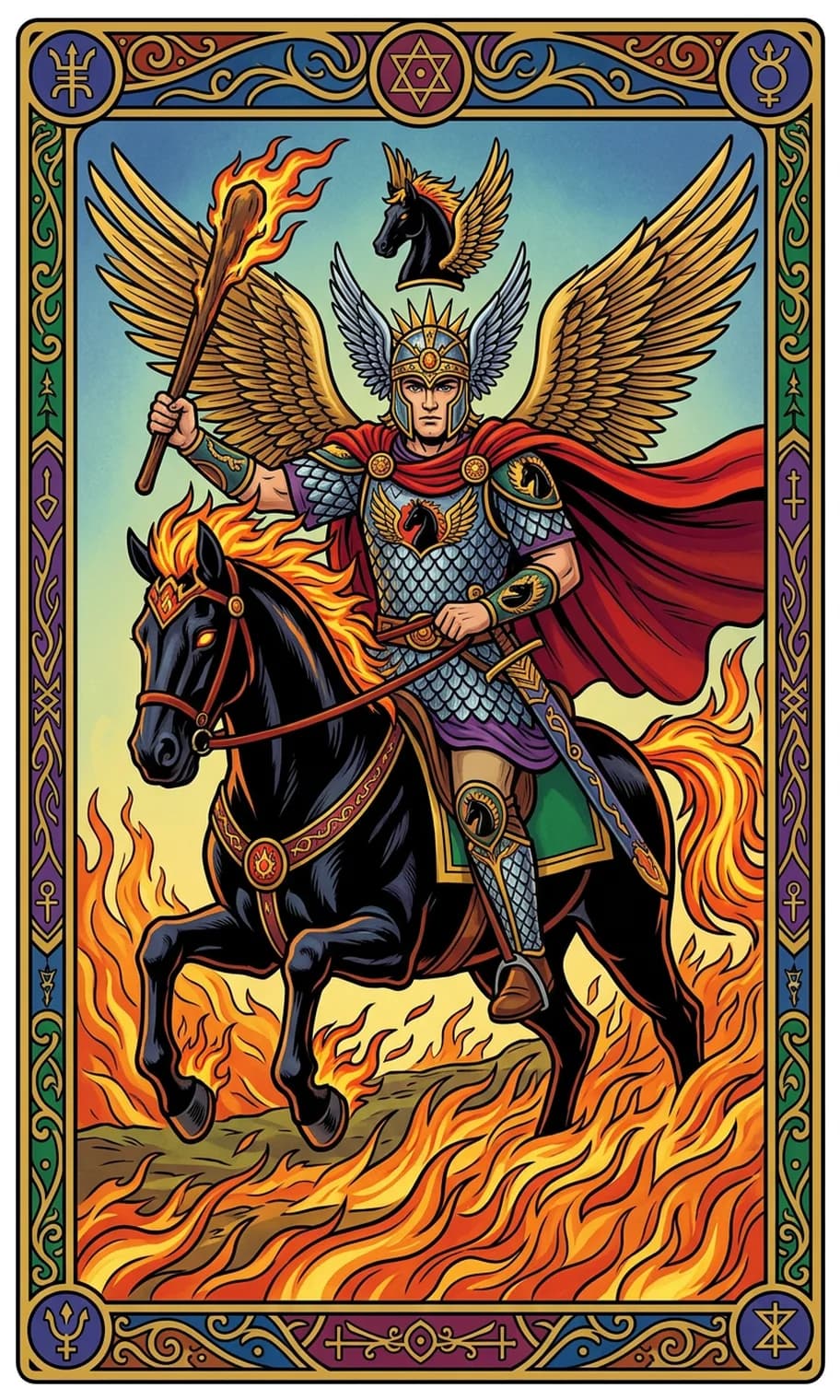
Think about how you'd picture these four stages if you could. Your Page doesn't have to be a medieval youth in tights. Maybe your Page looks like your niece the first time she picked up a paintbrush, still holding it wrong, not caring. Maybe your King looks like the mechanic who's been fixing cars for forty years and doesn't need to check the manual anymore. When you design a deck, you get to cast these roles with faces you actually recognize.
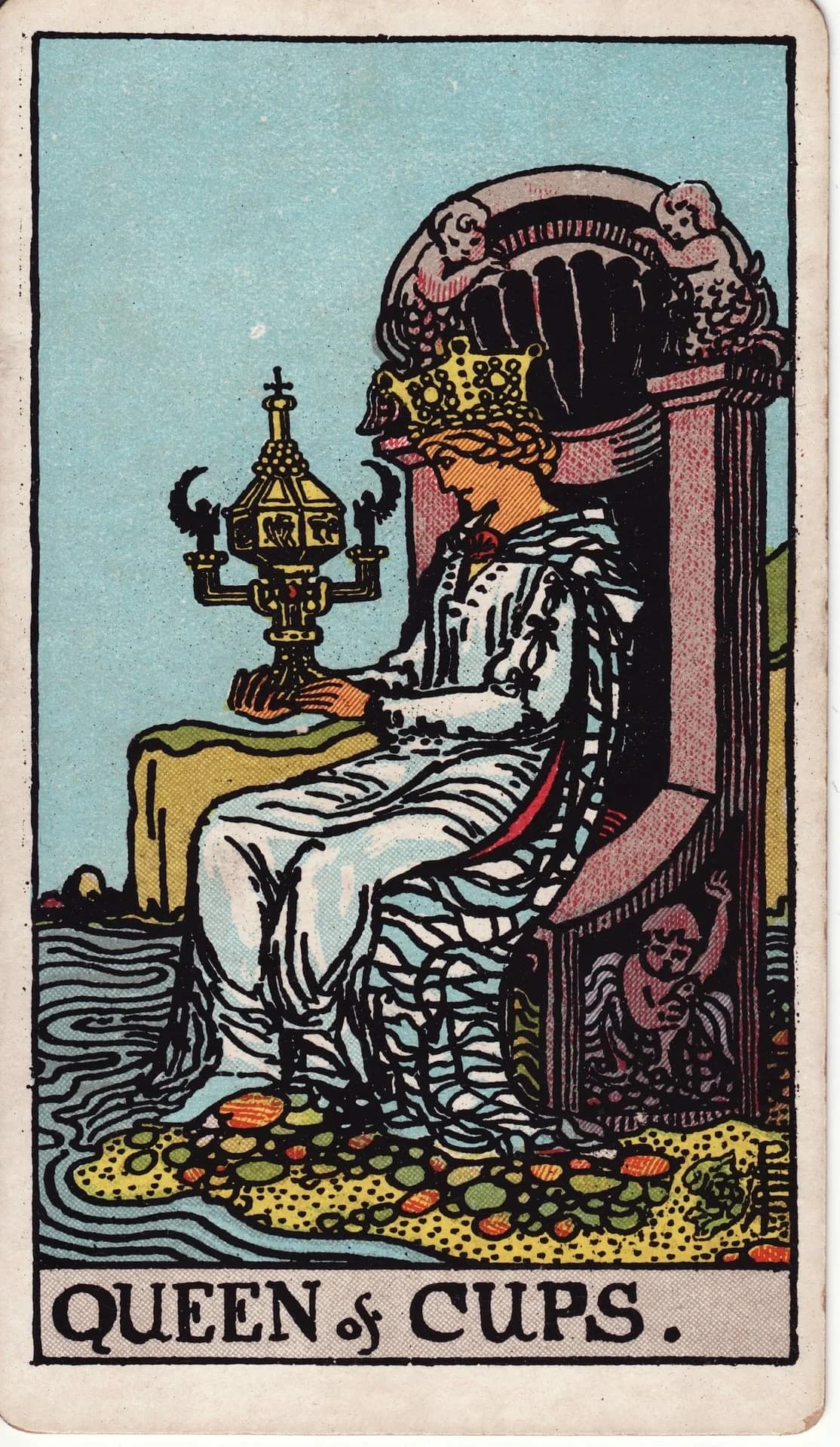
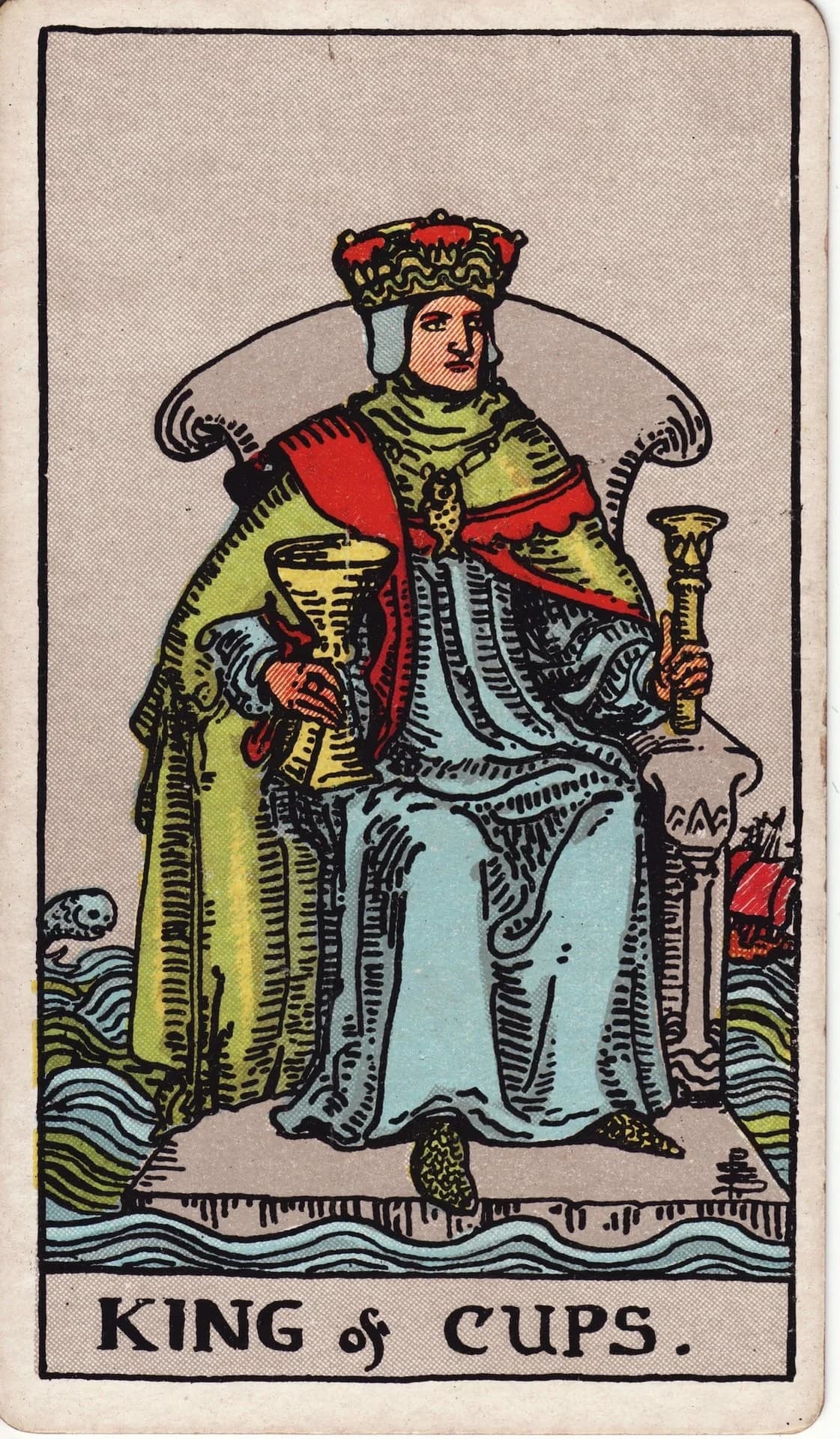
Theory is fine. Specifics are better.
Let's walk through the Cups suit, the suit of emotion and relationships, and watch the same impulse grow up.
The Page of Cups is first love. Not the complicated kind. The kind where your stomach flips when someone texts back. As one traditional interpretation puts it, "When they love, it is puppy love and crushes." The Page of Cups writes poetry in the margins of notebooks. She cries at commercials. He falls in love with the idea of being in love. There's a rawness here that's genuinely beautiful, exactly because it hasn't learned to protect itself yet.
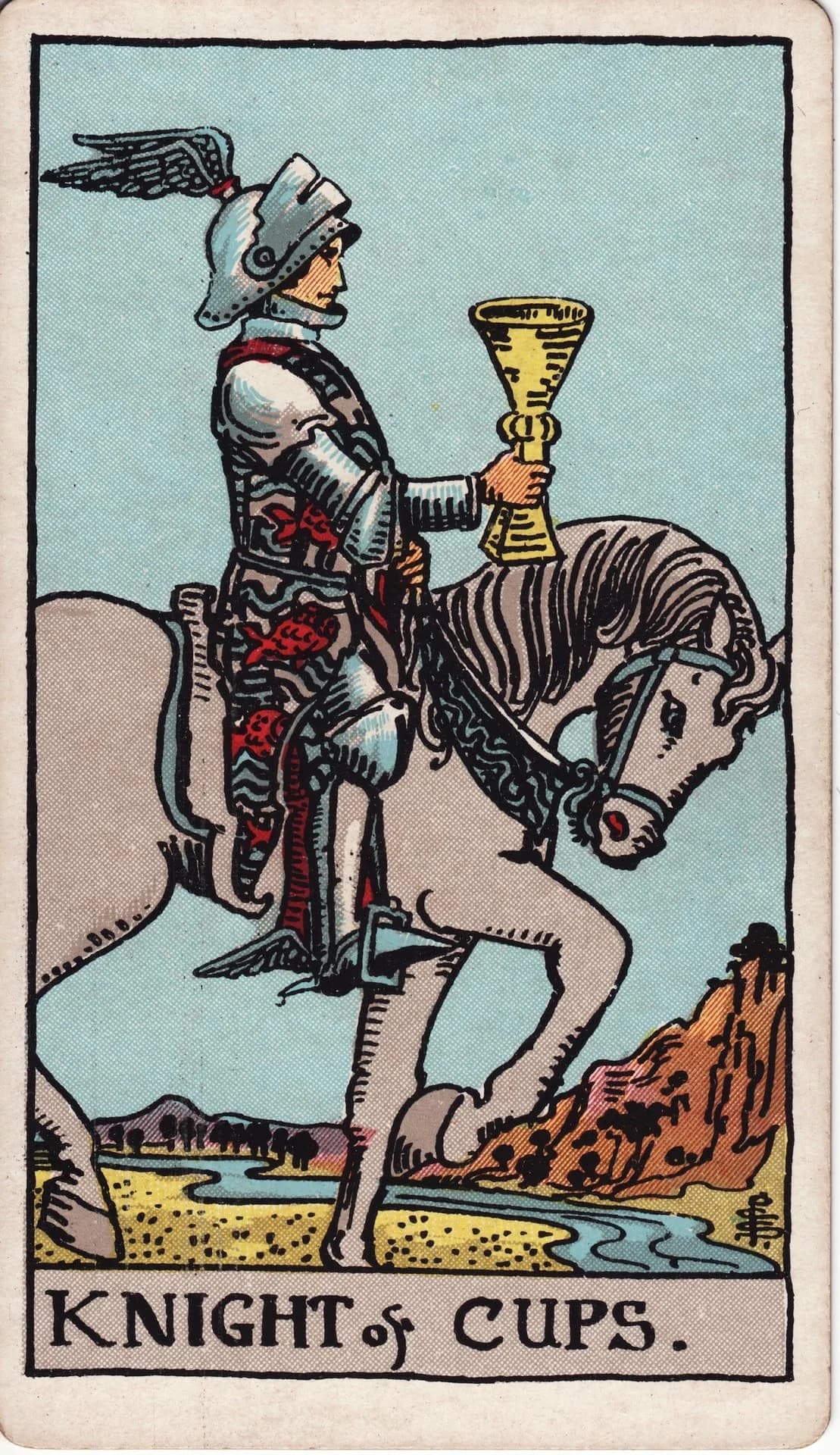
The Knight of Cups has started to perform that emotional openness. You know this person. You may have been this person. The Knight of Cups sends flowers but forgets to ask how you're actually doing. The gesture matters more than the substance. Not out of cruelty. Out of immaturity.
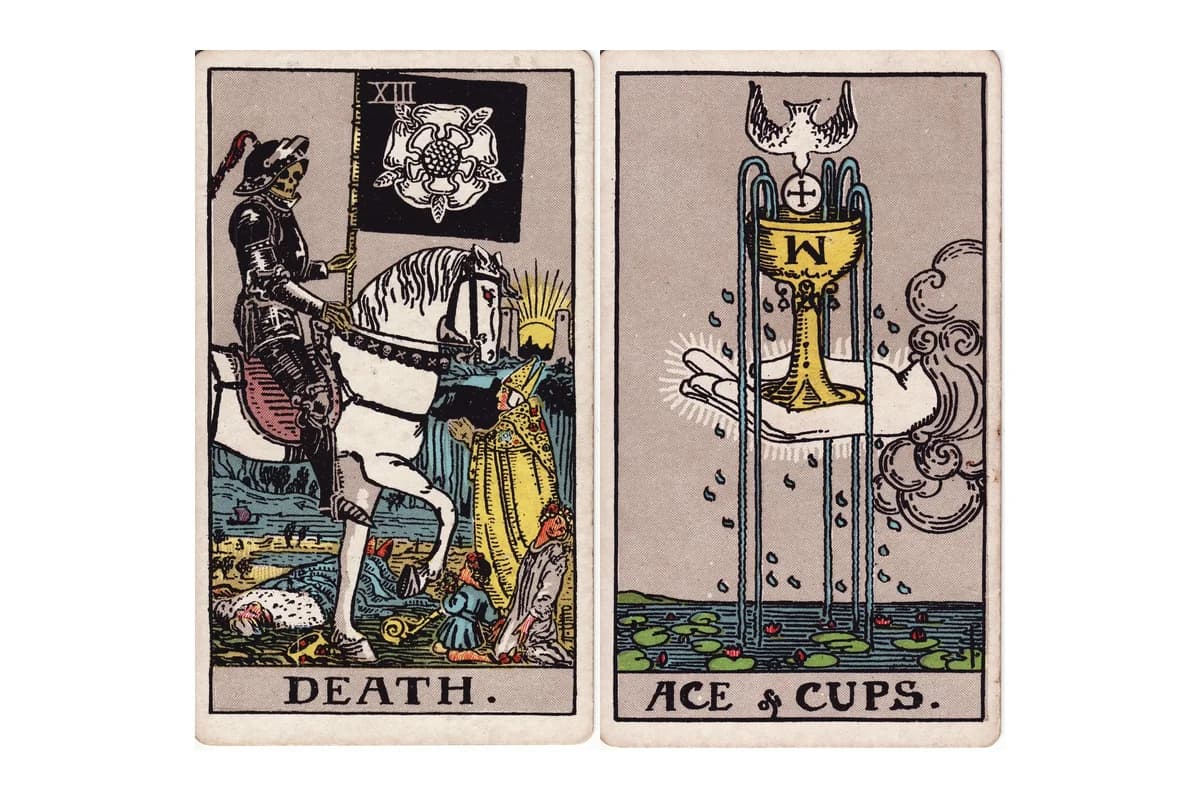
The Queen of Cups is what happens when emotional intelligence grows roots. Kait Fowlie describes her as "the most attuned queen, who has mastered her ability to care for herself and for her loved ones... strong enough in her boundaries that she doesn't let others take too much from her." That last part matters. The Queen of Cups isn't a doormat. She's the friend who listens deeply and still says no when she needs to. This is the same emotional honesty the Death and Ace of Cups combination carries, just grown up.
And the King of Cups holds steady when the water gets rough. Isabella Rotman, creator of This Might Hurt Tarot, drew her King of Cups as her grandfather living with Alzheimer's: "He is aging with a grace and cheerfulness that I can only imagine." Not the absence of difficulty. The presence of composure within it.
This pattern repeats across every suit. Consider Pentacles and career. The Page is the intern, wide-eyed on the first day. The Knight is the recent graduate grinding through the early years; Bunning says, "Once he bites down, you can be sure he won't let go." The Queen has figured out how to balance prosperity with generosity. And the King is the self-made CEO, building something that outlasts any single project.
Same pattern. Different element. Swords trace intellectual growth, from the Page's endless "but why?" to the King's calm, surgical logic. Wands follow creative fire, from the Page's first spark to the King who channels that energy into something lasting. Four stages, told again and again.
This is where a personal deck becomes something different from every other deck on the shelf. A standard Knight of Cups is a young man on a horse. Your Knight of Cups could be the friend who writes love poems on napkins at bars, or your sister who moved across the country for someone she'd known three weeks. Describe that person to yourself. What they're wearing. Where they're standing. That's your card.
Five court card myths that trip up readers
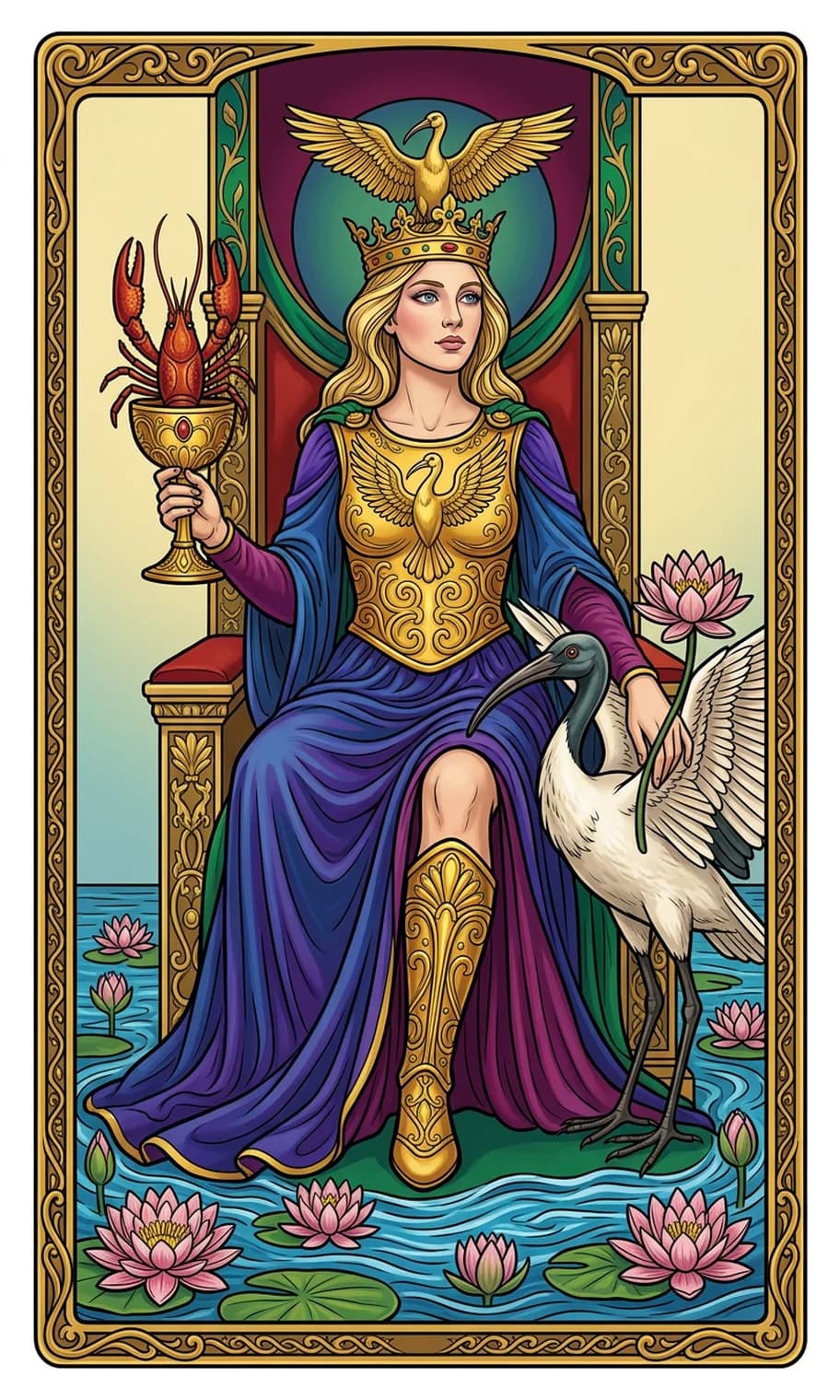
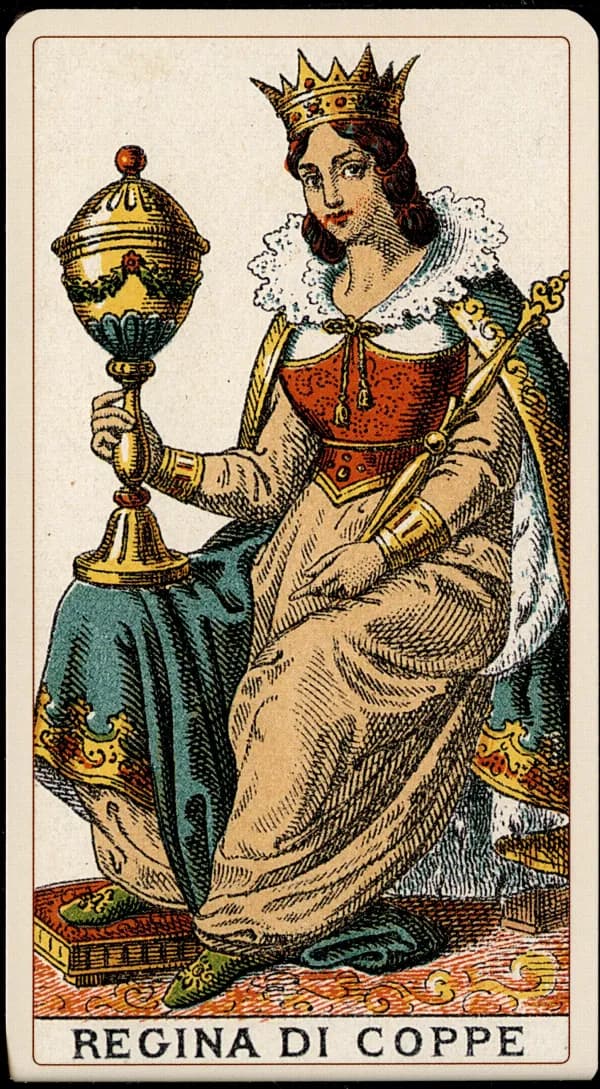
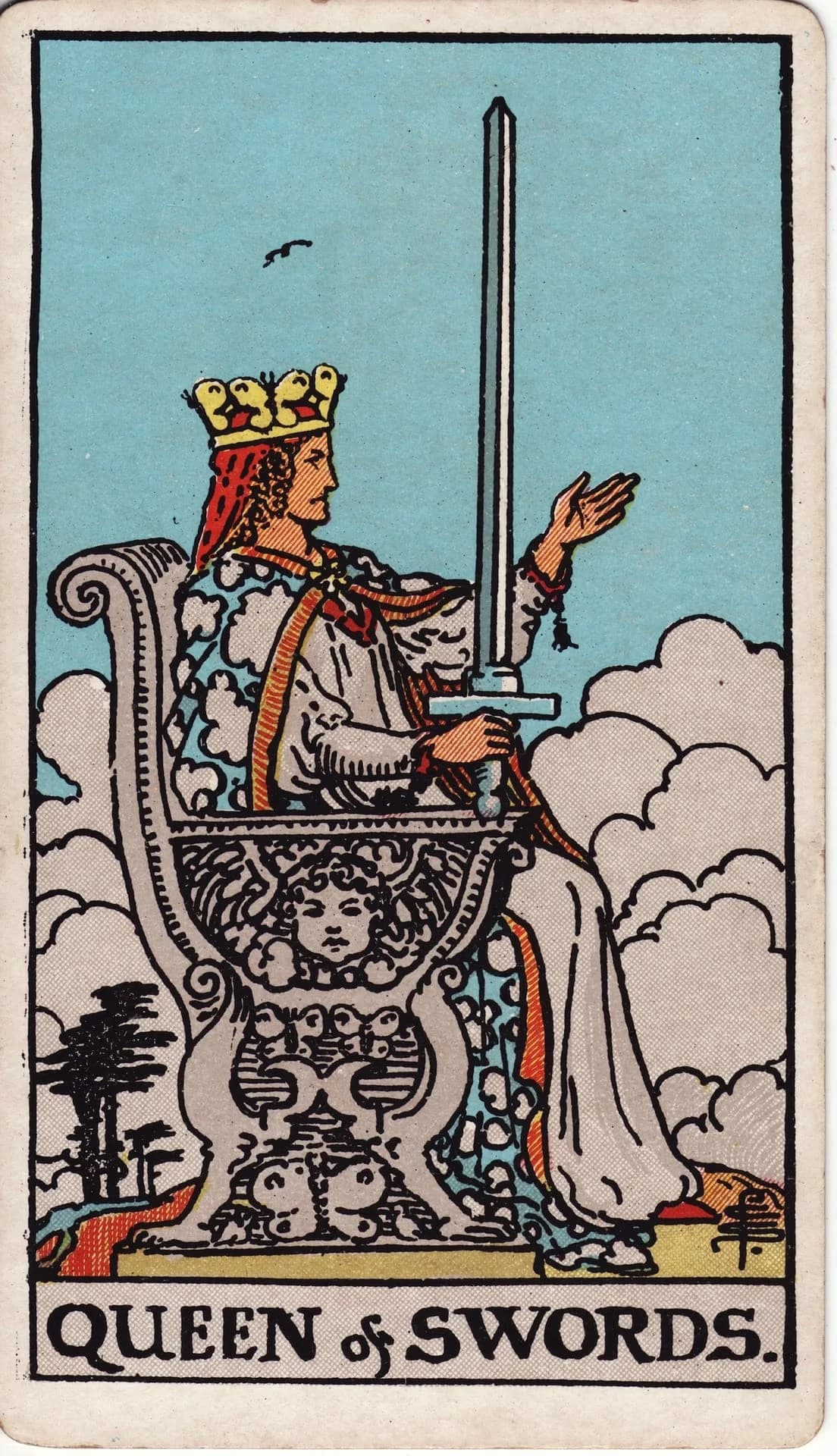
"Court cards always represent specific people." Look, this is the most common claim, and the most limiting. Joan Bunning pushes back directly: "To me, this way of looking at court cards is too limiting." A court card can represent a person. But it can also represent a mood, an approach you need to take, or an energy arriving from an unexpected direction. The Queen of Swords might be your sharp-tongued aunt. Or she might be the clarity you need to bring to a decision this week.
"Queens are female and Kings are male." Tarot reader Theresa Reed tells a story that dismantles this one for good. She was reading for a male querent and pulled a reversed Queen of Pentacles, describing the qualities of that reversed card. "He stopped me and said: 'I'm gay. But that describes my partner perfectly.'" Gender in tarot is metaphorical, not literal. Queens represent receptive, inward-facing mastery. Kings represent active, outward-facing mastery. Both energies live in everyone.
"The ranks correspond to age brackets." Pages aren't teenagers. Kings aren't old men. Beth Maiden frames the court as "four degrees of maturity," not four life stages. You can be sixty years old and in full Page mode about something you just discovered.
"Pages and Knights are basically the same thing." They're not. The difference is sharp. Pages are about curiosity. They ask, "What is this?" Knights are about action. They ask, "How far can I take this?" A Page picks up a guitar and plucks the strings. A Knight learns three chords and starts a band before the weekend.
"Kings outrank Queens." That's chess thinking, not tarot thinking. Several modern readers, including Beth Maiden, argue that Queens represent "the true culmination of a suit's story," because internal mastery is harder won than external authority. The question of who outranks whom misses the point entirely.
Every misconception on this list is also a creative opportunity. If Queens don't have to be women and Pages don't have to be children, then your court cards can look like anyone. Your King of Swords could have your grandmother's face. Your Page of Wands could be a forty-year-old picking up a guitar for the first time. When the old rules dissolve, what's left is your vision of who these figures really are.
Where astrology meets the four stages
The system you'll encounter most often in English-language tarot books comes from the Golden Dawn, the 19th-century occult society whose fingerprints are all over modern tarot. They mapped each court card rank to a category of zodiac sign. The logic follows cardinal, fixed, and mutable modes. Cardinal signs start things. Fixed signs hold on. Mutable signs adapt.
Queens align with the cardinal signs, the initiators. Queen of Wands pairs with Aries. Queen of Cups with Cancer. Queen of Swords with Libra. Queen of Pentacles with Capricorn.
The fixed signs get the Knights. Leo claims the Knight of Wands. Scorpio takes the Knight of Cups. Aquarius, the Knight of Swords. And Taurus anchors the Knight of Pentacles. Fixed energy holds on, which matches the Knight's tendency to push a single quality to its extreme.
Kings align with the mutable signs, the adapters and synthesizers. King of Swords with Gemini. King of Pentacles with Virgo. King of Wands with Sagittarius. King of Cups with Pisces. Mutable energy shifts with context, which fits the King as someone who takes mastery out into a complex, changing world.
And the Pages? They don't rule zodiac decans the way other ranks do. In the Golden Dawn system, Pages are tied to the earth quadrants rather than specific signs. No zodiac season. No decan to call their own. They're closer to pure potential, the blank card that could become anything. There's something fitting about that.
Each rank also carries an element. Kings hold Fire (willpower), Queens hold Water (intuition), Knights hold Air (intellect), and Pages hold Earth (grounding). These layers stack: the Queen of Cups is Water of Water, doubly receptive. The Knight of Wands is Air of Fire, thought fanning a flame.
Other systems exist. The Thoth tradition renames the ranks entirely (Prince and Princess instead of Knight and Page) and shifts the zodiac assignments. Some modern systems assign all four ranks of a suit to the three zodiac signs sharing its element. Others skip fixed correspondences entirely.
Even within this system, the boundaries aren't clean. Tarot author Jack Chanek points out that "the Queen of Cups is not just a Cancer; technically, she's actually a Gemini. She rules the last 10 degrees of Gemini and the first 20 degrees of Cancer." The boundaries blur, just like the boundaries between the court card personalities themselves.
If you know your birth chart, you already know which court card presence runs strongest in you. A Scorpio who designs a deck might pour everything into the Knight of Cups, making that card feel like a self-portrait. A Capricorn might obsess over the Queen of Pentacles, because that's the card that feels like home.
You are all sixteen
Most tarot books save this for the advanced chapters, but it belongs right at the beginning. You carry all sixteen court cards inside you.
Reed describes shifting between court cards in a single day: studying something new puts her in Page mode, caring for her cats activates the Queen, and work calls up the King. You do the same thing, probably without realizing it. King of Pentacles at the office. Page of Cups in a new relationship. Queen of Swords when you're parenting. Knight of Wands on vacation.
And here's something worth paying attention to: the court card that irritates you most is usually the one with the most to teach you. If the Knight of Swords annoys you with all that reckless argumentation, ask yourself what you're afraid of saying. If the Queen of Pentacles feels boring with her steady routines, ask yourself what stability you might be avoiding.
The court cards aren't labels. They're lenses. Your relationship with these figures changes as you change.
Try this: name the court card you'd most like to be. Now name the one you'd least like to be. The gap between those two cards tells you something about where you're growing.
When you think about creating a tarot deck that truly reflects who you are, the court cards are where it gets personal. You're deciding what growth looks like, what mastery looks like, what the most challenging versions of yourself look like when they show up on a card. Sixteen faces. All yours. Start by describing your creative vision and see what emerges.
Questions readers ask about court card personalities
What is the difference between a Page and a Knight in tarot?
Pages represent curiosity, learning, and the beginning of a journey. They observe, ask questions, and absorb new experiences without judging them. Knights represent action and pursuit. They have moved past wondering and started charging toward a goal, often with more enthusiasm than wisdom. A Page of Swords wants to understand an idea; a Knight of Swords wants to act on one.
Do Queens outrank Kings in tarot?
Neither outranks the other. Queens and Kings represent two parallel forms of mastery. Queens master their suit inwardly through deep understanding, emotional intelligence, and personal depth. Kings master the same force outwardly through leadership, structure, and decision-making. Most modern tarot educators treat them as complementary equals, not a hierarchy. Many modern readers argue that the Queen is the more complete expression of a suit, because internal mastery is harder won than external authority.
Can court cards represent someone of a different gender?
Yes. Court card rank describes a style of energy, not gender identity. A Queen can represent a man, and a King can represent a woman or nonbinary person. Tarot reader Theresa Reed shares a reading where a male querent immediately recognized his male partner in a Queen card description. Many modern decks replace gendered names entirely with terms like Child, Explorer, Guardian, and Elder.
Why do different tarot books assign different zodiac signs to court cards?
There are at least three competing systems. The Golden Dawn tradition assigns Queens to cardinal signs, Knights to fixed signs, and Kings to mutable signs. The modern popular system assigns all four ranks of a suit to the three zodiac signs of its matching element. A third approach ignores fixed correspondences entirely and matches court cards to people based on personality. No single system is universally agreed upon. The post above uses the Golden Dawn system, which is the most commonly taught in modern English-language tarot books.
What does it mean when I keep pulling the same court card?
A repeated court card usually signals that its energy is still active in your life. You may not have fully absorbed its lesson, or you may be resisting a quality it represents. The card could also point to a person whose influence in your life is more significant than you have acknowledged. Rather than looking for a single correct answer, consider where that card shows up in your daily life. The repetition is trying to get your attention.