Tarot History
The Art History Hidden in Your Tarot Deck
You're holding six centuries of art in your hands. The cards tell a story about how every generation sees the world, whether you're looking at gold-leaf court paintings commissioned by Italian dukes or hand-illustrated indie decks funded on Kickstarter. And how each generation wants you to see it too.

Climate scientist, ashtanga practitioner, and advocate for human rights and LGBTQIA+ equality.
Gold Leaf and Ducal Patronage: Tarot's Renaissance Origins
The earliest tarot cards weren't mystical. They were expensive.
Commissioned by the ruling families of 15th-century Milan, the first surviving decks were hand-painted luxury objects, closer to jeweled miniatures than anything you'd shuffle. The Visconti-Sforza tarot, created around 1450 to 1480, survives as 74 of the original 78 cards, split between the Morgan Library in New York, the Accademia Carrara in Bergamo, and the Colleoni family. As the Morgan's collection page puts it: "Such cards were hand-painted by some of the finest artists of the day."
The cards were called "Trionfi" (triumphs), not tarot. Marco Leona at the Metropolitan Museum described them simply: "These were made as a wedding gift for the Duke of Milan in 1458. Each one of them is hand painted. There's plenty of gold. They're miniature paintings." The workshop of Bonifacio Bembo produced the cards using techniques borrowed from both panel painting and manuscript illumination. Gold leaf on vellum. Blue pigment ground from lapis lazuli. Colors that cost more than the painter's annual salary.
“Such cards were hand-painted by some of the finest artists of the day.”→
The Morgan Library & Museum
These were status symbols, and they mark the starting point of tarot card art history as scholars now define it. Robert M. Place noted that "the original deck was probably hand-painted... They tend to be works of art that were given as gifts to Nobles." But buried in this aristocratic tradition sits a quieter revolution. The Sola-Busca tarot of 1491, engraved on copper plates and hand-colored, became the first complete 78-card deck with fully illustrated Minor Arcana. For five hundred years it was barely seen. Then it changed everything.
Woodblock Prints and the Democratization of Tarot
For two and a half centuries after the Sola-Busca, tarot's visual identity was shaped not by aristocratic painters but by artisan printers. The shift from hand-painted cards to woodblock-printed decks changed who could own a tarot deck and what the cards looked like.
Hand-painted decks took weeks or months to complete. With woodblock printing, tarot became accessible beyond the nobility. Bold outlines, flat color, and stylized figures replaced Bembo's gold leaf and lapis lazuli. The images lost their courtly refinement and gained something else: consistency. For the first time, two people in different cities could hold nearly identical cards.
Michael Dummett traced the lineage: "The Tarot de Marseille is descended from a particular type of design for popular Tarot cards used in Milan from the late fifteenth century, but acquired some of its features in France." The name was coined in 1856, but the tradition had been crystallizing for generations. Jean Dodal in Lyon (master cardmaker 1701-1715) produced the oldest complete surviving Marseille Type I tarot; only two copies survive, at the Bibliotheque nationale de France and the British Museum. Nicolas Conver of Marseille standardized the design in 1760, creating the template that virtually all later Marseille decks would follow.
The production process was artisanal craft in its own right. Engravers stenciled images onto hardwood. Figures were printed in black, dried, then colored one layer at a time through screens: red, blue, green, brown. The resulting aesthetic, somewhat rough but visually bold, remained remarkably stable across centuries and borders. Paolo Plebani, curator of the 2026 Accademia Carrara exhibition, observed: "Tarot has maintained an extraordinary iconographic continuity. Figures such as Justice, Death, or the Wheel of Fortune may have changed names over time, but visually they have remained surprisingly similar across the centuries."
This is the tradition that made tarot a mass medium, a turning point in tarot card art history when cards stopped being courtly treasures and became a shared visual language. And it's the tradition that Pamela Colman Smith would eventually upend.
Pamela Colman Smith and the Deck That Changed Everything
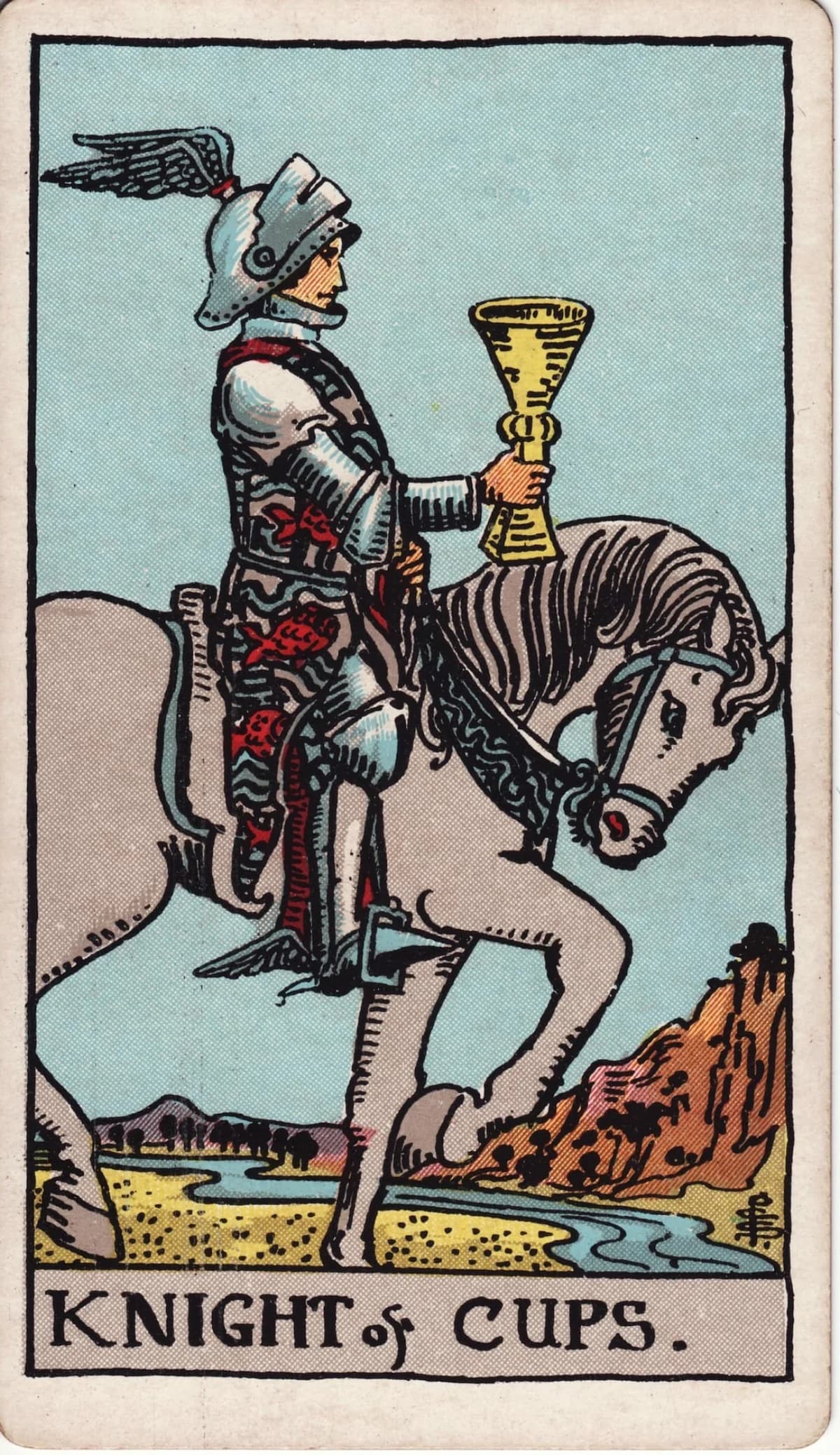
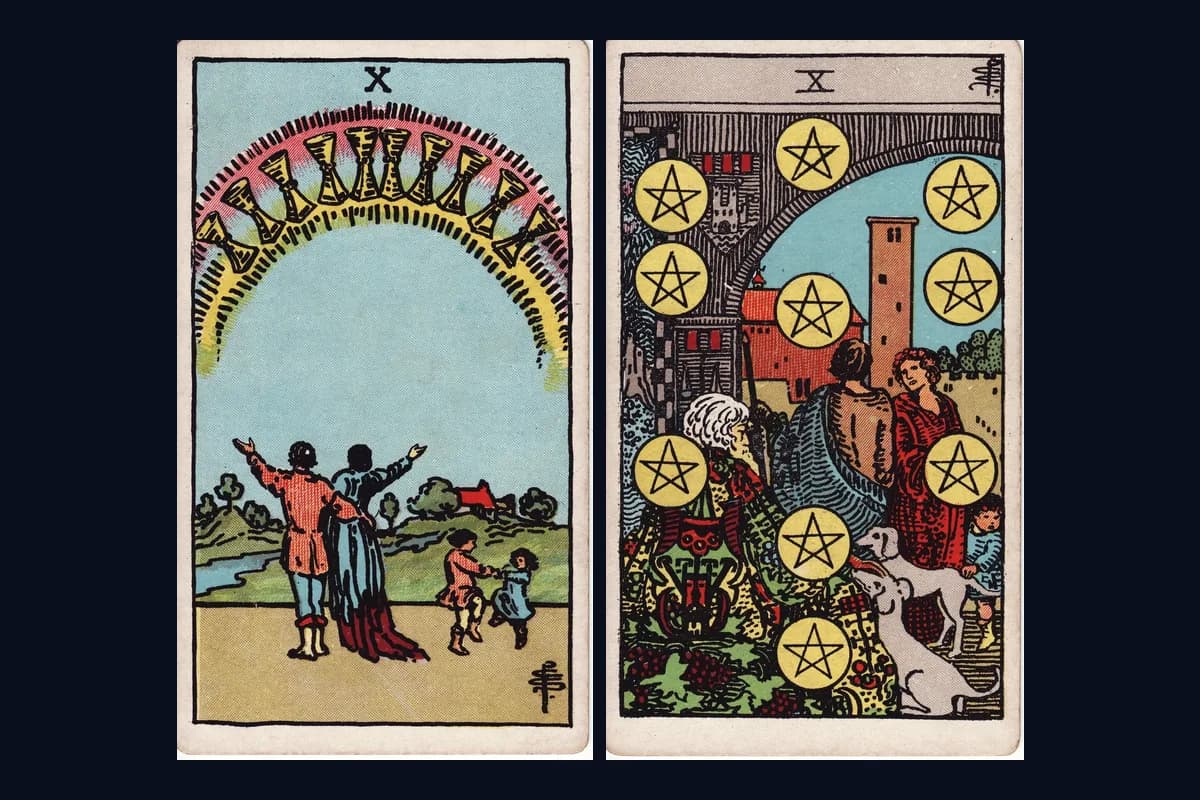
Before 1909, reading the Minor Arcana was an exercise in memorization. You looked at five cups arranged on a card, recalled the assigned meaning, and moved on. The image gave you nothing to work with. Pamela Colman Smith changed that in roughly six months.
Working in her London flat between April and October 1909, Smith illustrated all 78 cards of what became the Rider-Waite-Smith deck. She was reportedly paid around 50 pounds. No royalties. No copyright. Over 100 million copies of her designs are now in circulation worldwide, and for decades, publishers credited the deck to "Rider-Waite," erasing her entirely.
Smith's genius was completing an interrupted experiment. In 1908, black-and-white photographs of the Sola-Busca appeared at the British Museum, and she copied roughly a dozen Minor Arcana compositions directly from them. But where the Sola-Busca's figures were stiff, allegorical, Smith turned them into theater. Her training under Arthur Wesley Dow at Pratt Institute steeped her in Japanese design principles. Work with Ellen Terry's Lyceum Theatre company gave her a stagecraft instinct. And synesthesia let her paint what she heard.
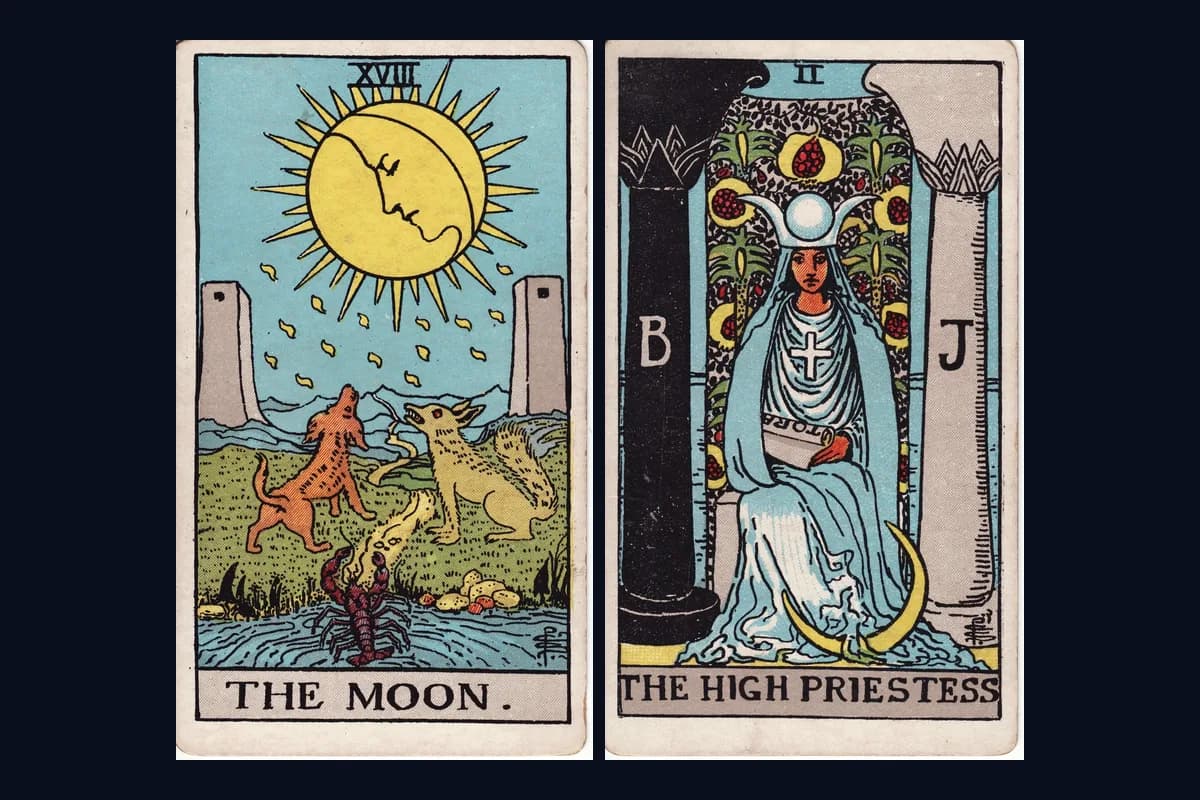
All of these threads ran through the cards. Art Nouveau's flowing lines show up in the borders. Japonisme's saturated color blocking shapes the backgrounds. And the theatrical staging Mary K. Greer identified in nearly every Minor Arcana scene gave readers something revolutionary: pictures they could actually read without a guidebook.
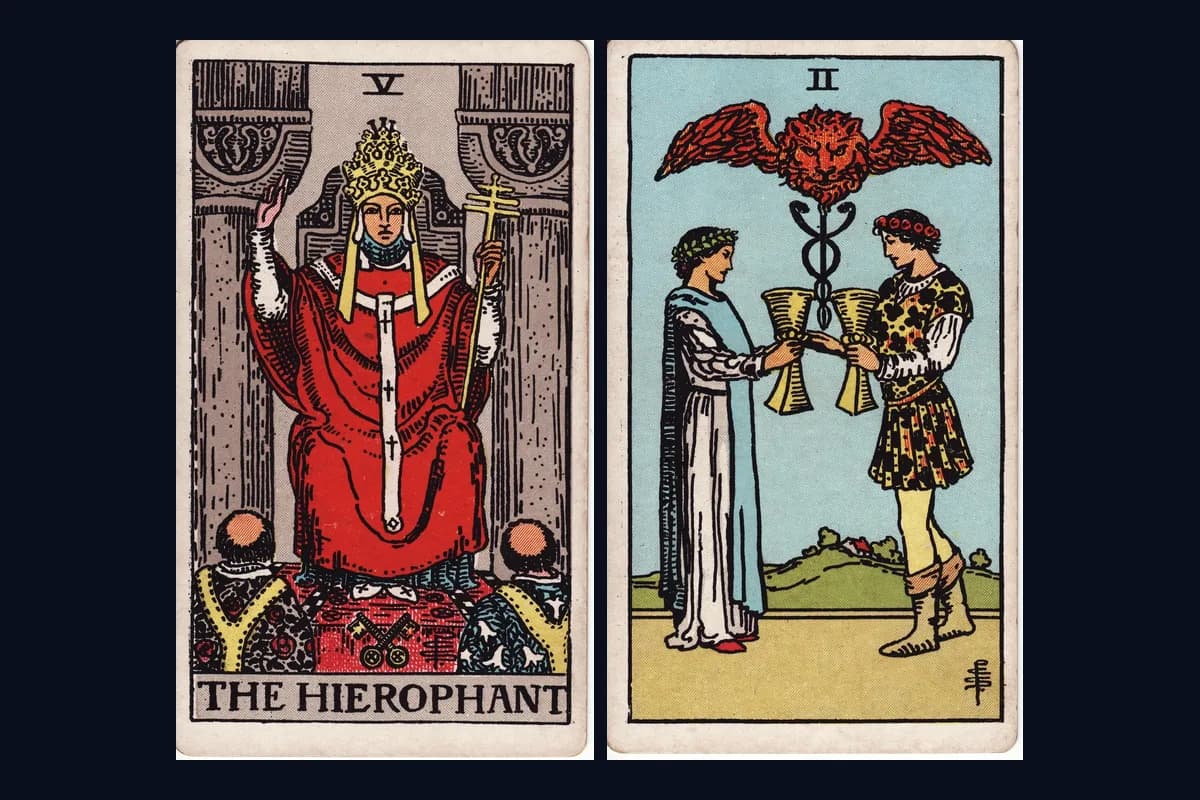
Smith knew the same Golden Dawn astrological system Harris would later make explicit. But as an oath-bound initiate, she couldn't label anything. Instead she buried it. The Six of Swords, Mercury in Aquarius, becomes a mother and child ferried from rough water to calm. "Reason serving humanity," as Greer described it, translated into a wordless narrative. Smith encoded astrological structure so deeply into theatrical scenes that you can read the cards for decades without spotting the framework beneath them.
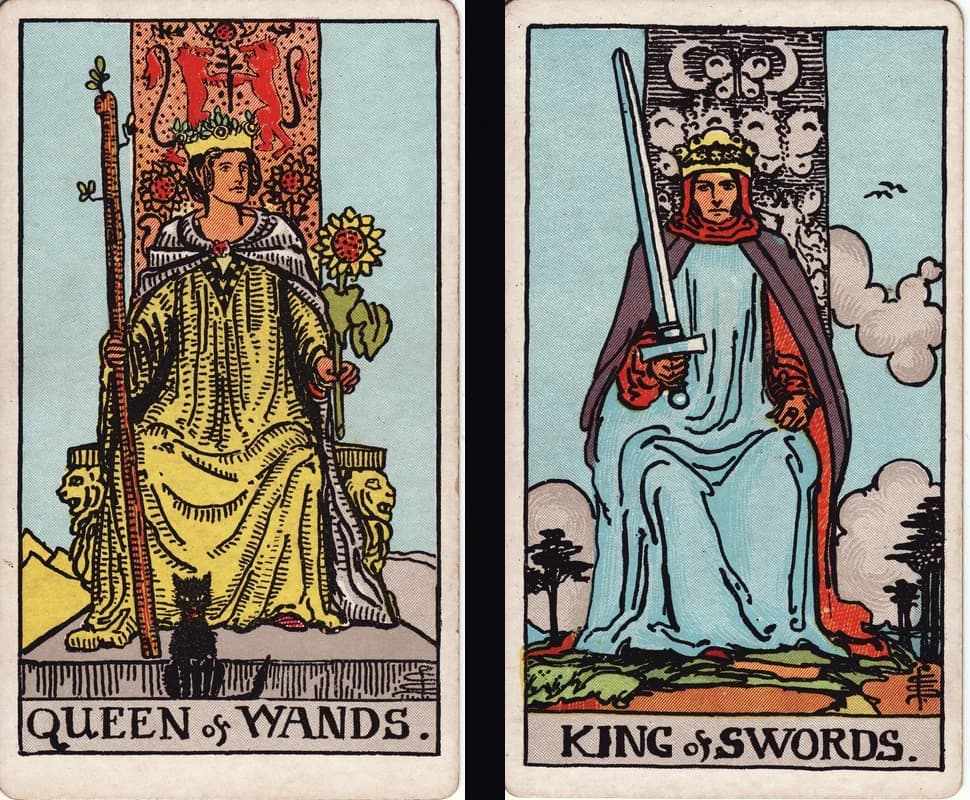
Rachel Pollack put it best: "The revolutionary change in the Minor Arcana seems to me to free us from the formulas that dominated the suit cards for so long. Previously, once you read and memorized the given meanings of a Minor card you could not really add to it." In the English-speaking world, tarot card art history splits cleanly into before Smith and after her. The feminist reclamation of her name, decades overdue, acknowledges what scholars like Elizabeth Foley O'Connor have documented: Smith was the designer. Waite described what he wanted in words. She made images that outlasted him by a century. Look at how court card personalities differ across traditions, and you'll see her theatrical instinct in every one.
How Artistic Style Shapes Every Tarot Reading
Pick up three different tarot decks and lay down the same card from each. The difference isn't decorative. It's structural.
A Marseille pip card shows you five swords arranged in a pattern. You bring the meaning. The RWS Five of Swords shows a smirking figure collecting fallen blades while two people walk away, defeated. The story is on the card; you react to it. The Thoth Five of Swords, titled "Defeat," shows Venus in Aquarius through bent, broken blades and sickly color, the planetary attribution printed right on the face.
Evvie Marin put the framework plainly: "Some of what we take for magic in tarot is plain communication. Artists craft symbol and mood, transmitting information intentionally, but perhaps subliminally to the untrained eye. Art purposely manipulates emotions and installs thought-forms." The art determines what reaches you. And each tradition determines it differently.
Frieda Harris translated planetary forces into pure visual energy. Every Thoth pip card carries its decan assignment openly: the Five of Cups, titled "Disappointment," depicts Mars in Scorpio through five vessels arranged as an inverted pentagram over a parched, dead-sea landscape. Harris renders that tension through wilting lotuses and cracked earth. She didn't just depict symbols. She gave the decan system color, motion, and geometry for the first time.
The result is a telling art-historical spectrum. The Thoth places astrological glyphs directly on every card face, making the decan system legible at a glance. The RWS hides identical correspondences inside visual storytelling. And the Marseille, as the Tarot Association of the British Isles states plainly, "has no elemental, Kabbalistic, astrological or colour-scale meanings except those the reader consciously brings to them." Three decks, the same 78-card structure, three completely different relationships between image and meaning.
Your choice of deck changes your reading. The Tower in fiery reds makes upheaval visceral; the Star in cool blues turns healing into something you can feel before you name it. Style isn't surface. It's the first layer of interpretation, and the artist's choices shape what you see before you've drawn a single card.
Court Cards: Where Art History Shows Its Hand
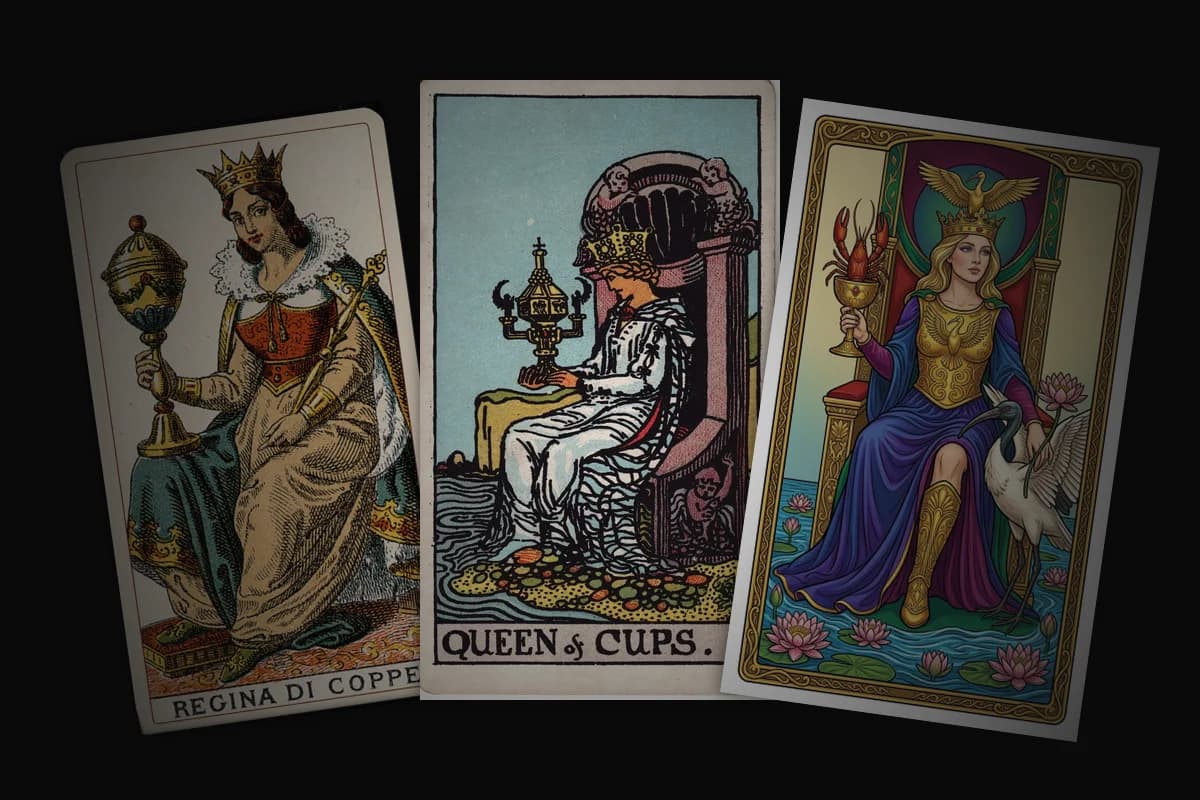
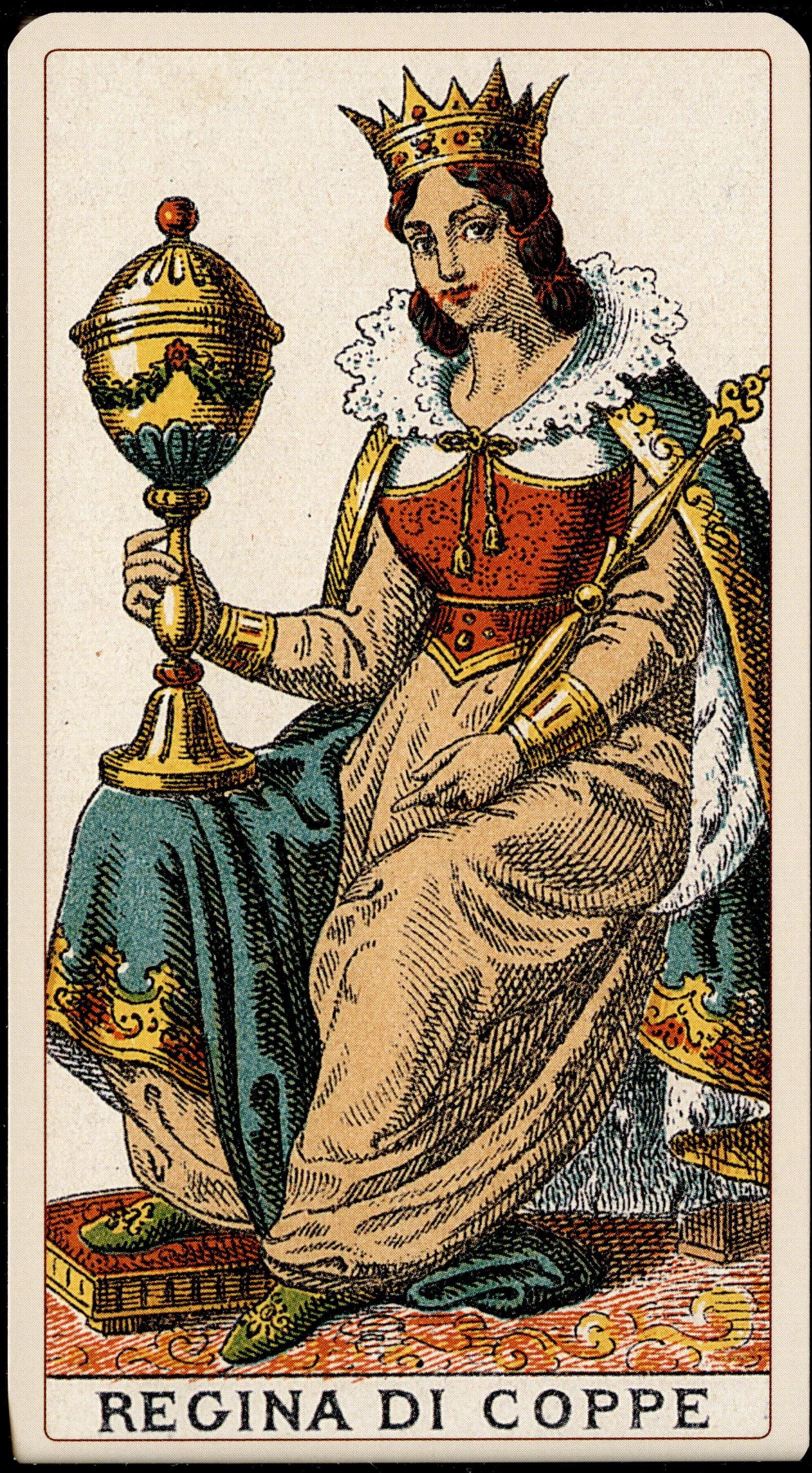
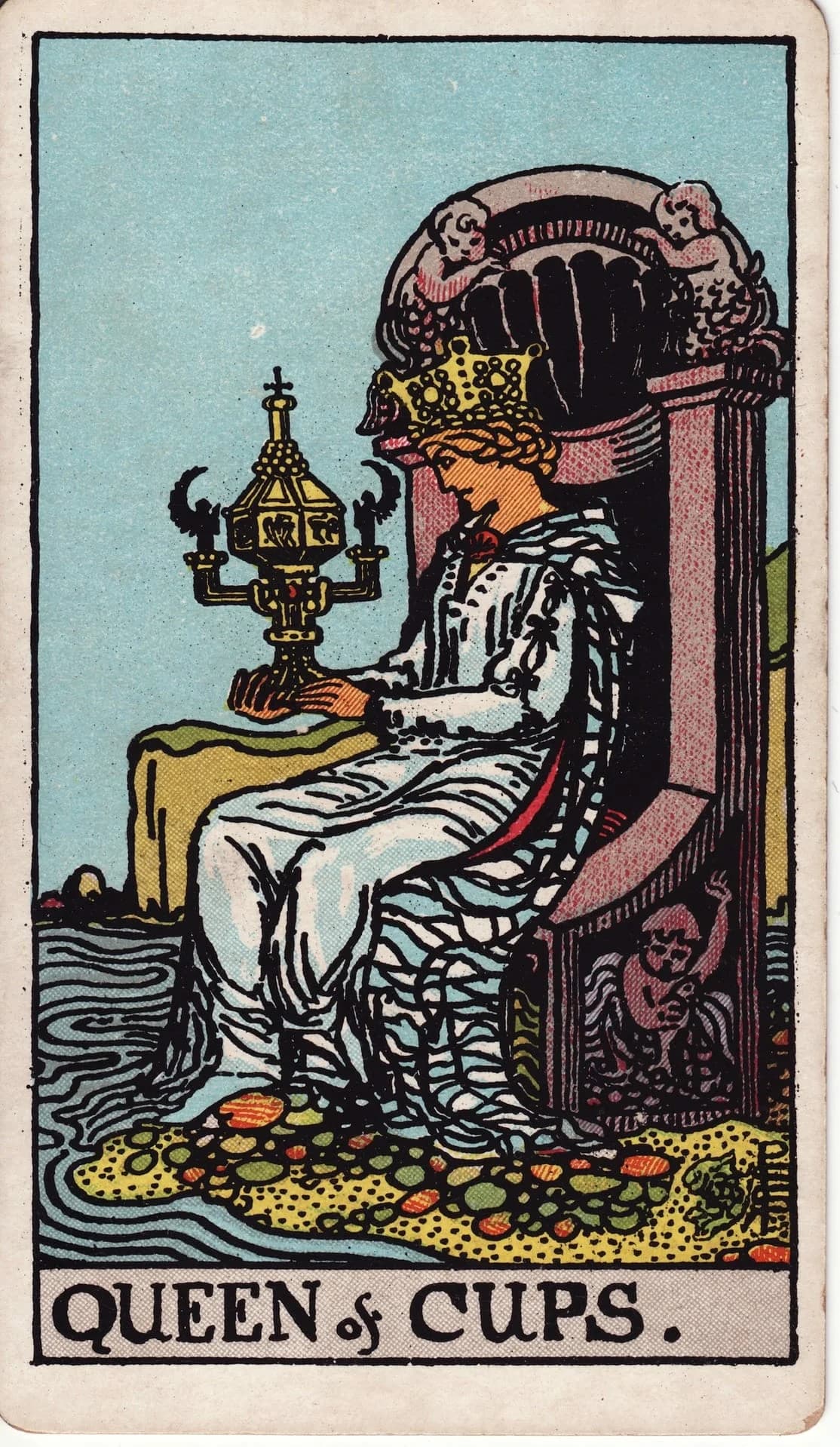
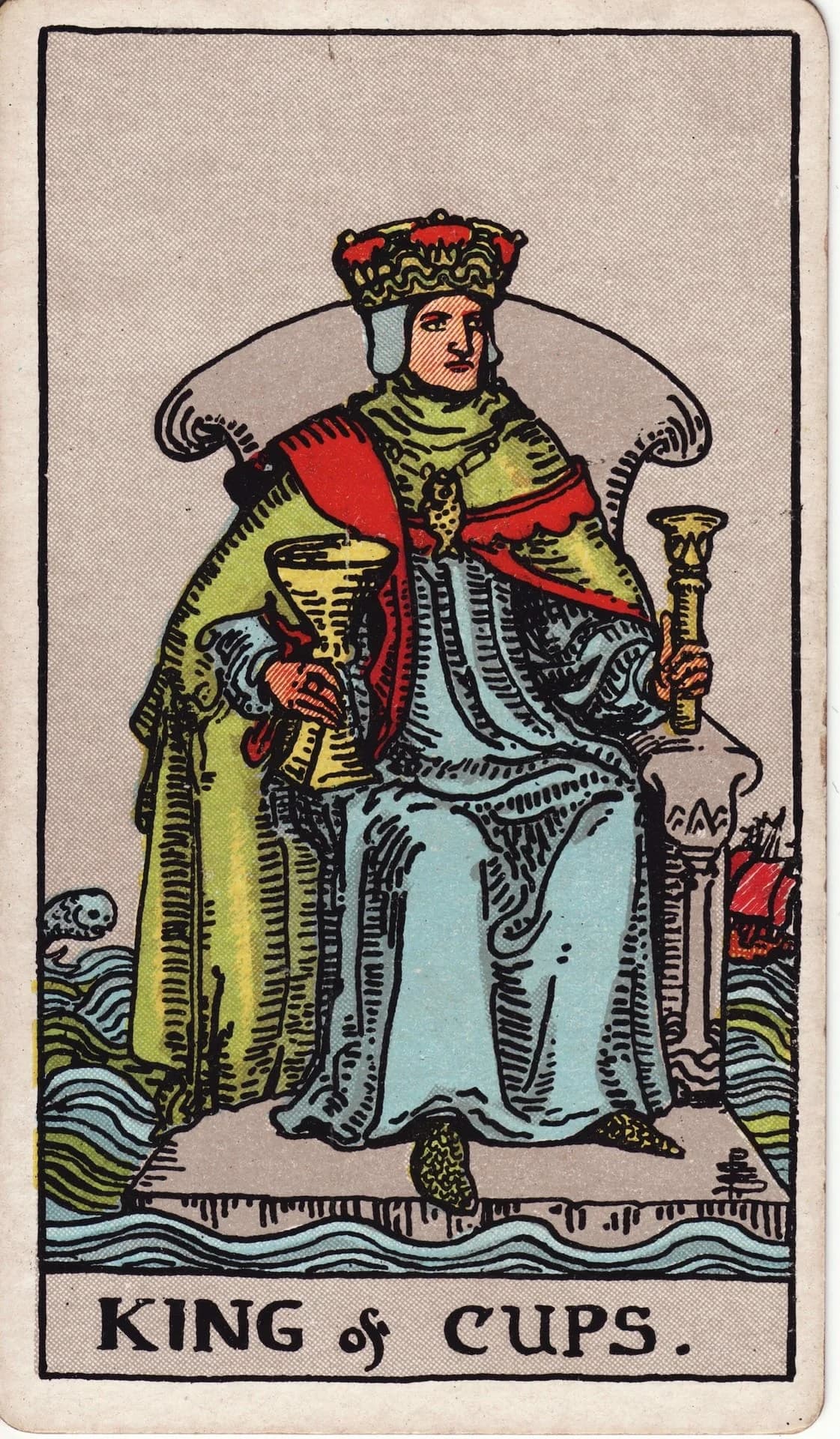
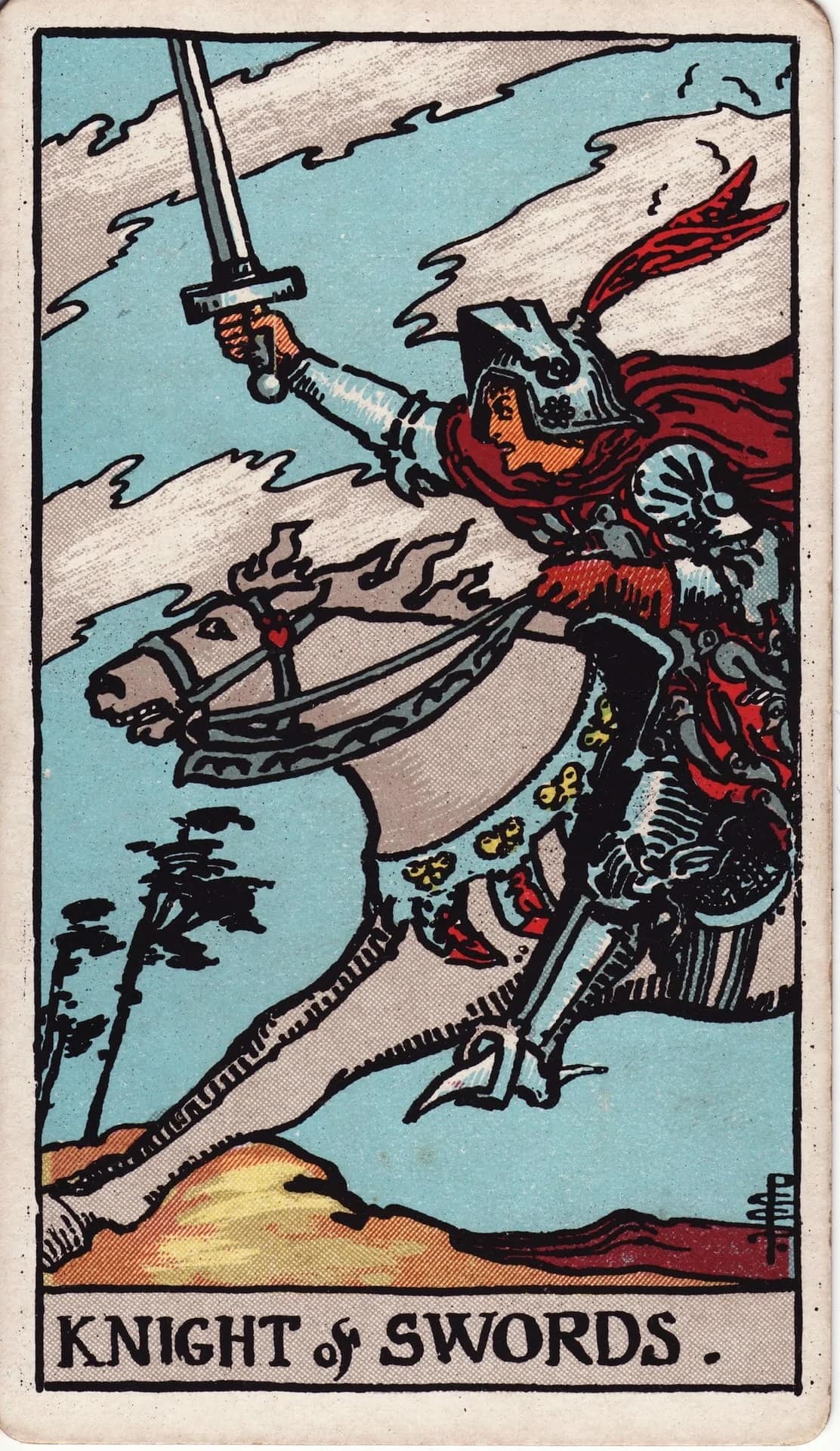
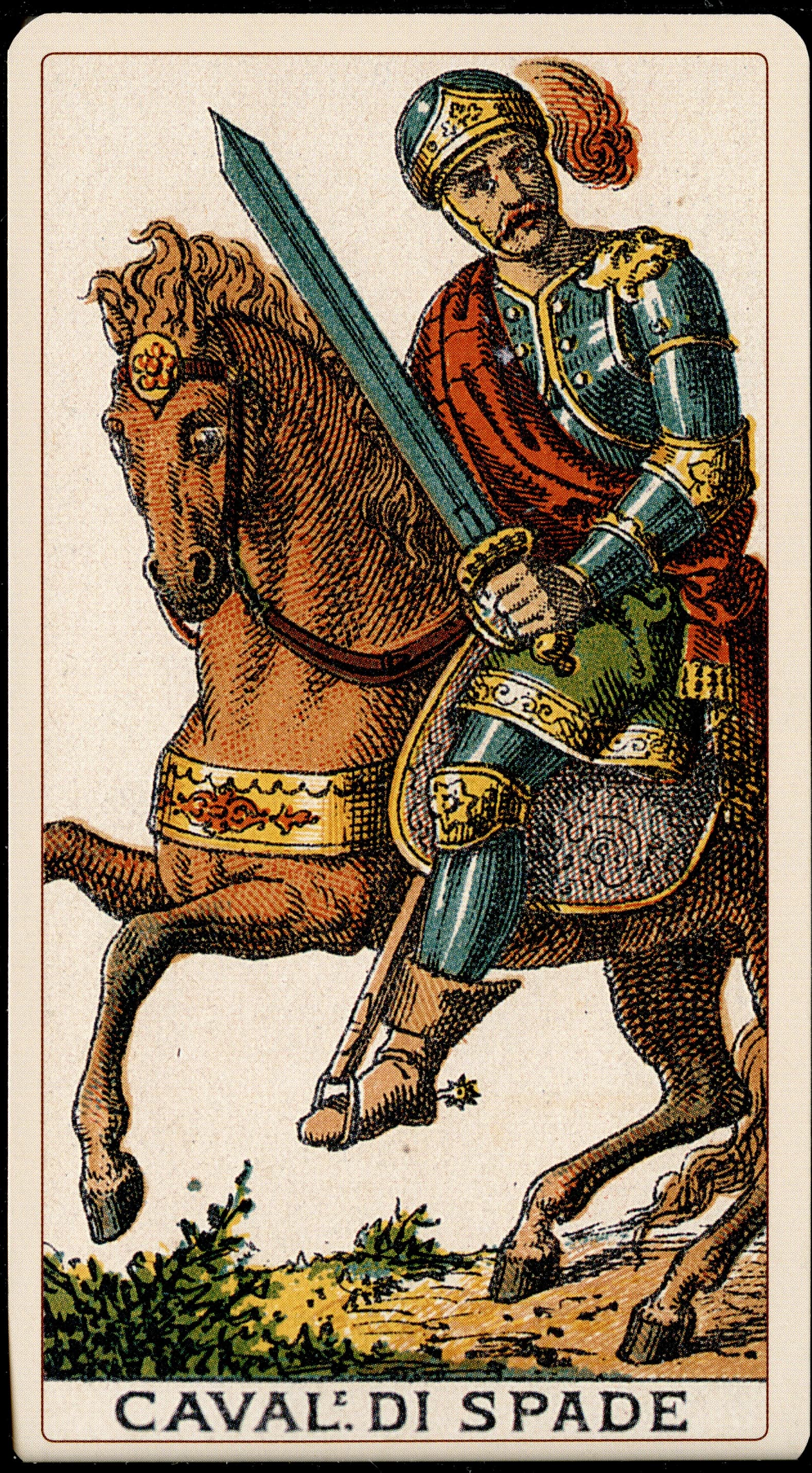
Court cards are the best test case for what tarot card art history actually does. They carry human figures across every era, so you can watch artistic priorities shift in real time.
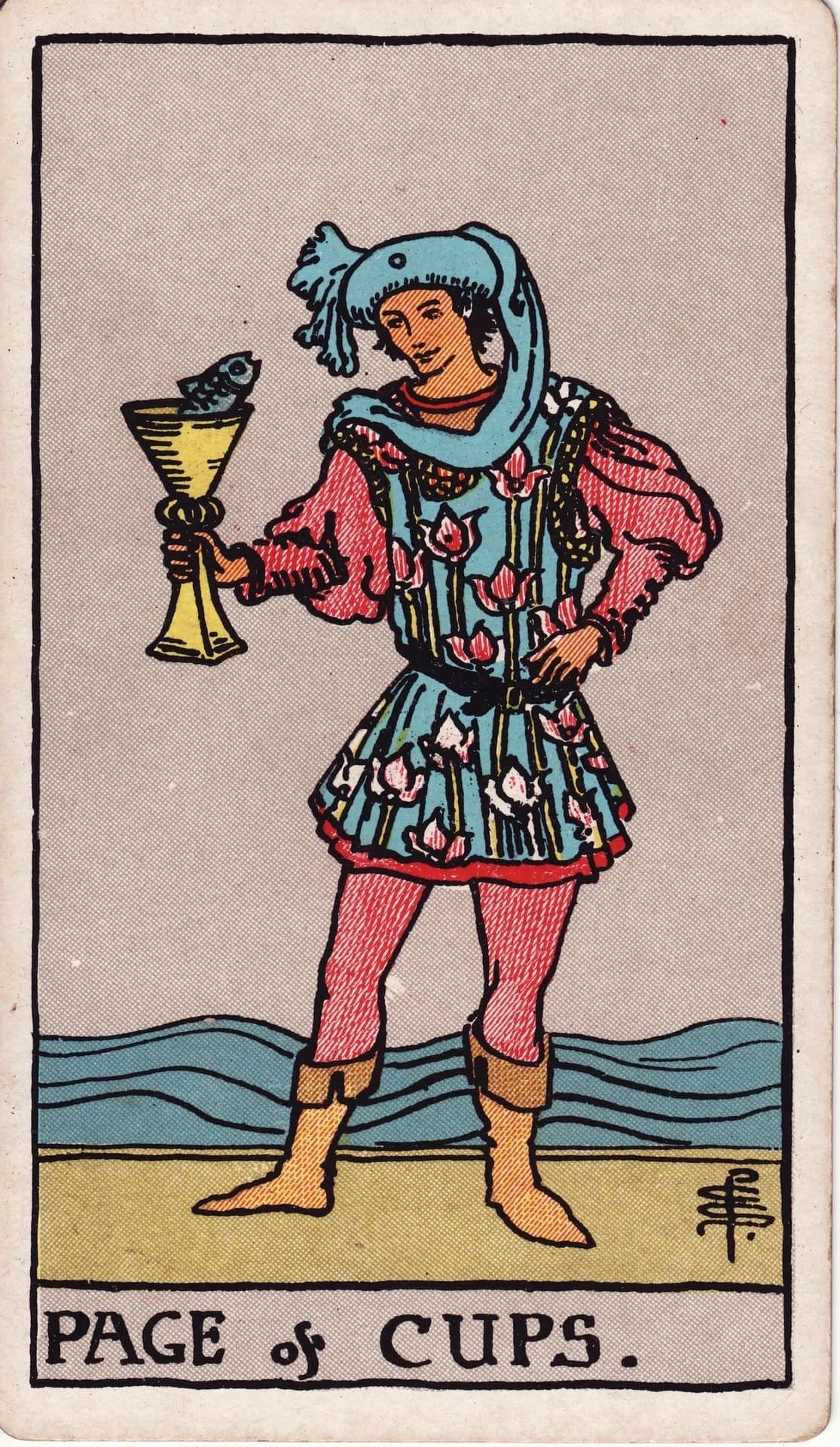
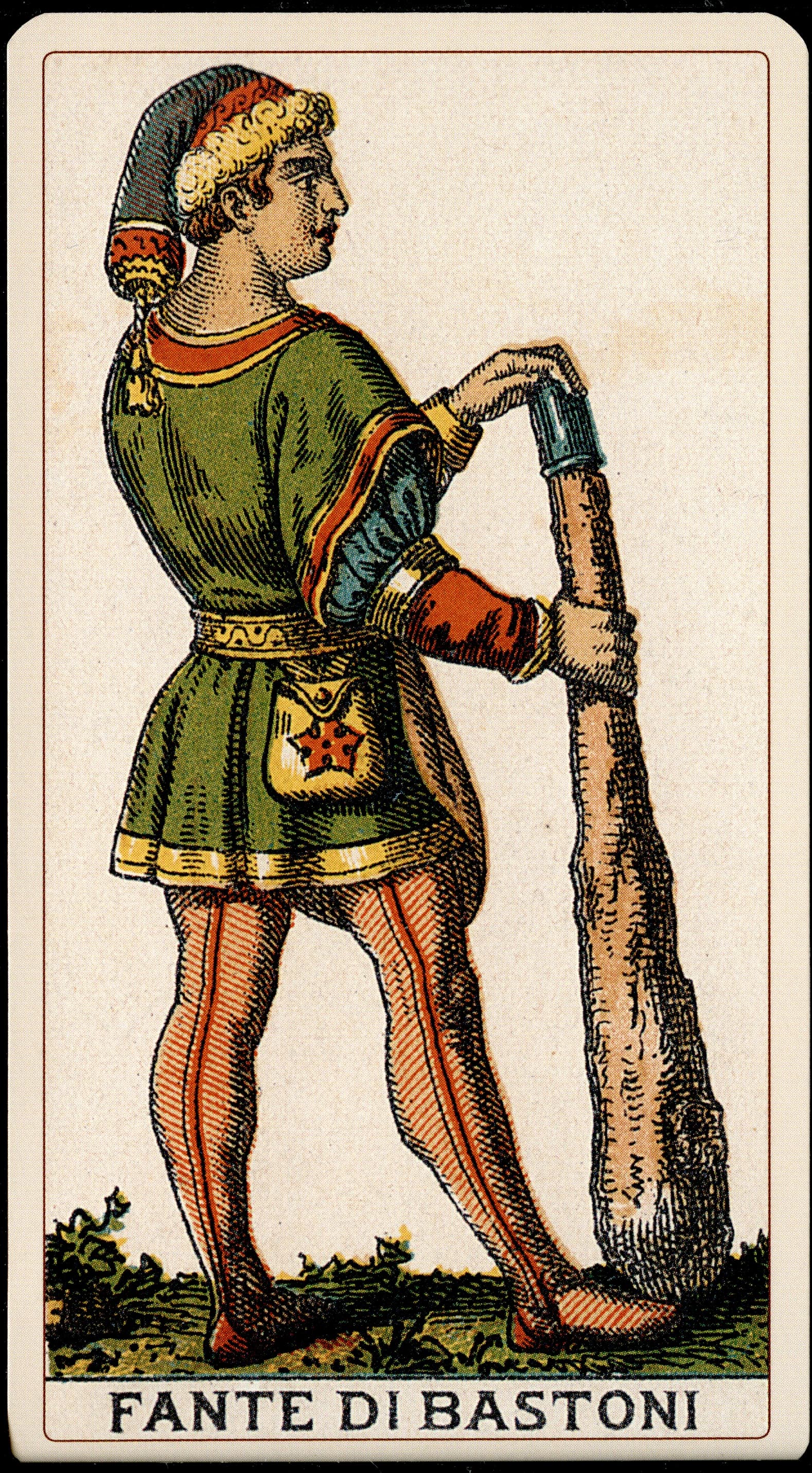
Smith's Page of Cups stares at a fish popping out of a golden chalice: a small surreal interruption in an otherwise grounded scene. Compare that to the Fante di Bastoni from a 15th-century Milanese deck: a young man standing straight, holding his suit symbol like a prop. Static. Formal. The Milanese card tells you the figure's rank. Smith's card tells you a story, and the fish is the part you'll remember.
The Surrealists understood this instinct. When Andre Breton and his circle were stranded near Marseilles in the winter of 1940-41, awaiting visas during the Nazi occupation, they created the Jeu de Marseille, a hybrid playing card deck that reinvented the standard 52-card structure along Surrealist principles. They scrapped the old court hierarchy entirely. Kings, queens, and jacks became Genius, Siren, and Magus. They were arguing about what authority looks like, using cards to do it.
The argument hasn't stopped. Courtney Alexander's Dust II Onyx and Lisa Sterle's Modern Witch Tarot both take the RWS framework and ask whose faces belong in it. Museums have started paying attention. The Warburg Institute's "Tarot: Origins & Afterlives" (January through April 2025) was London's first historical tarot overview. The Morgan Library opens "Tarot! Renaissance Symbols, Modern Visions" in June 2026. The Accademia Carrara's exhibition in Bergamo, described as "the most extensive exhibition ever devoted to this iconographic universe," is open now through June 2026. Three institutions, three arguments about why tarot card art history matters to the broader canon.
Every Deck Is an Argument About Art
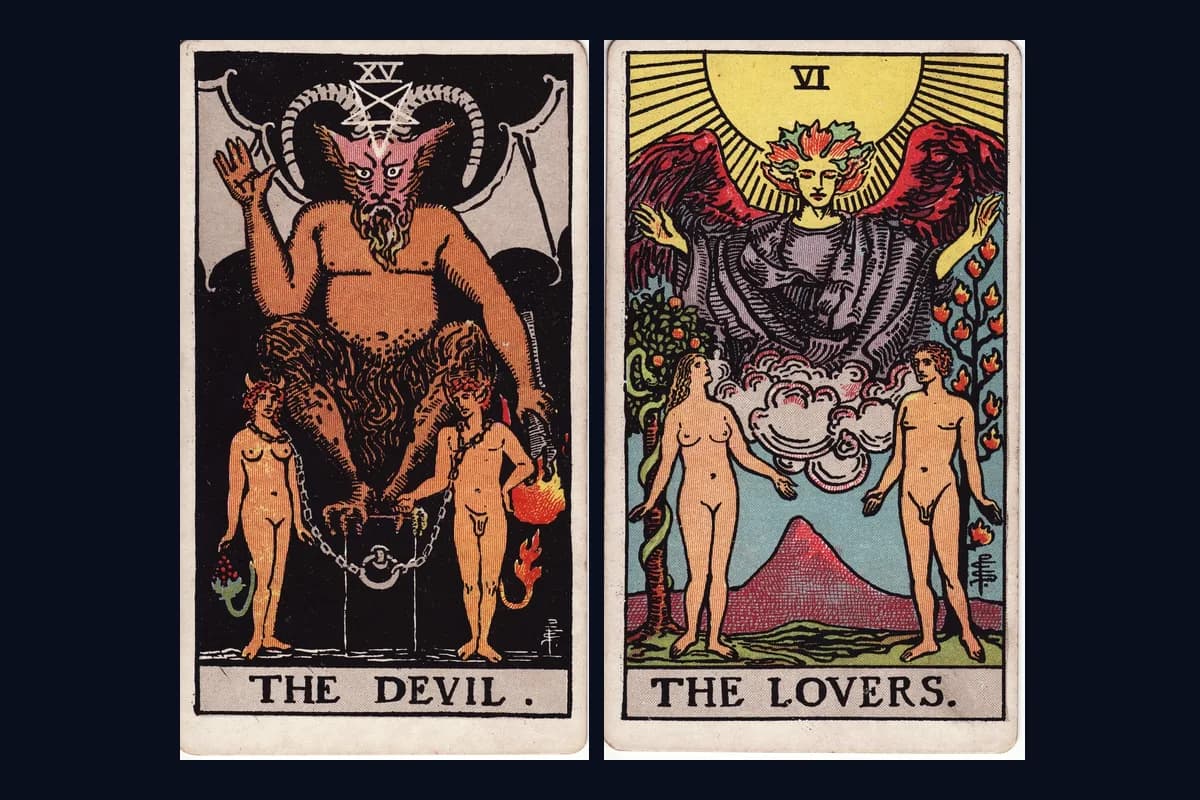
The Golden Dawn's esoteric vocabulary shaped both the RWS and Thoth decks, but in opposite directions. Smith buried the system under narrative. Harris made it the surface. And the Marseille tradition predates the entire framework, proving that tarot's visual power doesn't depend on any single symbolic overlay.
The 2025-2026 exhibitions make this case from three angles. The Warburg traced tarot from 15th-century engravings through countercultural reinvention. The Morgan connects Renaissance originals to modern artists (Breton, Carrington, Remedios Varo, Betye Saar, Kerstin Bratsch) who used tarot as a way out of modernist rigidity. The Carrara assembled six centuries of cards and manuscripts into what curator Paolo Plebani described as proof that "Tarot has maintained an extraordinary iconographic continuity."
Every deck is an argument about what images can do.
A Marseille deck argues that patterns are enough; your mind does the rest. The RWS says scenes pull intuition to the surface. The Thoth argues that geometry and color can make invisible forces visible. Every indie deck since has picked a side or tried to hold several at once.
The lesson tarot card art history keeps teaching is simple: every era's artists looked at the cards they inherited and reinterpreted them for their own time. Pamela Colman Smith channeled Art Nouveau and her own theatrical eye. Today's indie creators draw on everything from ukiyo-e prints to mid-century illustration. That tradition of reinterpretation isn't reserved for professional artists. If you have a sense of what moves you visually, a color palette, a mood, an artistic era that feels like yours, you already have the foundation for a deck shaped by your own vision.
Think about the art that stops you mid-scroll or holds you in front of a gallery wall longer than you intended. The colors, the mood, the way it makes something familiar feel new. What would your tarot deck look like if it carried that same feeling in every card?
Questions readers ask about tarot art history
What is the oldest surviving tarot deck?
The Cary-Yale Visconti deck, held at Yale's Beinecke Library, dates to approximately 1440-1445 and may be the oldest surviving set. The most famous early deck is the Visconti-Sforza tarot, a set of 74 surviving cards from around 1450-1480 split between the Morgan Library in New York, the Accademia Carrara in Bergamo, and the Colleoni family. No complete 15th-century tarot deck has survived.
Who painted the Rider-Waite tarot deck?
Pamela Colman Smith illustrated all 78 cards for the Rider-Waite-Smith deck in approximately six months in 1909. She was reportedly paid a flat fee of roughly 50 pounds with no royalties or copyright. For decades, the deck was called simply "Rider-Waite," erasing her contribution. Over 100 million copies of her designs are now in circulation worldwide.
How has tarot card art changed over time?
Tarot art has moved through at least six distinct phases. It began as hand-painted gold-leaf luxury cards for Italian aristocrats in the 1400s, then standardized through woodblock printing in the Marseille tradition. Pamela Colman Smith changed the deck in 1909 by illustrating all 78 cards with full narrative scenes. The 20th century brought avant-garde reinterpretations from Surrealists and occultists, while the 2010s and 2020s saw an explosion of diverse indie decks.
Why are museums exhibiting tarot cards now?
Three major museum exhibitions in 2025-2026 mark an institutional turning point. The Warburg Institute in London mounted its first historical tarot overview, the Morgan Library in New York is staging a double-gallery exhibition connecting Renaissance tarot to modern art, and the Accademia Carrara in Bergamo organized what it calls the most thorough tarot exhibition ever assembled. Scholars increasingly recognize tarot as one of the longest continuous traditions in Western visual art.
What art movements have influenced tarot deck design?
Nearly every major Western art movement appears in tarot card art history. Renaissance painters created the first decks. Art Nouveau influenced Pamela Colman Smith's 1909 illustrations. Projective geometry shaped Frieda Harris's Thoth tarot paintings in the 1940s. Surrealists including Andre Breton and Leonora Carrington all created or inspired tarot-related works. More recently, Afrofuturism, feminist art, and digital illustration have driven a wave of diverse independent decks.